Curated ToolThis tool is part of our curated AI directory. We only include tools that meet our standards for relevance, usability and real-world value.

Elementor

Elementor is a WordPress website builder plugin that lets users design pages, templates, and site layouts with a visual drag-and-drop editor. It includes tools for responsive design, theme building, forms, and WooCommerce page customization.
Website BuildersHosting & Deployment

FYAI Score

8.6 / 10

Based on 4,117 reviews

Pricing:

Freemium

Best for:

WordPress marketers and web creators building high-converting sites

Score Breakdown

  • Ease of use8.9 / 10
  • Features9.1 / 10
  • Pricing8.7 / 10
  • Integrations7.5 / 10
  • Support8.0 / 10

PRODUCT PREVIEW

What this AI tool does

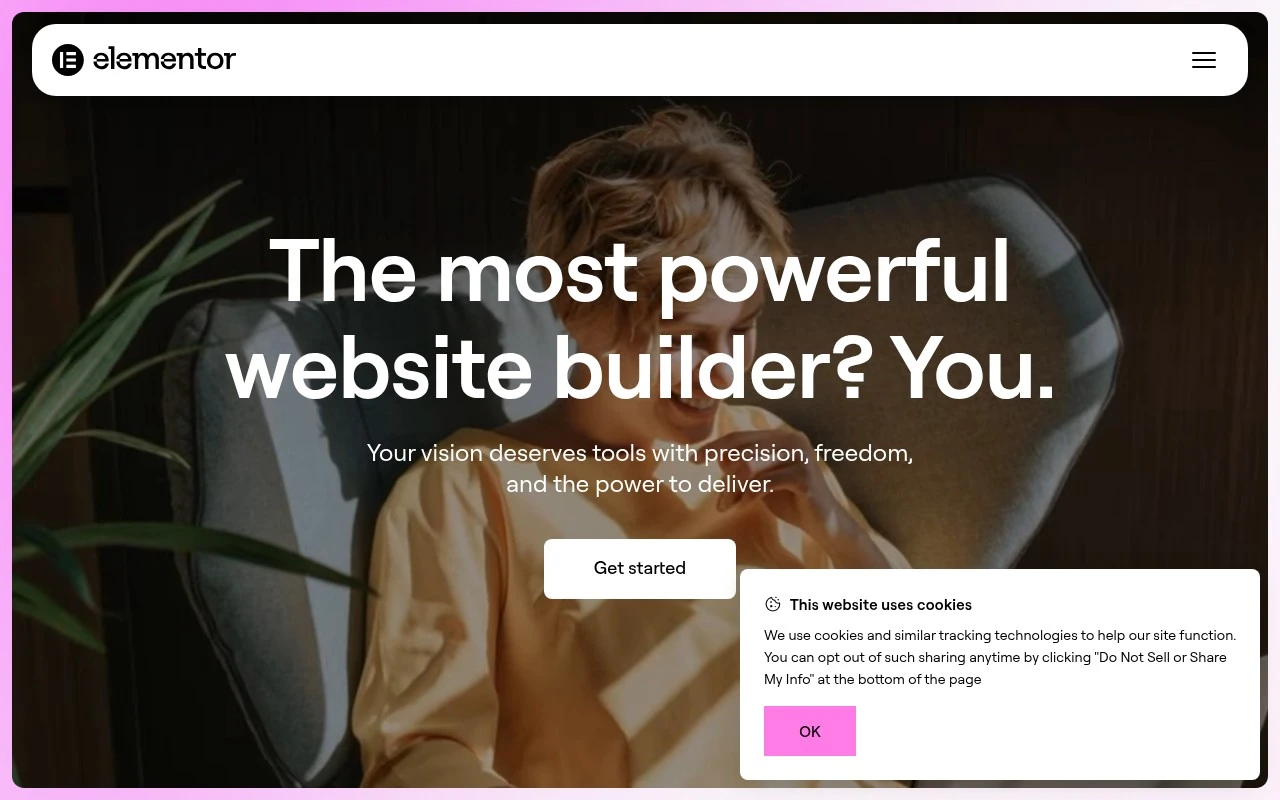
Elementor is a WordPress-focused website creation platform built around a visual drag-and-drop editor for designing, launching, and managing professional websites without starting from code. Elementor is best understood as a full WordPress web creation stack, not a standalone generic AI site generator, because it combines site design, publishing infrastructure, optimization, forms, popups, dynamic content, and workflow tools in one ecosystem. At its center is a live visual builder that lets users shape pages directly on the canvas. Instead of editing a theme from a back-end settings panel, creators can build landing page layouts, service pages, blogs, portfolios, and campaign pages while seeing the design take form in real time. Design templates, reusable sections, global styles, and responsive controls make it useful for both quick starts and more carefully structured brand systems. For WordPress users who want speed without giving up control, Elementor turns no-code page building into a practical production workflow. Elementor is for solo business owners, marketers, designers, developers, freelancers, agencies, and enterprise teams that need to create WordPress sites with visual precision and repeatable processes. The platform supports both simple brochure sites and more complex builds that depend on forms, lead capture flows, custom content, and integrations. AI features extend the platform from page assembly into planning and content creation. Users can get help with website generation, site structure, copy, layout ideas, and visual assets, including the ability to generate images for pages and campaigns. Code assistance can also help generate code snippets for styling or functionality, which makes the platform more flexible for users who are comfortable going beyond pure no-code editing. Commerce and conversion work are part of the same story. Online store creation is supported through WordPress and WooCommerce-oriented design workflows, so teams can shape product pages, checkout experiences, promotional sections, and conversion-focused landing pages visually. Forms, popups, and marketing integrations make it possible to capture leads, route enquiries, and test campaign ideas without treating the website builder as a separate island from the business workflow. Beyond the editor, the broader ecosystem includes website hosting, domains, performance optimization, image optimization, accessibility guidance, and cookie consent tools. This gives teams a more consolidated path from design to deployment, especially when they want fewer moving parts around WordPress infrastructure. The platform’s performance and accessibility tools are not just extras, they reflect the reality that modern web creation involves speed, compliance, usability, and maintainability as much as visual design. Agency and enterprise use cases give the platform a more operational character. Teams can standardize templates, reuse design systems, manage multiple client or brand sites, and hand off pages to non-technical editors while preserving structure. Elementor is best at helping WordPress-based teams move from blank page to polished, editable website while keeping design, content, conversion, and site operations closely connected. The result is a tool with a clear identity: it makes WordPress more visual, more accessible, and more production-ready for a wide range of creators. It does not replace every part of web strategy or development, but it reduces the distance between idea, design, content, and launch. For anyone committed to WordPress who wants a richer creation layer than the default editor, Elementor provides a mature platform for building and managing modern websites.

Use cases

Best for

Build Landing Page

Build a landing page in WordPress using Elementor’s drag and drop editor, templates, forms, and popup builder.

Website Hosting

Use Elementor Hosting to run a WordPress site with managed hosting, domains, SSL, backups, and performance optimization.

Generate Images

Generate and insert images with Elementor AI, then optimize them with built in image compression and performance tools.

ANALYSIS

Strengths & limitations

Strengths
  • Best suited to WordPress creators who want visual design control because its drag-and-drop editor lets teams build and refine pages without working primarily in code.
  • Useful for faster site production because its AI support spans briefs, sitemaps, wireframes, copy, images, and code that can be edited in the WordPress workflow.
  • Strong fit for agencies and growing teams because it combines site building with templates, forms, popups, optimization tools, hosting, domains, and workflow features in one WordPress-centered stack.

Limitations
  • Less suitable for teams that do not want to build on WordPress because Elementor’s core workflow, editor, and ecosystem are WordPress-focused.
  • Less suitable for buyers expecting a fully standalone AI site generator because the AI assists planning and production but the site still needs refinement in the visual WordPress editor.
  • The freemium model is less convenient for teams that need broad functionality from the start because advanced creation, infrastructure, or higher-usage workflows are likely to sit behind paid plans.

Evaluation

FYAI score breakdown

Our structured evaluation across five key criteria

8.6 / 10

Overall score

Based on 4,117 reviews

  • Ease of use8.9 / 10
  • Features9.1 / 10
  • Pricing8.7 / 10
  • Integrations7.5 / 10
  • Support8.0 / 10

What users say

Findings from public reviews, documentation and community sources.

  • Ease of use

    G2’s review summary highlights an “intuitive UI/UX and easy drag-and-drop builder,” and Elementor’s own page says users can build with “no coding required” via a visual drag-and-drop editor. The existing WordPress context can add setup complexity for users who are not already working in WordPress.

  • Features

    Elementor describes a builder stack that includes AI Site Planner, drag-and-drop editing, Dynamic Content, and Display Conditions. Elementor also references forms, popups, hosting, domains, and agency/enterprise workflows.

  • Pricing

    Elementor’s pricing page lists annual plans starting from $49/year and a 30-day money-back guarantee. Elementor’s pricing page also shows site counts, widgets, included/excluded features, cloud templates, support level, and renewal terms, while advanced capabilities such as popups, ecommerce, AI, optimization, accessibility, and management features vary by tier.

  • Integrations

    Elementor states that users can “connect the third-party integrations you need,” and Elementor’s pricing page says its Form Builder can integrate with “your favorite marketing tools.”

  • Support

    Elementor’s pricing page shows Basic Support included on listed plans, described as access to an AI support chatbot. Elementor’s enterprise messaging offers “24/7 access to certified experts.”

Who is this for?

Best for users building WordPress sites visually, Elementor’s own page says users can build with “no coding required” via a visual drag-and-drop editor. Best for buyers who want published plan details before purchasing, Elementor’s pricing page lists annual plans starting from $49/year and a 30-day money-back guarantee. Less suited to teams that need human expert support on standard listed plans, Elementor’s pricing page describes Basic Support as access to an AI support chatbot, while “24/7 access to certified experts” appears in enterprise messaging.

PRODUCT PREVIEW

Feature highlights

Drag-and-drop builder

Design WordPress pages visually with responsive controls and widgets.

AI content & code

Generate copy, layouts, and snippets to speed up site creation.

Performance tools

Optimize images and pages for faster loads and better Core Web Vitals.

COMPARE

Discover curated alternatives worth comparing

Compare similar AI tools based on features, pricing and use cases

8.8/ 10Based on 14,986 reviews

WordPress

Website BuildersE-commerce Builders
Builds websites and helps create site content with AI tools
Best for:
Small business owners
Pricing
Freemium

8.6/ 10Based on 28,442 reviews

Wix AI

Website BuildersE-commerce Builders
Builds a website draft from answers for later customization
Best for:
Small business owners
Pricing
Freemium

7.7/ 10Based on 35 reviews

WeWeb

Hosting & DeploymentApp / No-code Builders
Builds web-app pages, databases, logic, and coded components
Best for:
Startup founders
Pricing
Freemium

Join thousands building standout WordPress sites faster. Launch a polished, on-brand website today with Elementor and turn visitors into customers—without heavy coding.

FAQ

Frequently asked
questions

Everything you need to know about this AI tool,
its features, pricing, use cases, and limitations.

Who is Elementor best suited for?
Elementor is best suited for WordPress creators who want visual control over website design without relying heavily on custom coding. It fits freelancers, agencies, business owners, and larger teams building pages, templates, forms, popups, landing pages, online stores, and content-rich WordPress sites with optional AI support.
Does Elementor have a free plan, and what do paid plans add?
Elementor follows a freemium model, with free access available and paid options for more advanced website-building needs. Paid plans typically make more sense for users who need broader design capabilities, professional site features, AI-assisted creation workflows, hosting-related services, collaboration, or support beyond basic WordPress page building.
How does Elementor compare with other website builders?
Elementor stands out when the priority is building and managing WordPress websites through a visual drag-and-drop editor. Compared with more closed website builders, it gives strong design flexibility inside WordPress, but it is less suitable for teams that want to avoid WordPress or prefer an all-in-one non-WordPress platform.
How quickly can a team get started with Elementor?
Elementor’s main trade-off is that it is fundamentally tied to the WordPress ecosystem. It can reduce the need for coding, but complex business logic, advanced integrations, custom performance requirements, or large-scale site architecture may still require experienced developers, careful governance, and ongoing maintenance.
What should buyers check about Elementor privacy and compliance?
Buyers should evaluate how Elementor fits their own data handling, privacy, hosting, and compliance requirements before adopting it. Important checks include where site data is hosted, how user submissions and lead capture data are processed, which third-party services are connected, and whether internal policies require specific security or compliance assurances.