Curated ToolThis tool is part of our curated AI directory. We only include tools that meet our standards for relevance, usability and real-world value.

Replit

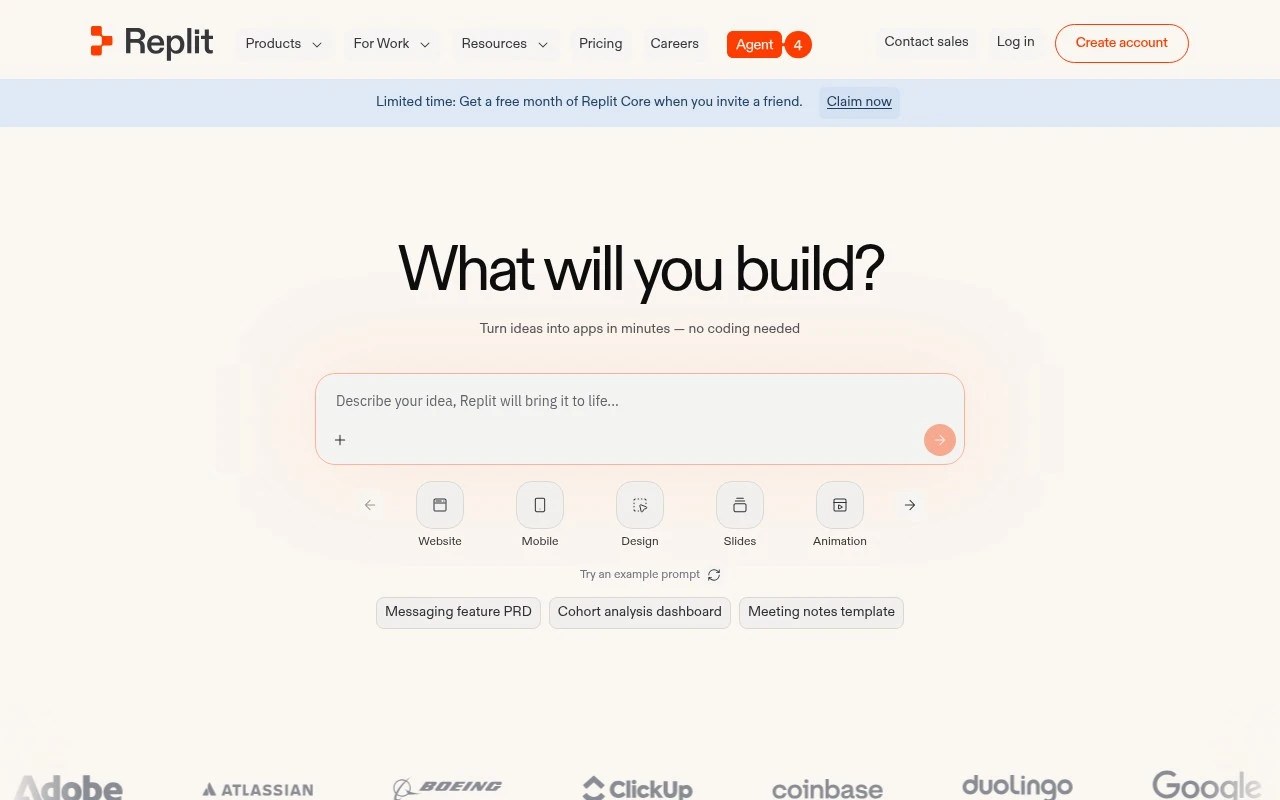
Replit is a browser-based software development platform for writing, running, and deploying code without setting up a local environment. It supports collaborative coding, hosted workspaces, and AI-assisted development tools.
Hosting & DeploymentApp / No-code Builders

FYAI Score

8.1 / 10

Based on 1,502 reviews

Pricing:

Freemium

Best for:

Developers and students prototyping and learning in a browser IDE

Score Breakdown

  • Ease of use7.7 / 10
  • Features8.8 / 10
  • Pricing7.5 / 10
  • Integrations9.2 / 10
  • Support7.5 / 10

PRODUCT PREVIEW

What this AI tool does

Replit is an online coding environment that combines a browser-based IDE, cloud runtime, collaboration workspace, deployment flow, and AI coding assistance in one place. Replit is built for learners, teachers, solo builders, and small teams that want to write, run, share, and publish software without setting up a local development machine. Its main strength is the continuity of the workflow, because the same workspace can support app prototyping, debugging, collaboration, and website hosting. For learners and educators, the platform lowers the friction that often comes with installing languages, configuring tools, or managing dependencies. A user can open a project, start coding in the browser, and run the result almost immediately. That makes it useful in classrooms, coding clubs, bootcamps, and self-guided learning, where access and speed matter as much as technical depth. The development experience feels closer to a lightweight cloud workstation than a simple code editor. Projects can include files, packages, terminals, previews, versioning, and runtime controls, so users can move from an idea to a working program without switching between many services. Replit supports many common programming languages and project types, which makes it flexible for scripts, web apps, bots, APIs, and experiments. Collaboration is one of the reasons Replit stands out from a traditional local setup. Multiple people can work in the same project through the browser, making it practical for pair programming, teaching, mentoring, and quick handoffs. Instead of sending zip files or walking someone through environment setup, a project can be shared as a live workspace that others can inspect, run, and improve. AI assistance adds another layer to the product’s identity. Replit can help users generate code, explain unfamiliar logic, debug code, and perform code refactoring inside the same environment where the project runs. This is especially valuable for beginners who need guidance in context, and for experienced builders who want to move faster through repetitive implementation details. Deployment and hosting turn the workspace into more than a place to write code. A prototype can become a public app or hosted website from within the platform, reducing the gap between building and publishing. This makes Replit well suited to small web tools, personal projects, classroom assignments, hackathon submissions, and early product experiments that need to be shared quickly. Because everything happens in the cloud, Replit is also useful when users work across devices or need a consistent environment. A project can be opened from a laptop, school computer, or other browser-equipped machine without recreating the development setup. The tradeoff is that users are working within a managed platform, which is convenient for speed and accessibility but different from controlling every layer of a local or custom cloud environment. For small teams and independent makers, Replit is best understood as an all-in-one creation space for software ideas that need to be tested, taught, shared, or launched quickly. It is not only an IDE and not only an AI coding tool, but a connected environment where coding, runtime, collaboration, assistance, and publishing are part of the same loop. That unified loop is the core story of Replit: fewer setup steps, faster feedback, and a shorter path from concept to working application.

Use cases

Best for

App Prototyping

Prototype an app by coding in Replit’s browser IDE and running it instantly on a cloud runtime with live preview.

Website Hosting

Host a website by deploying your Replit project to a public URL directly from the workspace.

Code Refactoring

Refactor code by using Replit’s AI assistant to suggest edits and apply changes across files in the IDE.

ANALYSIS

Strengths & limitations

Strengths
  • Best suited to fast prototyping because coding, running, AI assistance, collaboration, and publishing all happen in the same browser workspace.
  • Useful for students and educators because learners can start coding without configuring a local development environment.
  • Helpful for small teams because shared cloud workspaces make it easier to review, edit, and iterate on projects together.

Limitations
  • Less suitable for air-gapped, offline, or tightly controlled environments because development depends on a cloud-hosted browser workspace and runtime.
  • Less suitable for large or infrastructure-heavy production systems because Replit is strongest for learning, prototyping, and small-to-medium projects rather than highly customized enterprise stacks.
  • The freemium model can become limiting for serious use because heavier AI, compute, collaboration, or deployment needs are likely to require a paid plan.

Evaluation

FYAI score breakdown

Our structured evaluation across five key criteria

8.1 / 10

Overall score

Based on 1,502 reviews

  • Ease of use7.7 / 10
  • Features8.8 / 10
  • Pricing7.5 / 10
  • Integrations9.2 / 10
  • Support7.5 / 10

What users say

Findings from public reviews, documentation and community sources.

  • Ease of use

    Capterra lists Replit at 4.4/5 across 158 reviews, and a quoted user describes Replit as a “streamlined and efficient development environment that removes many of the blockers.” Reddit includes a non-technical user calling Replit “absolutely amazing” while noting “limitations” that can be “tricky.”

  • Features

    Reddit user discussion describes Replit as offering “one-click hosting” that handles “patching, updates, DDoS protection.” Capterra lists Replit at 4.4/5 across 158 reviews.

  • Pricing

    Replit’s pricing page lists a free Starter tier and Replit Core at “$20/$18 per month billed annually” with “$20 of monthly credits.” Reddit discussion flags dynamic usage-based pricing and says users should “check your costs regularly.”

  • Integrations

    Replit’s integrations page states “450+ Replit connectors” and calls the set a large integration library. The supplied blog snippet names Google, Dropbox, Salesforce, Linear, and Notion.

  • Support

    Capterra lists Replit at 4.4/5 across 158 reviews. Trustpilot lists Replit at 3/5 across 1502 reviews.

Who is this for?

Best for users who want building and deployment in one workflow, Reddit user discussion describes “one-click hosting” that handles “patching, updates, DDoS protection.” Less suited to users who need predictable flat-rate costs, Reddit discussion flags dynamic usage-based pricing and says users should “check your costs regularly.”

PRODUCT PREVIEW

Feature highlights

Browser IDE + runtime

Code and run projects instantly without local setup.

Live collaboration

Work together in real time with shared editing and comments.

AI coding assistant

Get code suggestions, fixes, and explanations as you build.

COMPARE

Discover curated alternatives worth comparing

Compare similar AI tools based on features, pricing and use cases

8.8/ 10Based on 14,986 reviews

WordPress

Website BuildersE-commerce Builders
Builds websites and helps create site content with AI tools
Best for:
Small business owners
Pricing
Freemium

8.6/ 10Based on 28,442 reviews

Wix AI

Website BuildersE-commerce Builders
Builds a website draft from answers for later customization
Best for:
Small business owners
Pricing
Freemium

7.7/ 10Based on 35 reviews

WeWeb

Hosting & DeploymentApp / No-code Builders
Builds web-app pages, databases, logic, and coded components
Best for:
Startup founders
Pricing
Freemium

Build, ship, and iterate faster with Replit. Bring your team into one shared workspace and turn ideas into working apps today.

FAQ

Frequently asked
questions

Everything you need to know about this AI tool,
its features, pricing, use cases, and limitations.

Who is Replit best for?
Replit is best for developers, students, educators, startup builders, and small teams that want to build and run software projects in a browser. It is especially useful for app prototyping, learning, collaboration, and projects where avoiding local development setup is more important than having a fully customized engineering environment.
Is Replit free, and when would I need a paid plan?
Replit uses a freemium model, so users can start with free access and move to paid options when they need more capacity or capabilities. Paid use is typically relevant when projects require higher resource limits, more serious deployment needs, or broader team and development workflows.
How does Replit compare with other website and app builders?
Replit is more code-centric than many website and app builders because it combines an online IDE, code execution, collaboration, deployment, and AI coding help. It is a better fit for users who want to write and modify code directly, while visual builders may suit teams prioritizing drag-and-drop design.
How quickly can I get started with Replit?
Replit may be less suitable for complex production systems that need highly customized local tooling, enterprise controls, or dedicated infrastructure. Because development is cloud-hosted, users should consider platform availability, pricing changes, resource limits, and the need to review AI-generated code for security and maintainability.
What should teams consider about privacy and compliance before using Replit?
Teams should review Replit’s current security, privacy, and compliance documentation before using it for sensitive or regulated codebases. Since projects run in a cloud development environment, buyers should evaluate access controls, data handling practices, collaboration settings, and whether internal policies allow source code to be developed on a hosted platform.