
Curated ToolThis tool is part of our curated AI directory. We only include tools that meet our standards for relevance, usability and real-world value.
Emergent
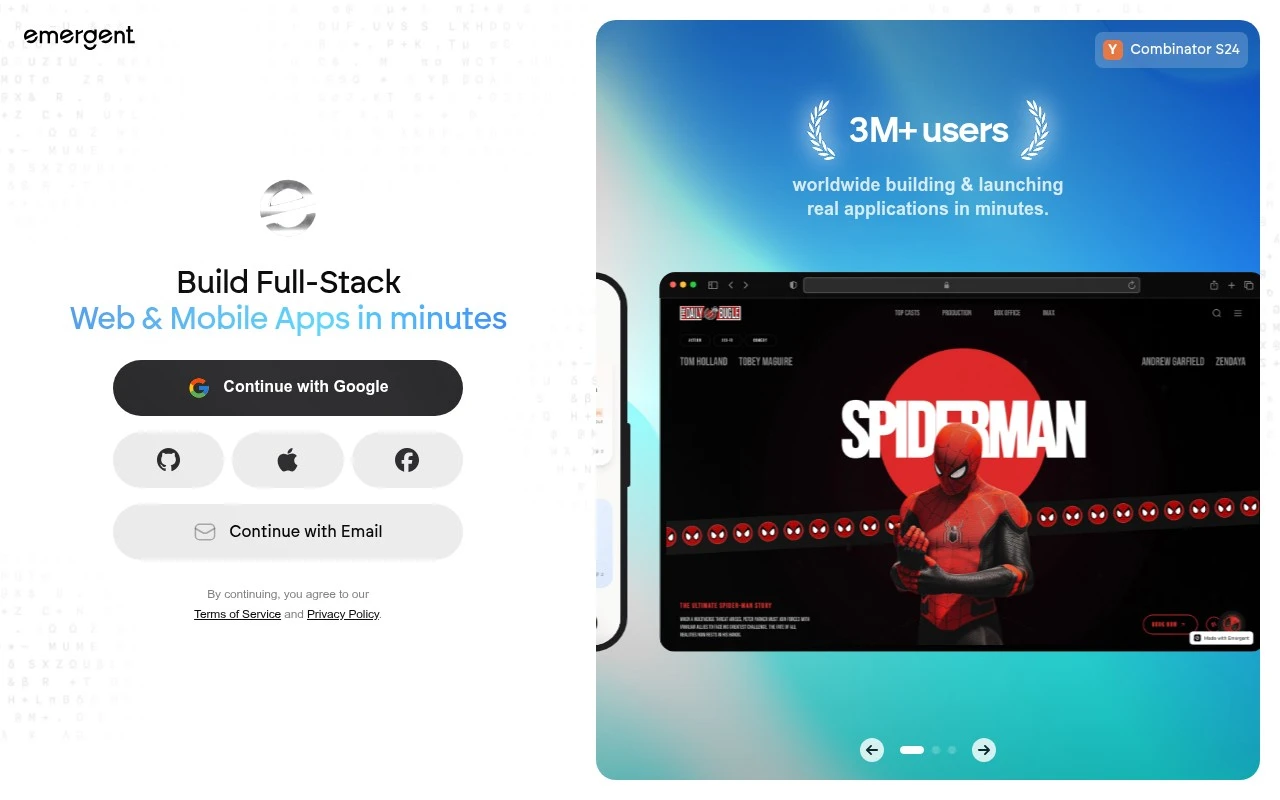
Emergent is an AI app development platform that turns natural-language prompts into working full-stack web applications. It generates frontend, backend, database logic, and deployment-ready project structure through coordinated coding agents.
Website BuildersApp / No-code Builders
FYAI Score
7.8 / 10
Based on 557 reviews
Pricing:
Freemium
Best for:
Founders and builders turning ideas into production-ready apps fast
Score Breakdown
- Ease of use8.0 / 10
- Features7.6 / 10
- Pricing7.5 / 10
- Integrations8.4 / 10
- Support7.6 / 10
 | Strengths |
-
 Best suited to non-technical founders and first-time builders because app ideas can be described in plain language instead of starting with code or wireframes.
 -
Useful for faster prototyping and launch because it can generate the design, full-stack code, and deployment flow in one conversational workflow.
-
Appealing to teams that want long-term flexibility because the resulting code can be owned, modified, connected to GitHub, or hosted independently.
 | Limitations |
-
 Less suitable for teams that want a traditional visual drag-and-drop builder because Emergent is centered on conversational app generation rather than direct manual page editing.
 -
Generated applications still need technical review for security, maintainability, and edge cases, so non-technical teams may need developer help before a serious production launch.
-
The freemium model is best for experimentation at first because larger builds, deployment needs, or heavier usage are likely to require paid capacity.
 | 8.8/ 10Based on 14,986 reviews |
WordPress
Website BuildersE-commerce Builders
Builds websites and helps create site content with AI tools
Best for: | Small business owners |
Pricing | Freemium |
 | 8.6/ 10Based on 28,442 reviews |
Wix AI
Website BuildersE-commerce Builders
Builds a website draft from answers for later customization
Best for: | Small business owners |
Pricing | Freemium |
 | 7.7/ 10Based on 35 reviews |
WeWeb
Hosting & DeploymentApp / No-code Builders
Builds web-app pages, databases, logic, and coded components
Best for: | Startup founders |
Pricing | Freemium |