Curated ToolThis tool is part of our curated AI directory. We only include tools that meet our standards for relevance, usability and real-world value.

Speechify

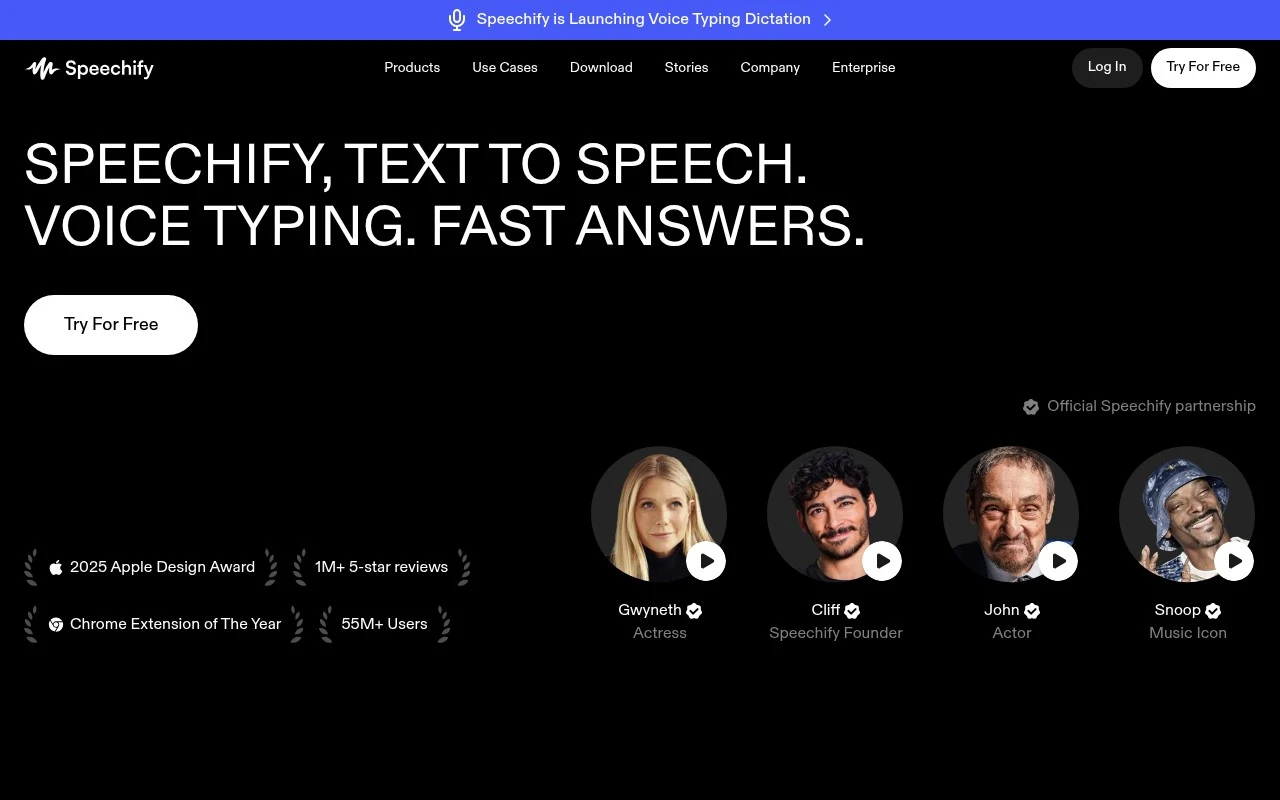
Speechify is a text-to-speech platform that converts written content such as documents, web pages, PDFs, and emails into natural-sounding audio. It is used for listening to reading materials across web, mobile, and browser extensions.
Speech to Text

FYAI Score

7.8 / 10

Based on 6,633 reviews

Pricing:

Freemium

Best for:

Students and busy readers who want to listen to documents anywhere

Score Breakdown

  • Ease of use7.8 / 10
  • Features8.3 / 10
  • Pricing7.2 / 10
  • Integrations7.7 / 10
  • Support7.7 / 10

PRODUCT PREVIEW

What this AI tool does

Speechify is a cross-device text to speech and voice AI platform for students, professionals, creators, and anyone who wants to read, write, and work with documents by voice. Speechify is best known for turning written content into natural-sounding audio, including PDFs, documents, books, web pages, emails, and scanned text. Its central idea is simple: make reading more flexible by letting people listen wherever they are, on the device that fits the moment. At its core, the platform converts text into lifelike AI voices that can be played back at adjustable speeds. This makes long articles, dense documents, study materials, and everyday reading easier to fit into commutes, workouts, screen breaks, or multitasking sessions. Optical character recognition also allows printed or scanned pages to become listenable, which extends the tool beyond clean digital text. For people with dyslexia, ADHD, low vision, eye strain, or reading fatigue, Speechify can function as an accessibility layer for written information. It is also useful for users who simply process information better by listening than by reading. In that sense, Speechify is not only a productivity tool, but also a reading support system that helps more people engage with the same material in a way that suits them. A practical strength is its continuity across web, browser extensions, iOS, Android, Mac, and Windows. A user can send a web page, upload a PDF, scan a printed page, or open a document and keep the listening workflow available across contexts. This cross-device design matters because the value of text-to-speech often comes from removing friction at the moment reading becomes inconvenient. Beyond passive listening, the product has expanded into voice-driven document work. Users can dictate with voice typing, ask contextual questions about a document, generate summaries, and turn source material into more digestible formats. These additions move the platform from simple read-aloud software toward a broader voice AI workspace for understanding and producing written content. In work and study settings, Speechify supports the flow from intake to output. Meeting notes, document-based podcasts, quizzes, and voice-created documents reflect a broader shift in how people interact with information: not only reading a file, but questioning it, summarizing it, repurposing it, and creating from it. The tool is especially relevant when users need to move through large volumes of text without staying locked to a screen. Creative and business users may also use the platform when they need spoken audio from written material. While its core identity is reading assistance, the ability to generate voiceover-style audio gives it a role in presentations, training content, drafts, social media narration, and internal communications. The emphasis is on fast conversion from text into polished speech rather than complex audio production. The product’s character is practical, accessible, and voice-first. It does not position reading and listening as separate activities, but treats them as interchangeable ways to work with information. That makes it useful both for everyday personal reading and for more structured professional workflows involving research, documentation, meetings, and content preparation. Because it spans reading, writing, summarization, dictation, and document interaction, Speechify sits between traditional text-to-speech software and a modern AI productivity assistant. Its strongest appeal is to people who want written information to become portable, audible, searchable, and easier to act on. Speechify is best understood as a voice AI layer for documents and web content, built around the idea that reading should not always require staring at text.

Use cases

Best for

Text to Speech

Speechify converts PDFs, web pages, and scanned text into lifelike AI speech so you can listen across devices.

Generate Voiceover

Generate voiceover by pasting a script and exporting it as audio using Speechify AI voices.

ANALYSIS

Strengths & limitations

Strengths
  • Strong fit for students, professionals, and accessibility-focused readers because it can read PDFs, documents, books, web pages, and scanned text aloud across devices.
  • Useful for multitasking and auditory learning because lifelike AI voices turn long reading material into listenable content.
  • Broader than basic text-to-speech because it also supports voice typing, document questions, summaries, meeting notes, podcasts, quizzes, and voice-created documents.

Limitations
  • Less suitable for teams that need a full document collaboration or knowledge management system because Speechify is primarily built around voice-based reading, writing, and document interaction.
  • The freemium model can limit heavy users because higher-volume listening, advanced voices, or productivity features may require a paid plan.
  • Less suitable for highly sensitive document workflows without an internal privacy review because using cross-device voice and document features can involve uploading or processing private content.

Evaluation

FYAI score breakdown

Our structured evaluation across five key criteria

7.8 / 10

Overall score

Based on 6,633 reviews

  • Ease of use7.8 / 10
  • Features8.3 / 10
  • Pricing7.2 / 10
  • Integrations7.7 / 10
  • Support7.7 / 10

What users say

Findings from public reviews, documentation and community sources.

  • Ease of use

    Speechify’s own page describes a cross-device workflow with “Upload any PDF,” “Add to Chrome,” “Scan & Listen,” “Text Highlighting,” and “Speed Control.” Speechify’s own page also cites “4.7 435k ratings.”

  • Features

    Speechify’s pricing page lists “1000+ high quality, natural voices,” “60+ different languages,” “AI Summaries & Chats,” and a “Voice AI Assistant.”

  • Pricing

    Speechify’s pricing page compares a Free plan with Premium at “$29 /Month” and lists a Free limitation of “10 robotic sounding voices.” Reddit includes a billing complaint reporting “Charged me $229.99 after I cancelled free trial.”

  • Integrations

    Speechify’s pricing page lists integrations with “Google Drive, Dropbox, Microsoft OneDrive” and supports web app, Chrome extension, iOS, Windows, Mac, Android, and Edge.

  • Support

    Trustpilot includes a reviewer saying “Sheila was very kind and helpful” and “promptly attending to my needs.” Reddit sentiment includes billing/refund frustration, including “No refund, even with proof.”

Who is this for?

Best for people who want text-to-speech across documents and devices, Speechify’s own page describes “Upload any PDF,” “Add to Chrome,” “Scan & Listen,” and “Text Highlighting.” Less suited to users who are highly sensitive to billing or refund issues. Reddit includes a report of being “Charged me $229.99 after I cancelled free trial” and a complaint saying “No refund, even with proof.”

PRODUCT PREVIEW

Feature highlights

Lifelike AI voices

Listen to PDFs, docs, web pages, and books in natural-sounding audio.

Read anywhere

Sync across iOS, Android, web, and desktop to keep listening on the go.

Summaries & Q&A

Get quick takeaways and ask questions about your documents by voice.

COMPARE

Discover curated alternatives worth comparing

Compare similar AI tools based on features, pricing and use cases

7.4/ 10Based on 30 reviews

Zencastr

Podcast Editing
Edits recordings like text, transcribes, and cuts social clips
Best for:
Audio & podcast creators
Pricing
Freemium

7.8/ 10Based on 31 reviews

Wudpecker

Meeting NotesSummarization
Turns recordings into notes, summaries, action items, and Q&A
Best for:
Knowledge workers
Pricing
Freemium

8.5/ 10Based on 16 reviews

Wondercraft

Short-form VideoVideo Editing
Creates editable videos and audio from text, prompts, media
Best for:
Video creators
Pricing
Freemium

Join thousands who listen instead of reread. Turn any text into audio and stay focused while you learn, work, or commute with Speechify.

FAQ

Frequently asked
questions

Everything you need to know about this AI tool,
its features, pricing, use cases, and limitations.

Who is Speechify best for?
Speechify is best for people who want to consume or create written content by voice instead of relying only on reading or typing. It fits students, professionals, accessibility-focused readers, creators, and heavy readers who need text-to-speech for PDFs, web pages, books, documents, scanned text, and related voice workflows.
Is Speechify free, and what do paid plans add?
Speechify uses a freemium model, so users can start with a free version and upgrade for broader capabilities. The main paid value is typically around higher-volume or more advanced voice features, but buyers should check Speechify’s current pricing page for the latest limits, plan differences, and included features.
How does Speechify compare with other text-to-speech tools?
Speechify stands out most for voice-based reading across many content types and platforms. It is a strong fit if the priority is listening to PDFs, documents, books, web pages, and scanned text with natural voices, while teams needing deeper transcription, document management, or full podcast production may prefer more specialized tools.
How quickly can I get started with Speechify?
Speechify’s main trade-off is that its strongest use case is voice-first reading and dictation rather than complete content operations. Pricing details, usage limits, and free versus paid feature boundaries may require checking the current site, and newer features such as meeting notes or podcast-style tools may need hands-on evaluation.
Is Speechify safe to use with private documents?
Speechify can be useful for reading and interacting with documents, but users handling sensitive files should review its current privacy, security, and compliance information before uploading confidential content. Teams should check data retention, access controls, enterprise options, and any compliance commitments that matter for their industry or internal policies.