Curated ToolThis tool is part of our curated AI directory. We only include tools that meet our standards for relevance, usability and real-world value.

Notion

AI workspace for search, Q&A, summaries, and task routing

Knowledge SearchTask & Project Management

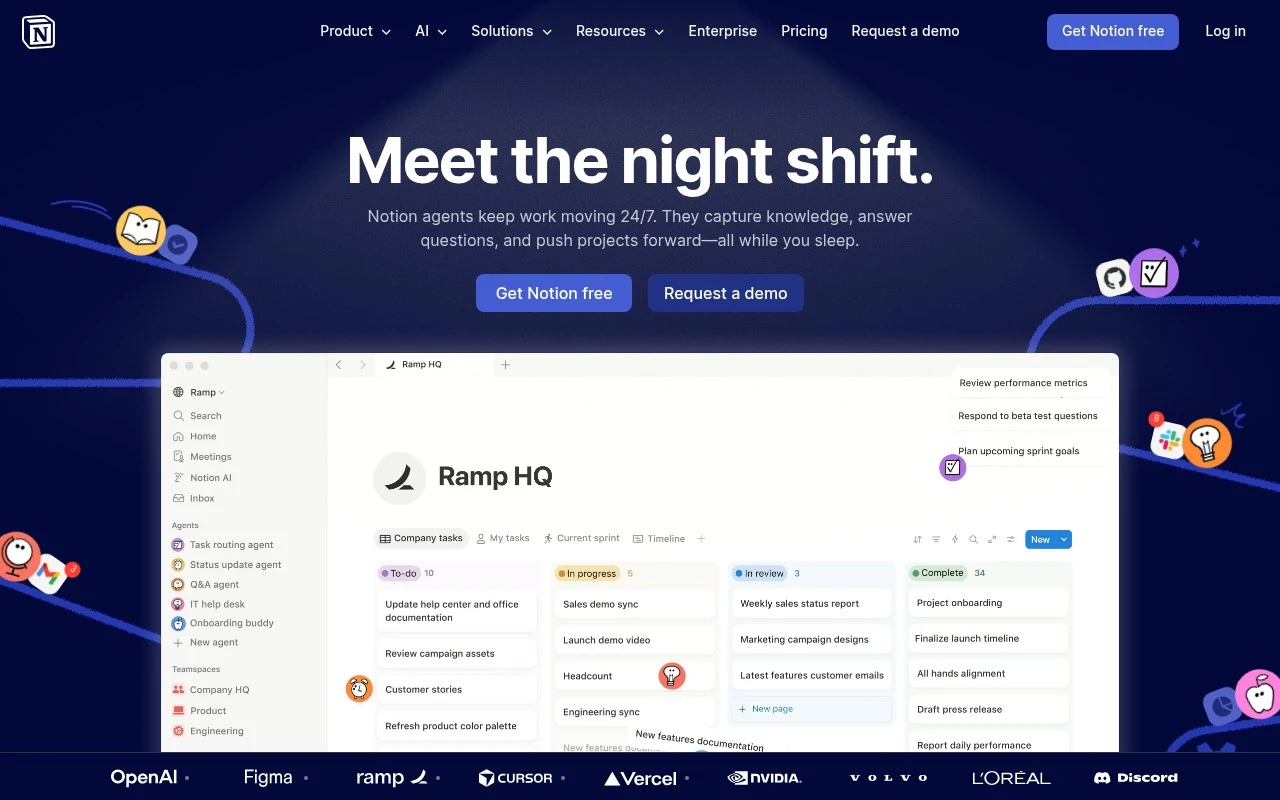
Notion is a flexible workspace that combines documents, databases, wikis, task management, and AI features. Its current positioning emphasizes an AI workspace where teams can search across work, create custom agents, automate busywork, answer questions from existing knowledge, route tasks, and generate reports. It is best understood as a shared operating layer for teams that want documentation, project work, and AI assistance in one system rather than spread across many separate tools.

FYAI Score

8.6 / 10

Based on 12.137 reviews

Pricing:

Freemium

Best for:

Product and ops teams running projects and knowledge in one workspace

Score Breakdown

  • Ease of use7.9 / 10
  • Features9.2 / 10
  • Pricing9.0 / 10
  • Integrations9.0 / 10
  • Support7.9 / 10

PRODUCT PREVIEW

What this AI tool does

Notion is a workspace app that brings notes, documents, and lightweight databases into one place. It’s commonly used to organize personal tasks, plan projects, and keep shared information accessible for teams, without needing multiple separate tools. The tool is built around flexible pages that you can structure to match how you work, whether that means a simple writing space or a more structured system for tracking work. Many people use it to create internal documentation, meeting notes, and project hubs that can be updated over time. If you’re comparing options or trying to understand how it fits into a workflow, it helps to think of it as a customizable information hub rather than a single-purpose app. It can support both individual organization and collaborative work, depending on how you set up your pages and permissions.

Use cases

Best for

Project Management

Plan projects in Notion using database boards, timelines, and linked docs that track owners, status, and milestones in one workspace.

Task Management

Manage tasks with Notion databases using assignees, due dates, reminders, and filtered views like My Tasks and Today.

Workflow Automation

Automate workflows with Notion Automations to trigger actions like assigning tasks, updating properties, and posting notifications on changes.

ANALYSIS

Strengths & limitations

Strengths
  • Combines notes, docs, wikis, databases, tasks, and AI assistance in one workspace.
  • Flexible enough to support many team workflows, from knowledge bases to product feedback and reporting.
  • AI features are positioned around practical workplace use cases such as Q&A, task routing, summarization, and custom agents.
Limitations
  • Its flexibility can require setup and governance before it works well for a team.
  • It may not replace specialized tools for highly specific functions such as advanced software development, analytics, or customer support operations.
  • AI results depend on the quality, structure, and accessibility of the underlying workspace knowledge.

Evaluation

FYAI score breakdown

Our structured evaluation across five key criteria

8.6 / 10

Overall score

Based on 12.137 reviews

  • Ease of use7.9 / 10
  • Features9.2 / 10
  • Pricing9.0 / 10
  • Integrations9.0 / 10
  • Support7.9 / 10

What users say

Findings from public reviews, documentation and community sources.

  • Ease of use

    G2 rates Notion 4.6/5 across 12,137 reviews and says users praise its “flexibility and ease of use,” especially customizing workflows and managing tasks in one platform.

  • Features

    Notion’s feature page lists docs, databases, AI Meeting Notes, and database automations.

  • Pricing

    Notion’s pricing page lists Free, Plus at €9.50 per member/month, Business at €19.50 per member/month, and Enterprise custom pricing. Notion’s pricing page states plan limits including 5MB uploads on Free and page history by tier, with advanced AI/enterprise capabilities in higher tiers or credit-based usage.

  • Integrations

    Notion’s feature page lists integrations and connectivity including Slack, Google Drive, GitHub, Asana, Salesforce and Jira data syncs, API, SCIM API, MCP, and DLP/SIEM connections.

  • Support

    Notion’s pricing page says Enterprise includes a “Customer success manager,” described as experts who help organizations get the most out of Notion.

Who is this for?

Best for teams building customizable workflows and managing tasks in one platform, G2 says users praise Notion’s “flexibility and ease of use,” especially customizing workflows and managing tasks in one platform. Less suited to teams that need advanced AI or enterprise capabilities on lower-cost plans, Notion’s pricing page says advanced AI/enterprise capabilities move into higher tiers or credit-based usage. Less suited to users who need larger uploads on Free, Notion’s pricing page lists 5MB uploads on Free.

PRODUCT PREVIEW

Feature highlights

Docs + databases

Build wikis, roadmaps, and trackers with flexible pages and views.

Notion AI answers

Ask questions across your workspace and get grounded, useful replies.

Automations & agents

Route tasks, summarize updates, and generate reports with AI workflows.

COMPARE

Discover curated alternatives worth comparing

Compare similar AI tools based on features, pricing and use cases

7.8/ 10Based on 31 reviews

Wudpecker

Meeting NotesSummarization
Turns meeting recordings into notes, summaries, and action items
Best for:
Knowledge workers
Pricing
Freemium

9.0/ 10Based on 1.589 reviews

Toggl Track

Time & Habit Tracking
Tracks time with automatic activity detection and reporting.
Best for:
Operations teams
Pricing
Freemium

8.5/ 10Based on 2.648 reviews

Todoist

Task & Project Management
Organize, schedule, and share tasks with AI-assisted planning
Best for:
Knowledge workers
Pricing
Freemium

Bring your team’s work into one place and move projects forward with clarity. Start building a workspace that keeps everyone aligned in Notion.

FAQ

Frequently asked
questions

Everything you need to know about this AI tool,
its features, pricing, use cases, and limitations.

What types of teams and workflows is Notion a good fit for?
Notion works best for teams that want a flexible workspace combining docs, tasks, and databases in one place—common fits include product, operations, marketing, and startups. It’s strong for building internal wikis, lightweight project tracking, and custom workflows. If you need strict task dependencies, advanced resource planning, or heavy automation out of the box, a dedicated project management tool may be a better match.
How does Notion’s free plan compare to paid plans, and what are the main limitations?
Notion’s free tier is usually enough for individuals and basic use, but team features and admin controls are limited. Paid plans add capabilities like more robust permissions, collaboration/admin features, and enterprise-grade controls. If you’re comparing tools for a larger team, check whether the plan you need includes the permission model and security settings you require.
When should I choose Notion over tools like Confluence, Asana, or Airtable?
Choose Notion when you want a single workspace that blends documentation and structured databases without switching tools. Confluence can be a better fit for formal knowledge management in larger orgs, while Asana is often stronger for dedicated project execution features. Airtable may win for database-first workflows, especially when you need more advanced relational data handling and views.
How quickly can a team get set up in Notion, and what onboarding effort should I expect?
Notion can feel cluttered if your workspace grows without clear structure, and complex setups can slow down performance with very large databases. Offline access is limited, which matters for travel or low-connectivity environments. It’s also easy for teams to create inconsistent processes unless you enforce templates and governance.
What should I know about Notion’s data privacy, security, and compliance before using it for company work?
Notion is a cloud service, so you’ll want to review where data is stored, available encryption/security controls, and whether the plan supports the admin features you need (e.g., SSO and audit capabilities). For regulated data, verify the specific compliance commitments and contractual terms offered for your plan level. If you handle sensitive customer data, compare Notion’s controls against tools with more mature enterprise governance and retention options.