Curated ToolThis tool is part of our curated AI directory. We only include tools that meet our standards for relevance, usability and real-world value.

Canva

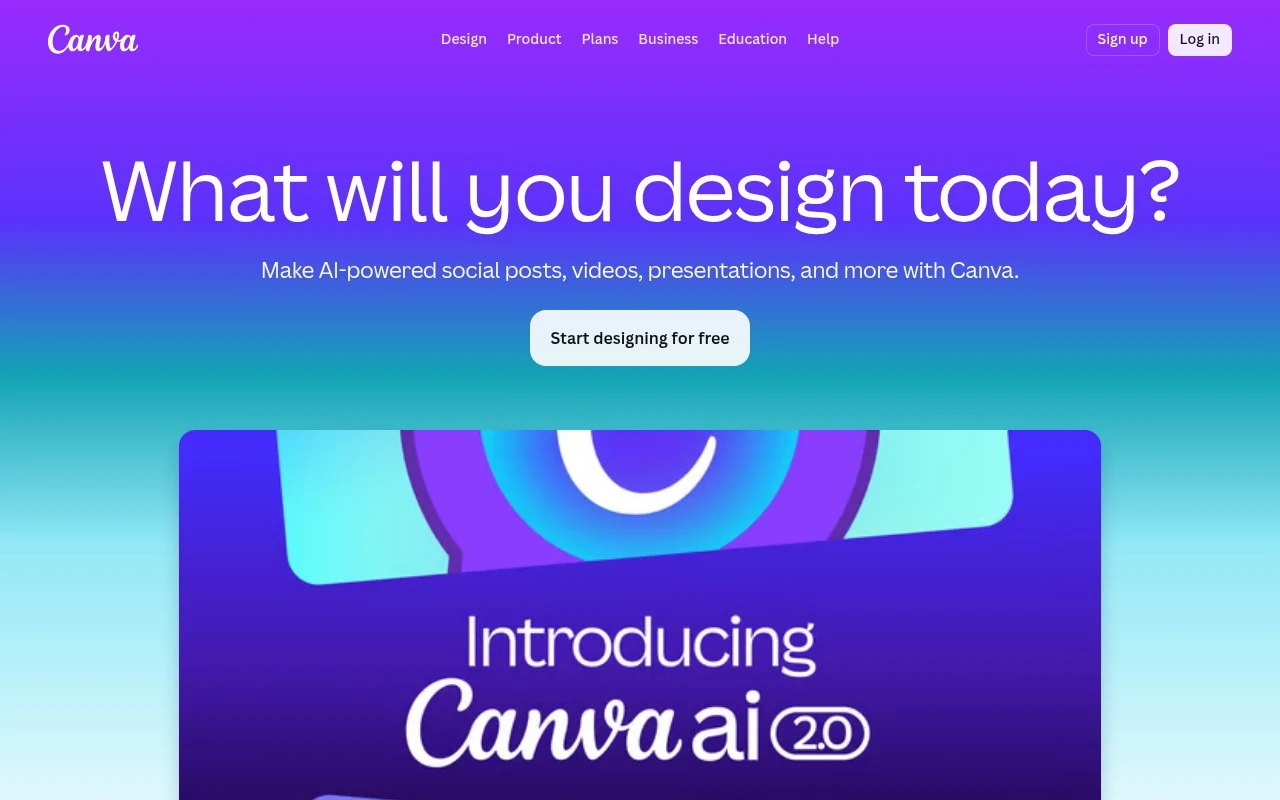
Canva is a web-based design platform for creating presentations, social media graphics, posters, videos, and other visual content using templates and drag-and-drop editing.
Marketing

FYAI Score

8.9 / 10

Based on 13,367 reviews

Pricing:

Freemium

Best for:

Non-designers creating polished marketing and social content fast

Score Breakdown

  • Ease of use9.4 / 10
  • Features9.1 / 10
  • Pricing8.9 / 10
  • Integrations9.2 / 10
  • Support7.7 / 10

PRODUCT PREVIEW

What this AI tool does

Canva is a visual design platform for individuals, teams, educators, creators, and businesses that need polished graphics, documents, presentations, and brand materials without advanced design skills. Canva is best known for combining professional design templates with a simple drag-and-drop editor, so users can start from a finished-looking layout and adapt it to their own message, brand, or campaign. At the centre of the product is a large template library that turns common design needs into ready-made starting points. A user can begin with a presentation, Instagram post, flyer, resume, website, logo, poster, document, invitation, or business card, then change the text, images, colours, and layout inside the platform. The experience is designed to reduce the blank-page problem that often slows down non-designers. For everyday creators, the value is speed and accessibility. Canva helps people create social graphics, create thumbnails, build event materials, prepare school projects, or design personal documents from a browser or mobile device. The editing model feels closer to arranging blocks on a page than using a traditional professional design suite, which makes it approachable for users who only design occasionally. Marketing and business users often use the platform as a lightweight production hub. Canva for marketing teams supports recurring work such as campaign visuals, sales decks, internal documents, ads, and branded social posts, especially when consistency matters but a dedicated designer is not always available. Brand kits, shared templates, and reusable assets help teams create brand assets that stay closer to approved colours, fonts, logos, and messaging. AI-assisted creation has expanded the role of the tool beyond template customisation. Features for writing, image generation, layout suggestions, and presentation generation can help users move from an idea to a draft more quickly. These capabilities do not replace creative judgement, but they make the platform more useful for brainstorming, repurposing content, and accelerating routine design work. Design templates are still the clearest expression of what makes the platform practical. Instead of asking users to understand spacing, hierarchy, typography, and composition from scratch, the tool packages those design decisions into editable formats. This is especially useful when someone needs to create a logo concept, a slide deck, a promotional flyer, or a set of posts that look coherent without starting in a blank canvas. Collaboration is another important part of the story. Teams can comment, share files, duplicate designs, resize creative work for different channels, and keep commonly used materials in one place. That makes the platform useful not only for making a single graphic, but also for managing a steady flow of visual communication across departments and channels. Canva is strongest when the goal is fast, attractive, practical design for common communication formats rather than highly specialised illustration, advanced photo retouching, or complex publishing workflows. Its character is deliberately accessible: it gives non-specialists enough structure to make good design choices, while giving teams enough flexibility to produce consistent visual content at scale.

Use cases

Best for

Design Templates

Browse Canva templates by format and customize layouts, fonts, and colors with drag and drop editing.

Create Logo

Start from a logo template and edit icons, typography, and brand colors in Canva to export a logo file.

Create Thumbnails

Use thumbnail templates to place images, add bold text, and resize for platforms like YouTube before exporting.

ANALYSIS

Strengths & limitations

Strengths
  • Broad template coverage across presentations, social posts, flyers, resumes, websites, logos, posters, documents, invitations, and business cards makes it useful for people who need many types of visual assets from one place.
  • Drag-and-drop customization is well suited to non-designers because users can adapt professionally designed layouts without advanced design software skills.
  • The freemium model works well for individuals, students, creators, and small teams that want to start with ready-made templates before paying for premium options.

Limitations
  • Less suitable for teams that need highly bespoke visual identities because template-based designs can require extra customization to avoid looking generic or widely reused.
  • Premium templates, assets, and advanced workflow features can sit behind paid access, so costs can increase for teams that rely heavily on Pro-level design resources.
  • Less suitable for buyers seeking an AI-first design generator because the templates experience is centered on browsing and customizing prebuilt layouts rather than generating designs from scratch.

Evaluation

FYAI score breakdown

Our structured evaluation across five key criteria

8.9 / 10

Overall score

Based on 13,367 reviews

  • Ease of use9.4 / 10
  • Features9.1 / 10
  • Pricing8.9 / 10
  • Integrations9.2 / 10
  • Support7.7 / 10

What users say

Findings from public reviews, documentation and community sources.

  • Ease of use

    Capterra lists Canva at 4.7/5 from 13,367 reviews, and the supplied Capterra excerpt calls Canva "user-friendly" and "efficient." Trustpilot’s excerpt describes Canva as "easy to use."

  • Features

    The Capterra excerpt cites Canva as offering "a wide range of templates and tools" for template-based image design. Reddit users describe Canva as strong for "social media content creation" but "not good for logo design."

  • Pricing

    Canva’s pricing page lists a "Free" plan with "No cost" plus paid "Pro" options. Canva’s Pro page cites premium templates and access to "over 100 million premium photos, graphics, videos, fonts, audio tracks, and more."

  • Integrations

    Canva states that its "Connect APIs and Apps SDK" let users "build custom integrations." Canva’s developer documentation says the Connect APIs integrate Canva capabilities into web apps and platforms.

  • Support

    Capterra lists Canva at 4.7/5 from 13,367 reviews. The supplied Capterra excerpt calls Canva "user-friendly" and cites templates/tools.

Who is this for?

Best for social media content creators and teams that want template-based image design, the Capterra excerpt cites "a wide range of templates and tools," and Reddit users describe Canva as strong for "social media content creation." The "Free" plan with "No cost" also makes Canva usable before choosing paid "Pro" options. Less suited to logo-design workflows, Reddit users describe Canva as "not good for logo design," so users focused on logo work may need another design workflow.

PRODUCT PREVIEW

Feature highlights

Template library

Browse thousands of templates for posts, decks, flyers, and more.

Drag-and-drop editor

Customize layouts, text, and images without design experience.

Brand Kit & styles

Apply logos, colors, and fonts to keep every design on-brand.

COMPARE

Discover curated alternatives worth comparing

Compare similar AI tools based on features, pricing and use cases

7.2/ 10Based on 2,027 reviews

Pixa

AI Image Generator
Edits and creates pixel-art images in a visual canvas editor
Best for:
Designers
Pricing
Freemium

8.2/ 10Based on 193 reviews

Uizard

UI/UX Design
Converts prompts, screenshots, and sketches into UI prototypes
Best for:
Product teams
Pricing
Freemium

8.2/ 10Based on 56,265 reviews

Topaz Labs

Image UpscalerPhoto Editing
Enhances photos and videos with upscaling, denoising, sharpening
Best for:
Designers
Pricing
Paid only

Join millions creating standout marketing designs in minutes. Start with Canva today and turn ideas into polished visuals you’re proud to share.

FAQ

Frequently asked
questions

Everything you need to know about this AI tool,
its features, pricing, use cases, and limitations.

Who is Canva best for?
Canva is best for people and teams that need polished visual materials quickly without starting from a blank canvas. It fits non-designers, creators, students, educators, small businesses, marketers, job seekers, and teams creating social posts, presentations, flyers, resumes, invitations, business cards, posters, logos, and similar design assets.
Can I use Canva for free, or do I need a paid plan?
Canva uses a freemium model, with many templates available for free and some content marked for paid access. The free option can work for basic template editing, while paid access is more relevant if you need premium templates, brand-focused assets, or broader design resources.
How should I compare Canva with other design template tools?
Canva is strongest when you want a broad template library and an easy drag-and-drop editor for common design formats. When comparing alternatives, look at template variety, brand asset controls, export needs, collaboration features, pricing model, and whether the tool is better suited to quick content creation or more advanced design workflows.
How quickly can a new user get started with Canva?
Canva’s main trade-off is that template-based designs can look similar when many users choose the same layouts. Some visible templates may require paid access, and users with advanced design, export, collaboration, or AI-specific requirements should check Canva’s current product pages before making a decision.
What privacy or compliance questions should teams ask before using Canva?
Teams should review Canva’s current privacy, security, and compliance documentation before uploading brand assets, customer materials, or internal documents. Important checks include account access controls, data retention, file sharing settings, administrative permissions, and whether the platform’s policies match the organization’s legal and procurement requirements.