Curated ToolThis tool is part of our curated AI directory. We only include tools that meet our standards for relevance, usability and real-world value.

Stability AI

Stability AI is the company behind Stable Diffusion, a generative AI model family for creating and editing images from text prompts, including workflows such as image outpainting.
AI Image GeneratorImage Upscaler

FYAI Score

8.0 / 10

Based on 30 reviews

Pricing:

Paid only

Best for:

Developers and creative teams building generative image workflows

Score Breakdown

  • Ease of use7.4 / 10
  • Features9.0 / 10
  • Pricing7.7 / 10
  • Integrations8.6 / 10
  • Support7.2 / 10

PRODUCT PREVIEW

What this AI tool does

Stability AI is an image generation and editing platform built around Stable Image, a family of models and services for creating, transforming, and refining visual content with generative AI. Stability AI is for developers, creative teams, product builders, and enterprises that need reliable access to advanced image models through APIs, licensed deployments, cloud partners, or a browser-based workspace. Stability AI is best known for Stable Diffusion, and its current Stable Image offering extends that foundation into production-ready workflows for generating and editing images. At the center of the platform are Stable Diffusion 3.5, Stable Diffusion XL, and SDXL Turbo, each serving a different balance of quality, control, and speed. Users can generate images from text prompts, produce variations from existing visuals, and explore multiple creative directions without starting from scratch each time. The result is a toolset that can support concept art, marketing visuals, product mockups, editorial imagery, and rapid experimentation. For developers and technical teams, Stability AI offers a practical route into generative image infrastructure without requiring every model to be built in-house. API access makes it possible to add image generation, image editing, image outpainting, and upscale image workflows directly into apps, content platforms, or internal creative systems. Self-hosted licensing and cloud partner deployment also make the platform relevant for organizations with stricter needs around control, compliance, latency, or customization. Creative teams can use Stable Assistant as a more accessible entry point into the same broader ecosystem. Instead of working only through code, users can prompt, iterate, and refine images in a web-based environment designed for visual exploration. This makes the platform useful not only for AI engineers, but also for designers, marketers, art directors, and content producers who want to generate images quickly while keeping room for human judgment. Editing is a major part of the story, because the platform is not limited to making a new picture from a prompt. Workflows such as remove background, image background replacement, image object removal, inpainting, outpainting, and upscaling help users revise existing assets rather than discard them. That matters for commercial work, where the task is often not to create a fantasy image, but to adjust a product shot, extend a scene, clean up a visual, or prepare an asset for a specific format. Deployment flexibility is one of the reasons Stability AI occupies a distinctive place in the AI image market. Some users want a hosted creative tool, while others want model access inside their own product, pipeline, or cloud environment. By supporting API use, licensing, partner clouds, and a creative interface, the platform can serve both experimentation and operational use. Compared with many Stability AI alternatives, the platform is closely associated with open and adaptable model ecosystems as well as high-end generative image quality. A Stability AI review should therefore look beyond prompt results alone and consider model choice, integration options, editing depth, licensing needs, and the total workflow from generation to delivery. Stability AI pricing also depends on the access path and usage model, so the right fit can vary between an individual creator, a startup adding AI features, and an enterprise deploying image generation at scale. The overall character of the tool is infrastructure-minded but creator-facing. It gives users ways to generate polished visuals, revise existing images, and embed generative media capabilities into larger systems. For teams that see AI imagery as part of a product, pipeline, or creative operation rather than a one-off novelty, Stability AI is a central platform to consider.

Use cases

Best for

Generate Images

Generate images from text prompts using Stability AI Stable Diffusion models via API, Stable Assistant, or self-hosted deployment.

Remove Background

Remove a background by editing an image with Stable Assistant or the API using inpainting and masking to replace the backdrop.

Upscale Image

Upscale image resolution using Stability AI upscaling services via API or Stable Assistant to increase size while preserving detail.

ANALYSIS

Strengths & limitations

Strengths
  • Best suited to teams that need both generation and editing workflows because it supports text-to-image creation, image modification, upscaling, and image variation within the same model platform.
  • Strong fit for developers and product teams because it offers API access, self-hosted licensing, cloud partner deployment, and a web creative interface for different integration needs.
  • Useful for organizations standardizing on Stable Diffusion-based image infrastructure because it provides access to multiple Stable Image model families across quality and speed-oriented use cases.

Limitations
  • Less suitable for casual users looking for a free image generator because Stability AI’s Stable Image offering is paid-only.
  • Less suitable for teams that want a simple no-code design app only because much of its value comes from API access, deployment options, and model integration workflows.
  • Less suitable as a complete creative operations suite because it is centered on image generation and editing models rather than broader design collaboration, asset management, or publishing workflows.

Evaluation

FYAI score breakdown

Our structured evaluation across five key criteria

8.0 / 10

Overall score

Based on 30 reviews

  • Ease of use7.4 / 10
  • Features9.0 / 10
  • Pricing7.7 / 10
  • Integrations8.6 / 10
  • Support7.2 / 10

What users say

Findings from public reviews, documentation and community sources.

  • Ease of use

    Stability AI's Stable Image page says users can “start creating now with our web-based applications” and describes models that “use shorter prompts.” The same page also presents API, self-hosted, and licensing workflows.

  • Features

    Stability AI's Stable Image page lists Stable Diffusion 3.5 Large/Turbo/Medium with “versatile styles” and “market-leading prompt adherence.” The same page lists image editing and control options including inpaint, outpaint, remove background, and upscale.

  • Pricing

    Stability AI's pricing page states “API usage is based on credits” and “1 credit = $0.01.” The pricing page also references subscriptions and custom licensing.

  • Integrations

    Stability AI's Stable Image page says users can “deploy Stable Diffusion 3.5 on your own infrastructure,” “integrate it via our API,” use “Cloud Partners,” or access it through “web-based applications.”

  • Support

    G2 includes a Stability AI review snippet saying, “There isn't much official support,” and “community discussions and forums are helpful when I get stuck.”

Who is this for?

Best for creators and developers who want multiple deployment paths, Stability AI says users can deploy Stable Diffusion 3.5 on their own infrastructure, integrate it via API, use Cloud Partners, or use web-based applications. Less suited to users who want a simple single subscription workflow, Stability AI's pricing page uses credits for API usage at “1 credit = $0.01” and also references subscriptions and custom licensing. Less suited to users who need extensive official support, a G2 snippet says, “There isn't much official support,” while community discussions and forums are helpful.

PRODUCT PREVIEW

Feature highlights

Text-to-Image

Generate high-quality images with Stable Diffusion 3.5 and SDXL.

Edit & Variations

Inpaint, outpaint, and create variations to refine concepts fast.

API & Self-Hosting

Deploy via API, partners, or license for self-hosted control.

COMPARE

Discover curated alternatives worth comparing

Compare similar AI tools based on features, pricing and use cases

7.2/ 10Based on 2,027 reviews

Pixa

AI Image Generator
Edits and creates pixel-art images in a visual canvas editor
Best for:
Designers
Pricing
Freemium

8.2/ 10Based on 193 reviews

Uizard

UI/UX Design
Converts prompts, screenshots, and sketches into UI prototypes
Best for:
Product teams
Pricing
Freemium

8.2/ 10Based on 56,265 reviews

Topaz Labs

Image UpscalerPhoto Editing
Enhances photos and videos with upscaling, denoising, sharpening
Best for:
Designers
Pricing
Paid only

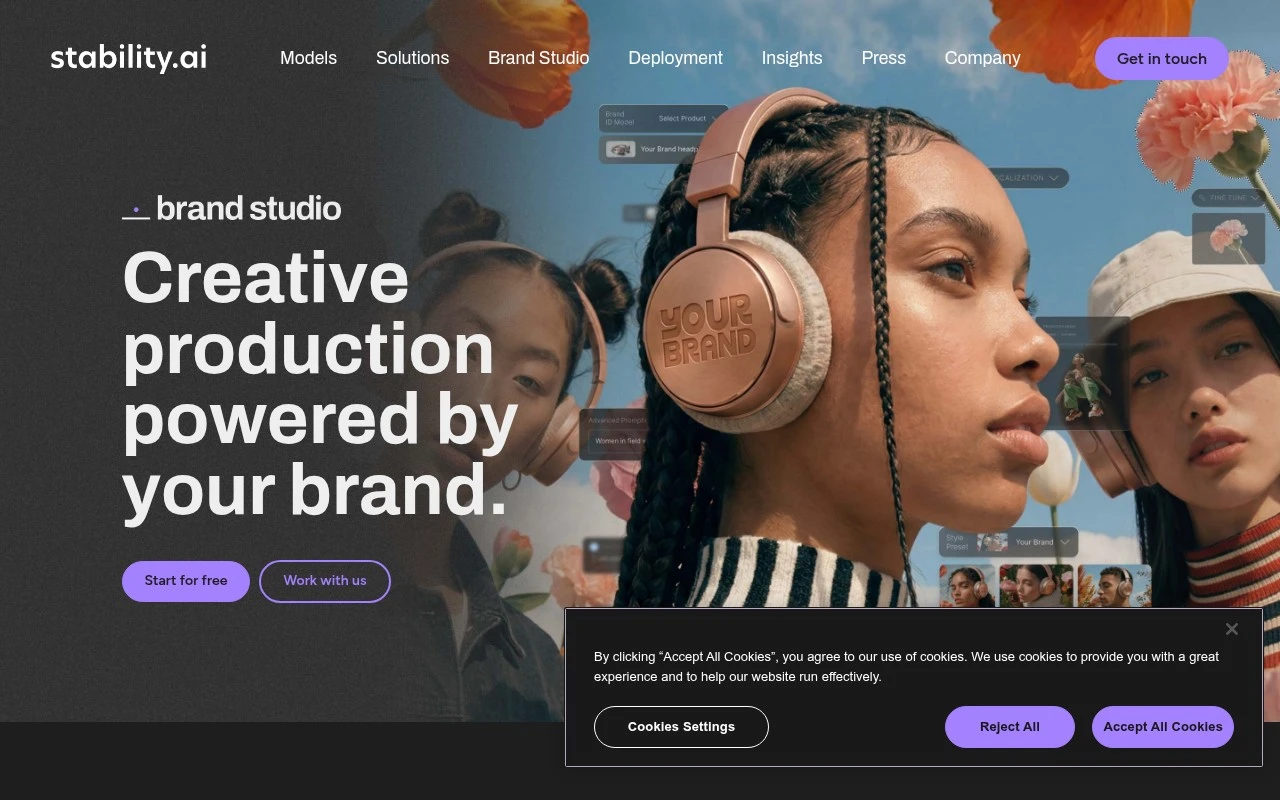
Create standout, on-brand visuals in minutes. See why creative teams choose Stability AI to move from concept to campaign-ready images faster.

FAQ

Frequently asked
questions

Everything you need to know about this AI tool,
its features, pricing, use cases, and limitations.

Who is Stability AI best suited for?
Stability AI is best suited for developers, creative teams, product teams, and organizations that need image generation or image editing models for professional workflows. It fits use cases such as generating images from prompts, building image tools into applications, outpainting, inpainting, background replacement, upscaling, and deploying Stable Diffusion-based capabilities.
Is Stability AI free or paid?
Stability AI is a paid image generation and editing platform. Pricing can vary by access method, such as API usage, cloud partner access, web-based tools, or self-hosted licensing, so teams should review the current commercial terms before planning production usage or estimating costs at scale.
How does Stability AI compare with other image generation tools?
Stability AI is stronger for teams that want model access, API integration, editing features, or deployment flexibility rather than only a simple prompt-to-image interface. Similar tools may be easier for casual creators, but Stability AI is often more relevant when product integration, image transformation, or infrastructure control matters.
How quickly can a team get started with Stability AI?
The main trade-off with Stability AI is that capabilities and implementation details depend on the model and access path selected. Teams may need to compare Large, Turbo, Medium, API, cloud, and self-hosted options separately, and should validate pricing, rate limits, quality, speed, and licensing before committing to a workflow.
What should buyers check about Stability AI privacy and compliance?
Buyers should review Stability AI’s current data handling, privacy, licensing, and compliance terms before using it with sensitive or regulated content. Important checks include how prompts and images are processed, whether data may be retained, what rights apply to generated outputs, and whether the chosen deployment method meets internal security requirements.