Curated ToolThis tool is part of our curated AI directory. We only include tools that meet our standards for relevance, usability and real-world value.

Sketch

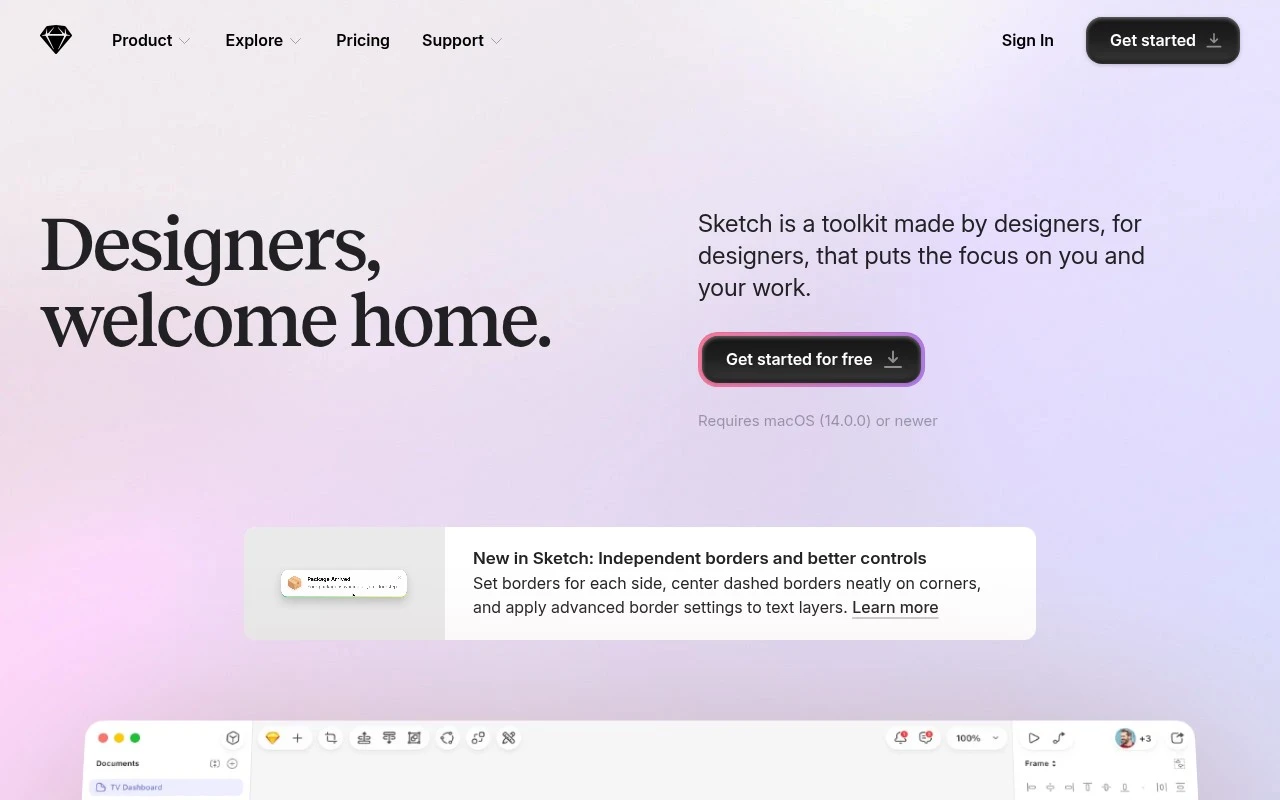
Sketch is a digital design platform for creating user interfaces, icons, and interactive prototypes. It provides vector editing, reusable components, shared libraries, collaboration, and developer handoff tools.
UI/UX DesignVector & Illustration

FYAI Score

8.2 / 10

Based on 6 reviews + FYAI product analysis

Pricing:

Paid

Best for:

Product design teams building macOS-first UI and prototypes

Score Breakdown

  • Ease of use8.4 / 10
  • Features7.9 / 10
  • Pricing8.4 / 10
  • Integrations8.0 / 10
  • Support8.3 / 10

PRODUCT PREVIEW

What this AI tool does

Sketch is a native macOS design and prototyping app for digital product designers who need to create interfaces, mockups, prototypes, design systems, and developer-ready specifications in one focused workflow. Sketch is best known for combining precise vector graphic design with a product design environment built around screens, symbols, reusable components, and collaborative workspaces. For digital product teams, the tool sits at the centre of the interface design process rather than at the edge of it. Designers can create mockups for websites, mobile apps, dashboards, and software products, then refine those early concepts into structured, production-oriented designs. Its workflow is especially familiar to teams that think in terms of artboards, responsive layouts, shared libraries, and repeatable UI patterns. A native macOS foundation gives the app much of its character. Instead of feeling like a general browser-based canvas, it behaves like a dedicated Mac design tool with fast vector editing, familiar system conventions, and a workspace tuned for detailed screen design. That focus makes it appealing to designers who want a polished desktop environment for drawing icons, building layouts, aligning interface states, and managing visual precision. Reusable components are central to how the platform scales from individual files to full design systems. Symbols, styles, variables, and shared libraries help teams keep buttons, typography, colours, icons, and interface patterns consistent across many screens. When a product evolves, these shared elements reduce repetitive editing and help designers maintain a single source of truth for the visual language of a product. Prototyping in Sketch connects static screen design with user journeys. Designers can link artboards, define flows, preview interactions, and communicate how an app or website should behave before engineering work begins. This makes app prototyping a natural continuation of the design process, not a separate activity that requires moving concepts into another environment too early. Collaboration happens through shared workspaces, browser-based feedback, and version-aware design files. Stakeholders can review work, leave comments, and inspect designs without needing the full Mac app, while designers continue to work in the native editor. This balance is important because it lets specialists keep the speed and control of a desktop design tool while opening the process to product managers, developers, clients, and other reviewers. Developer handoff is another part of the product story. Designs can be shared with the people who need measurements, colours, assets, and implementation details, helping reduce ambiguity between design intent and production work. The platform is not just about making screens look finished, but about making those screens understandable to the wider team that has to build and maintain them. For designers who work on digital products every day, Sketch offers a structured alternative to scattered workflows made from separate drawing tools, prototyping tools, file-sharing folders, and handoff documents. Its strengths are strongest when a team values reusable UI patterns, clean interface documentation, and a design system that can grow with a product. Sketch for designers is ultimately about focus, giving interface specialists a dedicated environment for turning product ideas into coherent, shareable design work. In practice, the tool is most useful for teams that want design, prototyping, feedback, and handoff to feel connected. It supports the early creative stage, where ideas are still loose, and the later operational stage, where consistency, documentation, and collaboration matter more. Sketch remains a defining product design app because it treats interface design as a complete workflow, from first mockup to shared system.

Use cases

Best for

Create Mockups

Create UI mockups by arranging artboards, grids, and reusable components in Sketch, then exporting screens for review.

App Prototyping

Build clickable app prototypes by linking layers between artboards and setting transitions to preview user flows.

Vector Graphic Design

Design vector graphics using pen and shape tools, boolean operations, and editable paths for icons and illustrations.

ANALYSIS

Strengths & limitations

Strengths
  • Best suited to macOS-based UI and product designers because it combines vector editing, layout, prototyping, and design system work in one native design workflow.
  • Useful for design teams that need consistency because reusable components and shared workspaces help standardize interface patterns across projects.
  • Helpful for developer handoff because developers can inspect design files, review specifications, and export assets from the same workflow.

Limitations
  • Less suitable for Windows or Linux design teams because the core design app is native to macOS.
  • Less suitable for buyers seeking AI-generated design because Sketch is focused on manual UI and product design workflows rather than AI-assisted production.
  • Less suitable for very small teams with minimal design volume because the paid model adds a recurring software cost for a specialized design workflow.

Evaluation

FYAI score breakdown

Our structured evaluation across five key criteria

8.2 / 10

Overall score

Based on 6 reviews + FYAI product analysis

  • Ease of use8.4 / 10
  • Features7.9 / 10
  • Pricing8.4 / 10
  • Integrations8.0 / 10
  • Support8.3 / 10

What users say

Findings from public reviews, documentation and community sources.

  • Ease of use

    Sketch's website emphasizes onboarding resources including "100s of free templates, Frame presets and component Libraries," and workflow aids including "multi-layer renaming, a Canvas Minimap and Command Bar." Sketch's website includes user quotes describing the product as "easy" and referencing the "simplicity of Sketch’s UI."

  • Features

    Sketch's website lists design workflow capabilities including vector editing, stack layouts, nestable frames, and libraries. Sketch's website also lists collaboration and handoff capabilities including real-time co-editing, prototyping, comments, version history, and developer handoff.

  • Pricing

    Sketch's pricing page lists a 30-day free trial, Standard at $12/editor/month billed yearly, Professional at $24, Enterprise at $44, and a $120 Mac-only perpetual license option. Sketch's pricing page also references unlimited free viewers, education access, and nonprofit discounts, while no general free plan is listed.

  • Integrations

    Sketch's plugins page says users can "do even more with Sketch with third-party plugins and integrations." Sketch documentation states integrations connect a Workspace with third-party tools.

  • Support

    Sketch's pricing page states that Enterprise includes "Dedicated support." Sketch's plan comparison lists "Customer success manager" and "Priority support" for larger deployments, and the pricing page includes subscription FAQ content.

Who is this for?

Best for UI and image-design teams that need templates, component Libraries, real-time co-editing, prototyping, comments, version history, and developer handoff in one workflow. Less suited to users who need a general free plan, because Sketch's pricing page lists a 30-day free trial and paid options starting with Standard at $12/editor/month billed yearly but does not list a general free plan.

PRODUCT PREVIEW

Feature highlights

Vector UI design

Precise vector tools, grids, and layouts for pixel-perfect screens.

Symbols & Libraries

Reusable components and shared libraries to keep designs consistent.

Developer handoff

Share specs, assets, and inspectable designs for smoother builds.

COMPARE

Discover curated alternatives worth comparing

Compare similar AI tools based on features, pricing and use cases

7.2/ 10Based on 2,027 reviews

Pixa

AI Image Generator
Edits and creates pixel-art images in a visual canvas editor
Best for:
Designers
Pricing
Freemium

8.2/ 10Based on 193 reviews

Uizard

UI/UX Design
Converts prompts, screenshots, and sketches into UI prototypes
Best for:
Product teams
Pricing
Freemium

8.2/ 10Based on 56,265 reviews

Topaz Labs

Image UpscalerPhoto Editing
Enhances photos and videos with upscaling, denoising, sharpening
Best for:
Designers
Pricing
Paid only

Join product teams designing faster with clarity and consistency. Create polished UI flows and ship confident handoffs with Sketch today.

FAQ

Frequently asked
questions

Everything you need to know about this AI tool,
its features, pricing, use cases, and limitations.

Who is Sketch best suited for?
Sketch is best suited for UI/UX designers, product designers, app designers, design teams, and developers working on interface design and handoff. It fits teams that need vector-based mockups, interactive prototypes, shared component libraries, feedback workflows, and inspection tools rather than AI-generated design output.
Is Sketch free or paid?
Sketch is a paid design tool, so buyers should expect a commercial pricing model rather than a fully free product. Teams evaluating Sketch should review its current pricing on sketch.com, especially if they need collaboration workspaces, shared libraries, prototyping, and developer handoff across multiple users.
How does Sketch compare with other design and prototyping tools?
Sketch competes with other UI design and prototyping platforms, but its main distinction is its native macOS design app combined with collaboration, libraries, prototyping, and handoff features. The better choice depends on operating system needs, team workflow, budget, and whether the team wants manual design control rather than AI-first generation.
How quickly can a design team get started with Sketch?
The main limitation of Sketch is that it requires macOS Sonoma 14.0 or newer, so it is not a cross-platform desktop tool for Windows or Linux users. It is also focused on UI and product design, not general website building, code generation, or AI-driven design automation.
What should teams consider about privacy and compliance before using Sketch?
Teams should review Sketch’s current privacy, security, and compliance documentation before using it for sensitive product work. Practical checks include how design files, comments, shared workspaces, exported assets, and developer handoff access are managed, especially when external collaborators or regulated customer data may be involved.