Curated ToolThis tool is part of our curated AI directory. We only include tools that meet our standards for relevance, usability and real-world value.

Recraft

Recraft is an AI vector graphic design tool for creating and editing SVG illustrations, icons, logos, and raster images from text prompts, with style controls for consistent brand visuals.
AI Image GeneratorLogo & Brand Assets

FYAI Score

8.1 / 10

Based on 455 reviews

Pricing:

Freemium

Best for:

Designers and creative teams producing consistent, production-ready visuals

Score Breakdown

  • Ease of use7.8 / 10
  • Features8.6 / 10
  • Pricing7.5 / 10
  • Integrations8.8 / 10
  • Support7.8 / 10

PRODUCT PREVIEW

What this AI tool does

Recraft is an AI image generation and design platform for creating polished visual assets, with a strong emphasis on vector graphic design, brand-ready imagery, mockups, and editable outputs rather than one-off raw AI pictures. Recraft is built for designers, creative teams, online sellers, marketers, and product makers who need consistent visuals that can move from prompt to professional use with minimal cleanup. For visual creators, the main appeal is control. The platform can generate images from prompts, but its positioning is closer to a design workspace than a novelty image generator. Instead of treating the result as a fixed bitmap, it helps users produce assets that can be refined, adapted, and reused across campaigns, storefronts, presentations, and brand systems. Vector output is one of the clearest ways the tool separates itself from many general AI art products. Recraft is best at turning generative AI into controlled, editable design assets, especially where crisp shapes, scalable graphics, icons, illustrations, and layout-friendly elements matter. That makes it relevant for workflows where a designer needs more than an attractive image, such as packaging graphics, app visuals, print materials, or identity components. Custom style creation gives teams a way to move beyond generic prompt aesthetics. By uploading reference images, users can create a visual direction that the platform applies across future generations. This is especially useful for people trying to create brand assets with a consistent look, since the goal is not just variety, but recognizable continuity across many pieces of content. Photorealistic generation broadens the platform beyond illustration and graphic work. Users can generate images for product scenes, campaign concepts, social content, and visual experiments without starting from stock photography or a blank canvas. The value is strongest when the output needs to feel finished enough for review, iteration, or direct design use, rather than merely serving as inspiration. Mockup creation is another practical layer in the workflow. Sellers and brand teams can create mockups that show artwork, products, or visual concepts in context, which helps bridge the gap between asset creation and presentation. For e-commerce, print-on-demand, packaging, and marketing, this can reduce the number of separate tools needed to move from idea to usable visual. Teams evaluating Recraft pricing will usually be comparing it against both design software and AI image generators. The platform makes the most sense when consistent, editable, professional-looking output is more important than simply producing a large number of images. In that context, the cost is tied less to casual experimentation and more to the time saved in asset production, style exploration, and design iteration. Compared with many Recraft alternatives, the platform’s identity is more design-centric than entertainment-centric. A typical Recraft review should focus on how well it supports real creative workflows, including editable vectors, controlled styles, polished image quality, mockups, and API access for teams that want to integrate generation into their own products or production systems. In practice, the tool sits between an AI image model and a professional design environment. It is not only for people who want to generate images quickly, but for users who need those images to become usable parts of a broader visual system. That makes Recraft a strong fit for creators who care about consistency, scalability, and production-ready assets, especially in areas where vector graphic design and brand presentation are central.

Use cases

Best for

Vector Graphic Design

Generate editable SVG vector illustrations from prompts in Recraft, then refine colors, shapes, and layout for brand assets.

Generate Images

Use prompt based generation to create photorealistic or stylized images, and apply custom styles trained from uploaded references.

Create Mockups

Create product and packaging mockups by placing generated designs into realistic scenes and exporting design ready visuals.

ANALYSIS

Strengths & limitations

Strengths
  • Strong fit for professional visual asset creation because it combines AI image generation with design-ready outputs such as polished images, vectors, and mockups.
  • Useful for designers who need editable artwork because vector output can be adjusted after generation instead of being limited to flat raster images.
  • Well suited to teams building repeatable visual styles because uploaded reference images and custom styles help keep assets more consistent across campaigns.

Limitations
  • Less suitable for teams that need a full end-to-end design suite because Recraft is focused on generating and refining visual assets rather than managing every part of layout, collaboration, and asset operations.
  • High-volume or advanced production workflows may outgrow the free tier because Recraft follows a freemium model where heavier usage and premium capabilities typically require paid access.
  • Generative outputs still need human review for brand accuracy, text details, and rights-sensitive use, so Recraft is not ideal for workflows that require guaranteed exact results without creative QA.

Evaluation

FYAI score breakdown

Our structured evaluation across five key criteria

8.1 / 10

Overall score

Based on 455 reviews

  • Ease of use7.8 / 10
  • Features8.6 / 10
  • Pricing7.5 / 10
  • Integrations8.8 / 10
  • Support7.8 / 10

What users say

Findings from public reviews, documentation and community sources.

  • Ease of use

    Recraft docs include a guided "Generate your first image" flow with "Follow these simple steps to create an image." Reddit user sentiment describes Recraft as a tool that "looks simple," while ProductHunt signals note some "buggy performance on mobile or weaker devices."

  • Features

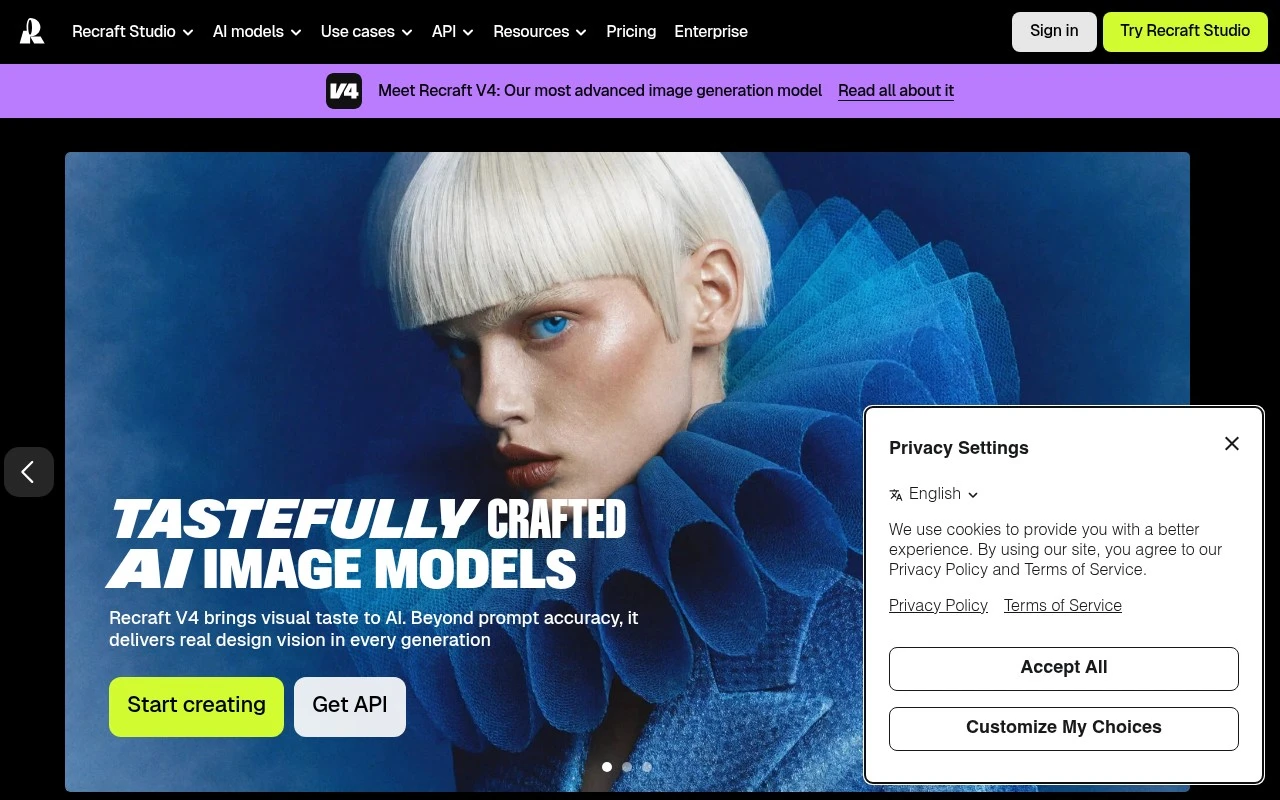
    Recraft homepage describes Recraft as a "text-to-image model and design platform for photorealism, vector generation, custom styles, mockups, and more." Recraft homepage highlights "Complex editable vector graphics," "Design-ready typography," and custom styles that can be created by "dropping in your images."

  • Pricing

    Recraft pricing page references creator/team subscriptions, credits, and top-ups. Recraft pricing page cites annual billing with "save 20%," refunds under stated usage conditions, and ownership differences between Free and paid plans.

  • Integrations

    Recraft blog lists access through Figma, Framer, Chrome extension, and Google Docs add-on, and Recraft also offers an API for embedding models into products or internal tools. Make lists a Recraft connector for workflows across "over 3000 apps."

  • Support

    Recraft docs include a "Get help" section to "Contact support, report a bug, and request a feature." Recraft docs include FAQ coverage, and the pricing page lists support contact via "[email protected]" and "Message support."

Who is this for?

Best for designers who need image generation plus editable design assets, Recraft homepage highlights "Complex editable vector graphics," "Design-ready typography," and custom styles created by "dropping in your images." Best for teams that need workflow connections, Recraft blog lists Figma, Framer, Chrome extension, and Google Docs add-on access, and Make lists a Recraft connector for workflows across "over 3000 apps." Less suited to users working mainly on mobile or weaker devices, ProductHunt signals note some "buggy performance on mobile or weaker devices," which could make those setups less reliable for design work.

PRODUCT PREVIEW

Feature highlights

Prompt to polished

Generate design-ready images with a clean, professional finish.

Editable vector output

Export vectors you can tweak for logos, icons, and layouts.

Custom brand styles

Train styles from your images to keep visuals consistent.

COMPARE

Discover curated alternatives worth comparing

Compare similar AI tools based on features, pricing and use cases

7.2/ 10Based on 2,027 reviews

Pixa

AI Image Generator
Edits and creates pixel-art images in a visual canvas editor
Best for:
Designers
Pricing
Freemium

8.2/ 10Based on 193 reviews

Uizard

UI/UX Design
Converts prompts, screenshots, and sketches into UI prototypes
Best for:
Product teams
Pricing
Freemium

8.2/ 10Based on 56,265 reviews

Topaz Labs

Image UpscalerPhoto Editing
Enhances photos and videos with upscaling, denoising, sharpening
Best for:
Designers
Pricing
Paid only

Join teams creating on-brand visuals in minutes. Start with Recraft today and turn ideas into polished marketing assets faster.

FAQ

Frequently asked
questions

Everything you need to know about this AI tool,
its features, pricing, use cases, and limitations.

Who is Recraft best suited for?
Recraft is best suited for designers, creative professionals, sellers, and teams that need production-ready images, editable vectors, mockups, and reusable visual styles. It fits workflows such as branding, marketing, ecommerce, illustration, and vector graphic design, especially when users want design assets generated from prompts or reference images.
Is Recraft free to use, or do I need a paid plan?
Recraft uses a freemium pricing model, so users can start with a free option and may need a paid plan for broader usage. Buyers should review Recraft’s current pricing page for limits around generation volume, exports, commercial usage, team features, and access to advanced image or vector workflows.
How does Recraft compare with other AI image and design tools?
Recraft is more design-oriented than many general AI image generators because it supports editable vectors, typography-focused outputs, mockups, custom styles, and multiple asset types. The best alternative depends on whether a team prioritizes photorealistic images, vector editing, brand consistency, collaboration, licensing clarity, or integration with an existing design stack.
How quickly can a team start using Recraft?
Recraft is strongest as a visual asset generation platform, not a full replacement for broader design operations, project management, publishing, or approval workflows. Output quality can also depend on prompt clarity and the suitability of reference images, especially when creating reusable brand-like styles or consistent vector graphics.
What should teams check before using Recraft for commercial or client work?
Teams using Recraft for commercial or client work should review its current terms for licensing, ownership, export rights, data handling, and privacy controls. Organisations with compliance requirements should also confirm how uploaded reference images, prompts, and generated assets are stored, processed, and governed before adding it to production workflows.