Curated ToolThis tool is part of our curated AI directory. We only include tools that meet our standards for relevance, usability and real-world value.

Midjourney

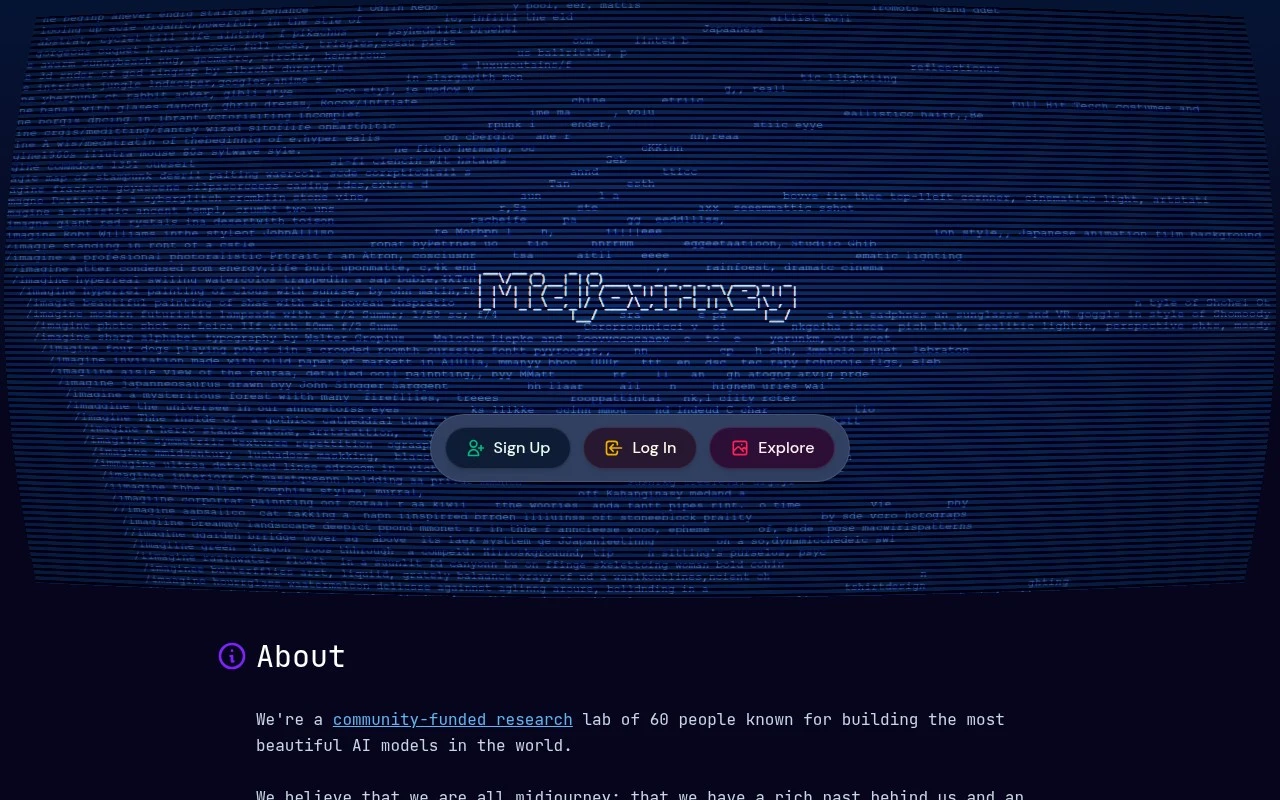
Midjourney is an AI image generation tool that creates images from text prompts, commonly used for concept art, illustration, design exploration, and visual ideation. It runs through Discord and a web interface, allowing users to generate, refine, and upscale visual outputs.
AI Image Generator

FYAI Score

7.6 / 10

Based on 365 reviews

Pricing:

Paid only

Best for:

Artists and designers exploring stylized concept art and illustration

Score Breakdown

  • Ease of use7.1 / 10
  • Features8.2 / 10
  • Pricing7.6 / 10
  • Integrations7.3 / 10
  • Support7.5 / 10

PRODUCT PREVIEW

What this AI tool does

Midjourney is an AI image-generation service that turns text prompts and visual references into polished, highly stylized images for creative exploration, illustration, and concept development. Midjourney is best known for producing visually striking compositions that often feel closer to finished art direction than rough machine output. Rather than focusing on office productivity or document automation, it sits firmly in the world of visual imagination. Creative work with the platform usually begins as a prompt, a reference image, or a loose visual direction. The system can generate images from simple descriptions, but its real strength appears when users iterate on mood, lighting, composition, subject, and style. It rewards experimentation, where small changes in language or reference material can lead to very different aesthetic outcomes. For artists, illustrators, art directors, game teams, and visual storytellers, Midjourney is a tool for quickly exploring what something could look like before committing to a final production path. Midjourney for designers is especially useful when a project needs fast visual territory, such as campaign concepts, character studies, environments, product moodboards, or editorial illustration directions. The output can help teams align around a look and feel, even when the final asset is later recreated, refined, or produced through traditional design workflows. Image references give the tool a more directed creative role. Users can guide the model with existing visuals, then ask for variations that preserve a character, echo a style, reinterpret a scene, or expand an idea into a broader visual system. This makes it useful not only for generating standalone images, but also for building a visual language across multiple exploratory assets. The experience has historically been associated with prompt-based creation through Discord, while the broader product has moved toward more accessible web-based workflows. That background gives the platform a distinctive culture, with creators sharing prompt techniques, comparing versions, and treating image generation as an iterative craft. The workflow is less like filling out a business form and more like directing a visual collaborator through successive rounds of choices. A defining quality of the tool is its aesthetic confidence. Many AI image systems can produce usable pictures, but Midjourney is best at creating dramatic, refined, and expressive imagery that feels intentionally composed. Its strengths are visible in areas such as fantasy art, cinematic scenes, fashion concepts, architecture studies, surreal illustration, and visually rich branding explorations. Because results can be highly stylized, human judgment remains central. Good prompts, careful selection, and thoughtful editing matter, especially when the image must match a brand, a brief, or a production constraint. The platform can accelerate ideation, but it does not replace the need for taste, direction, rights awareness, and post-production decisions. Midjourney is not primarily a general-purpose business automation platform, and it is not designed around spreadsheets, emails, or internal knowledge work. Midjourney is for creators and teams who want to generate images, explore visual possibilities, and discover directions that might be difficult to sketch from scratch. Its story is the story of AI as a visual imagination engine, giving people a faster way to move from an idea in words to an image with atmosphere, style, and creative momentum.

Use cases

Best for

Text to Image Generation

Generate original images by entering a text prompt that Midjourney renders into a new image.

Concept and Mood Exploration

Explore art directions by prompting visual concepts like characters, environments, and mood boards for rapid ideation.

Image Variations and Refinement

Create iterative variations by remixing an image with new prompts or references to refine composition, style, and details.

ANALYSIS

Strengths & limitations

Strengths
  • Best suited to visual creators who need fast ideation because it can turn text prompts and visual references into polished concept directions quickly.
  • Strong fit for art direction, illustration, and game or film concept work because its stylized outputs support moodboards, visual exploration, and rapid variation.
  • Useful for marketing and design brainstorming because it can generate original visual options without starting from a photoshoot or manual illustration process.

Limitations
  • Less suitable for teams needing business workflow automation, document processing, or operational AI because its scope is focused on image generation.
  • Paid-only pricing makes it a weaker fit for casual experimentation, classrooms, or teams that need a free production tier.
  • Less suitable for buyers requiring exact layout, typography, or pixel-perfect brand compliance because prompt-driven image generation still needs curation, iteration, and editing outside the tool.

Evaluation

FYAI score breakdown

Our structured evaluation across five key criteria

7.6 / 10

Overall score

Based on 365 reviews

  • Ease of use7.1 / 10
  • Features8.2 / 10
  • Pricing7.6 / 10
  • Integrations7.3 / 10
  • Support7.5 / 10

What users say

Findings from public reviews, documentation and community sources.

  • Ease of use

    A Reddit user in r/midjourney says, “I’ve been using mj for a while” and “every time I generate an image,” describing repeated use of Midjourney’s image-generation workflow.

  • Features

    A Reddit user in r/midjourney describes Midjourney’s image quality as “unmatched” and “artistic.”

  • Pricing

    Midjourney documentation says Midjourney has “four subscription tiers: Basic, Standard, Pro, and Mega” with monthly prices of “$10 $30 $60 $120.”

  • Integrations

    A Zapier community thread asks whether a form-to-Discord workflow can be used to send messages to Midjourney, indicating connectivity through surrounding tools like Discord workflows.

  • Support

    Reddit has an active r/midjourney community described as focused on the image generator, which supports peer discussion of workflows.

Who is this for?

Best for users who prioritize image output style and quality, a Reddit user describes Midjourney’s image quality as “unmatched” and “artistic.” Less suited to teams that need broad native app integrations, the integration evidence centers on a Zapier community question about using a form-to-Discord workflow to send messages to Midjourney.

PRODUCT PREVIEW

Feature highlights

AI image generator

Turn text prompts into polished, highly stylized images fast.

Image prompting

Use image references to guide composition, mood, and style.

Variations & upscales

Iterate on favorites and upscale for cleaner, sharper outputs.

COMPARE

Discover curated alternatives worth comparing

Compare similar AI tools based on features, pricing and use cases

7.2/ 10Based on 2,027 reviews

Pixa

AI Image Generator
Edits and creates pixel-art images in a visual canvas editor
Best for:
Designers
Pricing
Freemium

8.2/ 10Based on 193 reviews

Uizard

UI/UX Design
Converts prompts, screenshots, and sketches into UI prototypes
Best for:
Product teams
Pricing
Freemium

8.2/ 10Based on 56,265 reviews

Topaz Labs

Image UpscalerPhoto Editing
Enhances photos and videos with upscaling, denoising, sharpening
Best for:
Designers
Pricing
Paid only

Join creators turning ideas into standout visuals in minutes. Start generating on-brand images with Midjourney today and ship campaigns faster.

FAQ

Frequently asked
questions

Everything you need to know about this AI tool,
its features, pricing, use cases, and limitations.

Who is Midjourney best suited for?
Midjourney is best suited for visual creators who need fast AI-assisted image ideation and creative iteration. It is a strong fit for artists, designers, illustrators, creative directors, marketers, and concept teams exploring styles, characters, environments, mood boards, and early production visuals from prompts or visual references.
Is Midjourney free or paid?
Midjourney is a paid image generation tool. Buyers should evaluate the current plans on Midjourney’s website, since plan structure can affect usage volume, generation limits, and access options. Teams comparing costs should consider how often they generate images and how many people need access.
How does Midjourney compare with other AI image generators?
Midjourney is strongest when the priority is visually striking, stylized image generation for concepts, mood boards, and imaginative artwork. Other AI image tools may be a better fit if a team needs deeper layout controls, built-in asset management, brand-template workflows, or tighter integration with broader design software.
How quickly can a designer get started with Midjourney?
Midjourney’s main trade-off is that strong image quality does not always mean precise or predictable control. Prompting can take practice, outputs may need human review or editing, and the tool is focused on image generation rather than full graphic design, layout production, or asset-management workflows.
What should teams check about privacy and compliance before using Midjourney?
Teams should review Midjourney’s current terms, privacy practices, and content policies before using it with confidential briefs, client assets, or regulated material. Buyers should confirm how prompts, uploaded references, generated images, account data, and commercial usage rights are handled, especially for agency, enterprise, or client-facing work.