Curated ToolThis tool is part of our curated AI directory. We only include tools that meet our standards for relevance, usability and real-world value.

Autogpt

Builds and runs autonomous AI agents to complete multi-step tasks.

Workflow AutomationIntegration Automation
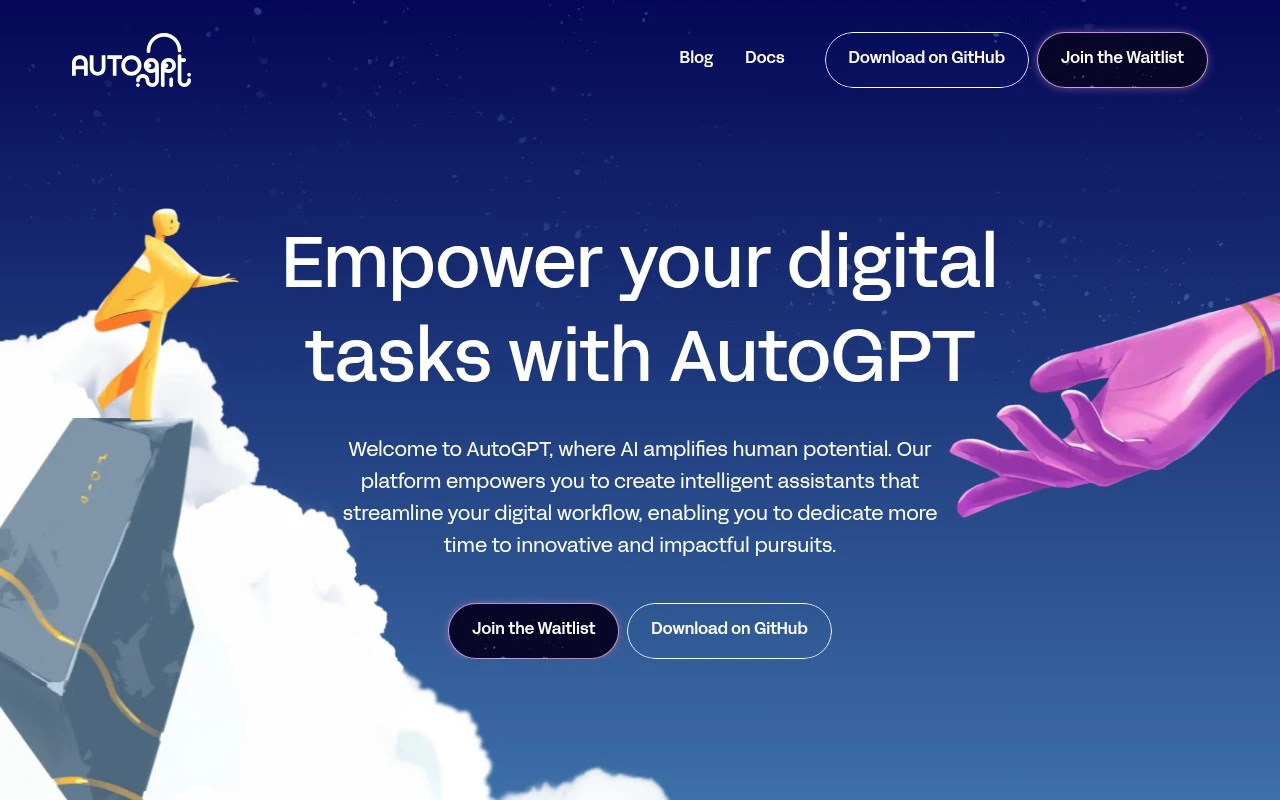
Autogpt, at agpt.co, is an AI-agent automation platform. It lets users create agents through a conversational AutoPilot, build workflows visually with blocks, manage agent runs in a dashboard, and start from marketplace agents created by AutoGPT or the community. The product is positioned for automating digital workflows such as research, outreach, content, support, call prep, competitor monitoring, and similar operational tasks.

FYAI Score

7.7 / 10

Based on 36 reviews

Pricing:

Freemium

Best for:

Ops and growth teams automating research, outreach, and support

Score Breakdown

  • Ease of use7.2 / 10
  • Features8.2 / 10
  • Pricing7.9 / 10
  • Integrations7.7 / 10
  • Support7.6 / 10

PRODUCT PREVIEW

What this AI tool does

Autogpt is an AI tool designed to help users run goal-driven tasks with less manual back-and-forth. Instead of responding to a single prompt and stopping, it can work through a sequence of steps toward an objective, making it useful when you want an assistant to handle multi-stage work rather than one-off answers. In practice, it’s often used for exploratory research, drafting and refining written content, or organizing information into a usable format. Because it operates with more autonomy than a typical chatbot, it’s best approached with clear goals, constraints, and a review step to verify outputs and correct mistakes. This tool is generally most helpful for informational workflows where you want a starting point quickly and are comfortable iterating. As with any AI system, results can vary based on the prompt and the task, so it’s important to validate sources, check calculations, and apply domain judgment before relying on the final output.

Use cases

Best for

Agent Building

Use Autogpt AutoPilot to define goals in chat and generate an agent you can refine into reusable tasks.

Workflow Automation

Build block based workflows that run agents step by step, then monitor each run and outputs in the dashboard.

Integration Automation

Connect agents to external apps via integrations so triggers and data can flow into and out of your automations.

ANALYSIS

Strengths & limitations

Strengths
  • Supports both chat-based agent creation and a visual builder for users who need more control.
  • Includes a dashboard for tracking agent status, inspecting runs, monitoring spend, and handling agents that need input.
  • Offers a marketplace of ready-made agents that can be added and customized, with public browsing and community publishing.
Limitations
  • The official page is high-level and does not provide detailed evidence about reliability, error handling, or performance in production workflows.
  • Pricing, security, compliance, and data-governance details are not established from the provided page.
  • The broad automation claims cover many workflow types, so buyers may need hands-on testing to confirm whether a specific process can be automated well.

Evaluation

FYAI score breakdown

Our structured evaluation across five key criteria

7.7 / 10

Overall score

Based on 36 reviews

  • Ease of use7.2 / 10
  • Features8.2 / 10
  • Pricing7.9 / 10
  • Integrations7.7 / 10
  • Support7.6 / 10

What users say

Findings from public reviews, documentation and community sources.

  • Ease of use

    AutoGPT’s own page says users can “go from idea to working agent in one chat” with “no flowcharts, prompt-engineering, or API setup,” and it references a drag-and-drop visual builder. A Reddit user in r/AutoGPT said they had been “trying to use Auto-GPT for the past 2 months” and had not received “1 conclusive answer.”

  • Features

    The AutoGPT pricing page describes chat-based AutoPilot, visual Agent Builder, scheduled/event triggers, and self-hosting.

  • Pricing

    The AutoGPT pricing page lists Pro at “$42.50 / month billed annually,” Max at “$272.00 / month billed annually,” Team as “Coming soon / Contact us,” and a Self-Host open-source option.

  • Integrations

    AutoGPT’s site states it supports “45+ platforms,” “hundreds of AI models,” and “zero API keys.” AutoGPT’s site also says users can “connect any tool, model, or API on the canvas.”

  • Support

    The AutoGPT pricing page lists “Priority support” on the Max plan and points self-host users to “Read the docs.”

Who is this for?

Best for users who want to create AI-agent automations without API setup, AutoGPT’s own page says users can “go from idea to working agent in one chat” with “no flowcharts, prompt-engineering, or API setup.” Less suited to users who need priority vendor support without a higher paid tier, the AutoGPT pricing page lists “Priority support” on the Max plan, while self-host users are pointed to “Read the docs.”

PRODUCT PREVIEW

Feature highlights

AutoPilot agent chat

Create agents by describing goals in a guided conversation.

Visual workflows

Build automations with block-based steps and reusable flows.

Run dashboard

Track, manage, and review agent runs from one place.

COMPARE

Discover curated alternatives worth comparing

Compare similar AI tools based on features, pricing and use cases

9.0/ 10Based on 3.056 reviews

Zapier

Workflow AutomationIntegration Automation
Connects apps to automate multi-step workflows and actions
Best for:
Operations teams
Pricing
Freemium

8.6/ 10Based on 779 reviews

Workato

Workflow AutomationIntegration Automation
Orchestrates workflows across business apps via MCP integrations
Best for:
IT & Security teams
Pricing
Free trial

8.9/ 10Based on 7.771 reviews

Uipath

Workflow AutomationIntegration Automation
Automates workflows with AI agents, robots, and document processing
Best for:
Operations teams
Pricing
Freemium

Start delegating repetitive work to Autogpt and free your team for higher-impact projects. See faster turnarounds and smoother operations in days.

FAQ

Frequently asked
questions

Everything you need to know about this AI tool,
its features, pricing, use cases, and limitations.

What types of automation is Autogpt a good fit for in an SME?
Autogpt is best when you have repeatable, rule-based workflows like ticket triage, report generation, data entry between apps, and scheduled follow-ups. It’s a strong option if you want non-technical teams to run automations with minimal ongoing support. If your processes are highly variable or require frequent human judgment, you may need more oversight or a different tool.
Does Autogpt have a free plan, and what are the typical limitations compared to paid tiers?
Autogpt offerings can vary by deployment and packaging, so confirm current free vs paid details on agpt.co before deciding. In general, free tiers (when available) tend to cap usage, restrict advanced workflow features, and limit integrations or support. Paid plans usually make sense once you need higher run volumes, team features, or more reliable execution.
How does Autogpt compare with Zapier/Make or RPA tools like UiPath?
Compared with Zapier or Make, Autogpt is often more flexible for multi-step, customizable workflows but may have fewer plug-and-play integrations depending on your stack. Versus RPA tools like UiPath, Autogpt is typically lighter to operate for common business automations, while RPA can be stronger for legacy desktop apps and strict governance. Your choice usually comes down to integration coverage (Zapier/Make), legacy UI automation (RPA), or customizable workflow logic (Autogpt).
How quickly can a team get Autogpt running, and what onboarding effort should we expect?
Autogpt can require upfront configuration to get reliable results, especially for complex automations. Integration coverage may be limited for certain legacy systems, which can block end-to-end automation. Performance and consistency can vary as workflows become more advanced, so plan for monitoring and fallbacks.
What should we check about data privacy, security, and compliance before using Autogpt?
Review what data Autogpt processes, where it’s stored, and whether it’s used for model improvement, then align that with your internal policies. Confirm access controls, audit logs, encryption, and data retention options if you handle sensitive customer or employee information. If you have compliance requirements (e.g., GDPR, SOC 2), verify available documentation and contractual terms on agpt.co before rollout.