Curated ToolThis tool is part of our curated AI directory. We only include tools that meet our standards for relevance, usability and real-world value.

Zencastr

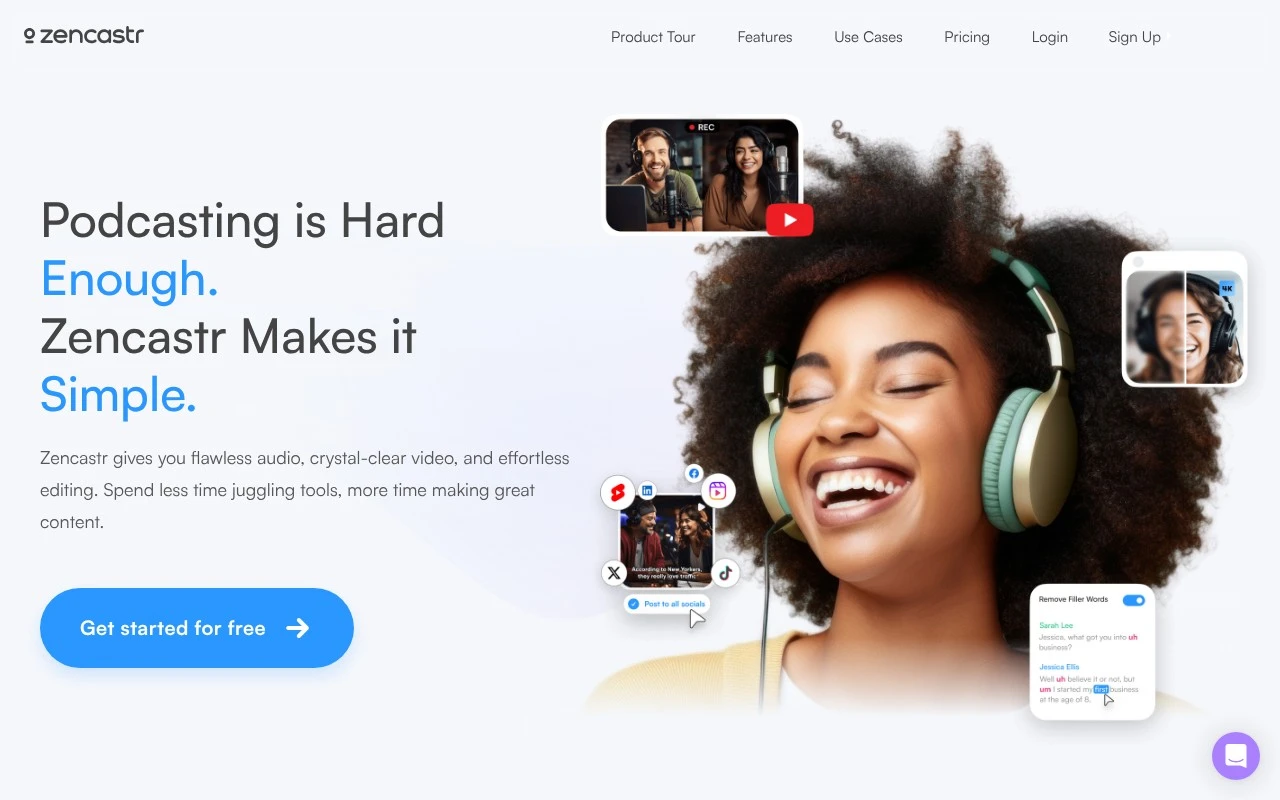
Zencastr is a web-based podcast and video recording platform for capturing remote interviews in high-quality separate audio and video tracks. It also supports post-production workflows such as editing, transcription, and publishing.
Podcast Editing

FYAI Score

7.4 / 10

Based on 30 reviews

Pricing:

Freemium

Best for:

Podcasters and interviewers recording remote shows

Score Breakdown

  • Ease of use7.5 / 10
  • Features7.9 / 10
  • Pricing7.1 / 10
  • Integrations7.2 / 10
  • Support7.1 / 10

PRODUCT PREVIEW

What this AI tool does

Zencastr is a remote podcast and video creation platform for creators, interviewers, and production teams that need to record, edit, publish, and grow content from one workspace. It is built around the reality that many modern shows are produced across locations, with hosts, guests, editors, and marketers working from different places but still needing studio-quality results. For remote interviews, the platform focuses on capturing high-quality audio and video without making every guest become a technical operator. Creators can bring people into a session, record conversations, and keep production organized in the cloud, which makes it especially useful for recurring podcasts, expert interviews, panel discussions, webinars, and video-first shows. Zencastr is best at helping remote creators move from raw conversation to publishable podcast episodes, videos, clips, and transcripts without stitching together a large production stack. Instead of treating recording, podcast editing, transcription, hosting, and promotion as separate jobs spread across separate apps, it presents them as connected stages of the same workflow. Its editing layer is designed for creators who want to polish content quickly after recording. Users can edit video and audio, clean up takes, prepare a finished episode, and shape the material for different publishing formats. This makes the tool relevant not only for podcasters, but also for creators who run interview channels, educational series, branded content programs, or thought leadership shows. AI-assisted production is a major part of the story. The platform can transcribe audio so spoken conversations become searchable, editable text, and easier source material for summaries, show notes, captions, and repurposed content. These capabilities support a faster post-production process, especially for small teams that need to turn long recordings into usable assets without spending hours on manual cleanup. Content repurposing is where the workflow extends beyond the main episode. Long-form conversations can become social posts, audiograms, or short form video creation assets for platforms where discovery happens in smaller clips. For creators trying to grow an audience, this matters because the same recording can feed a podcast feed, a video channel, and a social content calendar. Publishing and distribution are also part of the platform’s role. Audio and video hosting, analytics, and cloud storage help creators manage what happens after an episode is finished. Rather than ending at export, the tool supports the operational side of running a show, including understanding performance and keeping content accessible for future reuse. Team collaboration gives Zencastr a production-oriented character rather than making it only a simple recorder. Editors, producers, hosts, and contributors can work around shared projects, which suits creators who are moving from casual recording into a more repeatable content operation. Monetization features further position the platform as part of a creator’s broader business workflow, not just a utility for capturing calls. In practice, Zencastr serves creators who want fewer handoffs between recording, editing, transcription, hosting, analytics, and promotion. Its value is not just one feature, but the continuity between those steps. For independent podcasters, agencies, educators, marketers, and media teams, the platform offers a more unified way to produce remote audio and video content from first conversation to final distribution.

Use cases

Best for

Podcast Editing

Zencastr edits podcast recordings with AI tools for cleanup, leveling, and assembling multi-track remote sessions.

Transcribe Audio

Generate a text transcript from uploaded or recorded audio, then export it for captions, notes, or search.

Edit Video

Edit recorded video interviews by trimming segments and creating shareable social clips from the timeline.

ANALYSIS

Strengths & limitations

Strengths
  • Best suited to remote podcast and video teams because recording, editing, transcription, hosting, analytics, collaboration, and monetization live in one workflow.
  • Strong fit for interview-led creators because AI text-based editing and transcription can speed up cleanup and repurposing after a recording session.
  • Useful for growth-focused creators because longer recordings can be turned into ready-to-post social clips without moving the project through multiple separate tools.

Limitations
  • Less suitable for creators who only need basic recording because the broader production, hosting, and growth toolkit can add unnecessary workflow complexity.
  • Less suitable for teams already committed to separate editing, hosting, and analytics systems because Zencastr works best when more of the production pipeline is consolidated inside the platform.
  • The freemium model can limit heavier production teams because higher-volume recording, storage, collaboration, or publishing needs are likely to require a paid plan.

Evaluation

FYAI score breakdown

Our structured evaluation across five key criteria

7.4 / 10

Overall score

Based on 30 reviews

  • Ease of use7.5 / 10
  • Features7.9 / 10
  • Pricing7.1 / 10
  • Integrations7.2 / 10
  • Support7.1 / 10

What users say

Findings from public reviews, documentation and community sources.

  • Ease of use

    G2’s review summary says users “consistently praise the sound quality and ease of use” and highlight separate audio tracks for each participant. G2 also shows a mid-3s review rating overall.

  • Features

    Zencastr lists “4k 48kHz WAV,” “Multi track video recording on desktop and mobile,” AI editing, and hosting with analytics.

  • Pricing

    Zencastr’s pricing page presents plan-based monthly/yearly billing and custom enterprise plans. A Reddit user characterizes the paid plan as “like $19/mo” and says “the features it offers aren't worth it.”

  • Integrations

    Zencastr’s support article says the “YouTube integration” is available on the Grow plan and higher for uploading full video episodes directly to YouTube.

  • Support

    Zencastr’s site shows support as a channel. Reddit feedback describes recurring technical issues and says tech support was the usual back-and-forth after “lagging audio and dropping connection.”

Who is this for?

Best for podcast creators who want remote recording with separate audio tracks for each participant and a creator workflow that includes “4k 48kHz WAV,” “Multi track video recording on desktop and mobile,” AI editing, and hosting with analytics. Less suited to workflows that need many named integrations, because Zencastr’s documented publishing integration is YouTube upload on the Grow plan and higher. Less suited to users who are sensitive to recurring connection issues, because Reddit feedback describes “lagging audio and dropping connection” followed by tech-support back-and-forth.

PRODUCT PREVIEW

Feature highlights

Remote recording

Capture high-quality audio and video for every guest, anywhere.

AI editing tools

Clean up audio fast with AI-assisted edits and enhancements.

Social clip maker

Turn episodes into shareable clips to grow your audience.

COMPARE

Discover curated alternatives worth comparing

Compare similar AI tools based on features, pricing and use cases

8.5/ 10Based on 16 reviews

Wondercraft

Short-form VideoVideo Editing
Creates editable videos and audio from text, prompts, media
Best for:
Video creators
Pricing
Freemium

8.6/ 10Based on 130 reviews

Wellsaid

AI Voiceover
Creates business voiceovers with voice and pronunciation controls
Best for:
Audio & podcast creators
Pricing
Paid only

8.2/ 10Based on 14 reviews

Unreal Speech

AI Voiceover
Synthesizes speech, streams audio, and syncs word timing
Best for:
Software developers
Pricing
Freemium

Record remote interviews that sound studio-ready and ship episodes faster. Join creators who trust Zencastr to capture every voice clearly, every time.

FAQ

Frequently asked
questions

Everything you need to know about this AI tool,
its features, pricing, use cases, and limitations.

Who is Zencastr best suited for?
Zencastr is best suited for podcasters, video creators, interviewers, and content teams that record remote conversations and want editing, hosting, analytics, clips, and monetization in one workflow. It fits interview-based podcasts and video shows better than general video production, social media management, or enterprise marketing automation.
Does Zencastr have a free plan, and what should I check before upgrading?
Zencastr uses a freemium pricing model, so users can start with a free option and upgrade for more advanced needs. Before choosing a paid plan, check the current limits on recording time, storage, exports, video quality, transcription, AI features, hosting, and monetization on zencastr.com.
How does Zencastr compare with other podcast recording and editing tools?
Zencastr stands out by combining remote audio and video recording, AI-assisted editing, transcription, podcast hosting, analytics, social clips, and monetization in one platform. Similar tools may focus more narrowly on recording, editing, hosting, or repurposing, so the better choice depends on workflow, budget, team size, and publishing needs.
How quickly can a team get started with Zencastr?
Zencastr is strongest for podcast and interview workflows, not for full-scale video editing or broad marketing automation. Buyers should review current plan limits, export options, storage allowances, AI transcription quality, clip selection accuracy, and hosting requirements before relying on it as the central production platform.
What privacy and compliance questions should teams ask before using Zencastr?
Teams handling sensitive recordings should confirm Zencastr’s current data retention, access controls, guest permissions, storage practices, deletion options, and compliance posture before adoption. This is especially important for interviews involving customers, employees, healthcare topics, legal discussions, internal meetings, or unpublished commercial content.