Curated ToolThis tool is part of our curated AI directory. We only include tools that meet our standards for relevance, usability and real-world value.

Transistor

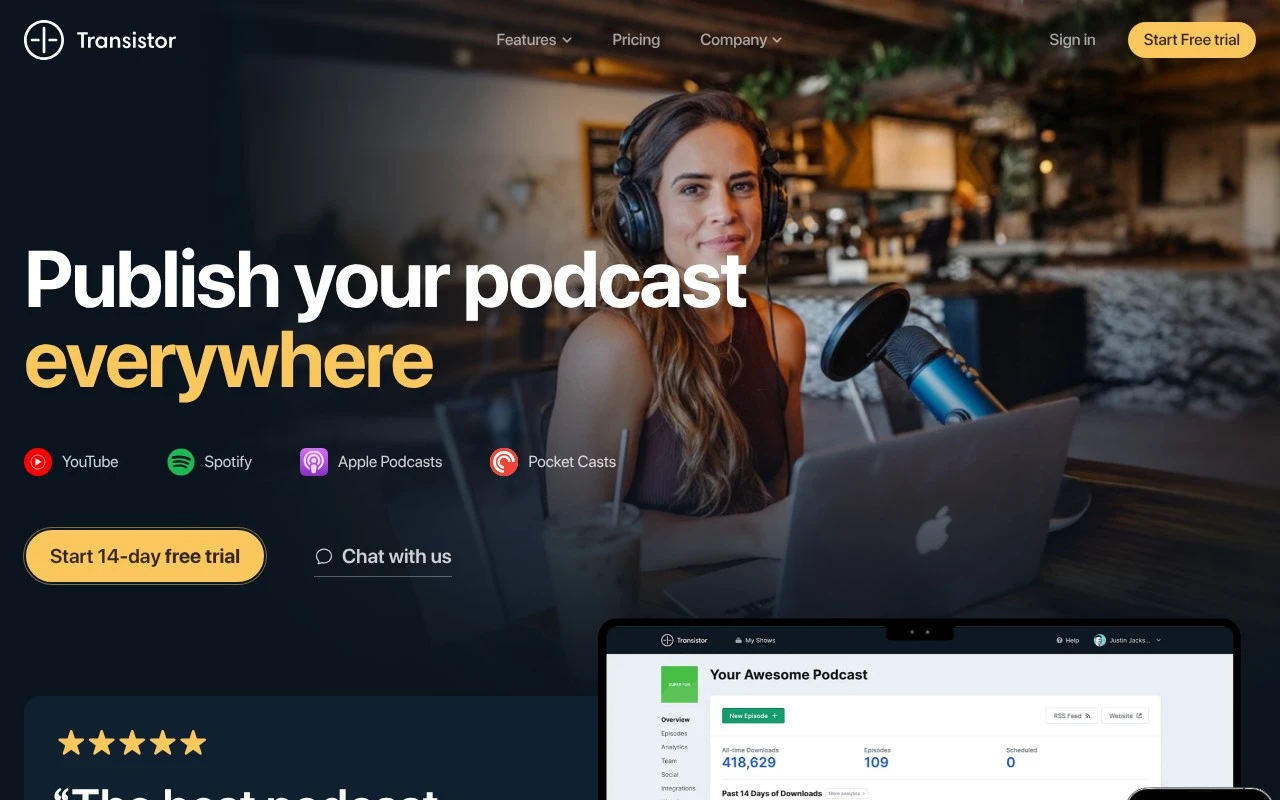
Transistor is a podcast hosting platform for publishing, distributing, and managing public or private podcasts. It provides podcast websites, analytics, and distribution tools for major listening platforms.
Podcast Hosting

FYAI Score

9.0 / 10

Based on 15 reviews + FYAI product analysis

Pricing:

Paid

Best for:

Podcasters and organizations managing multiple shows

Score Breakdown

  • Ease of use9.3 / 10
  • Features8.8 / 10
  • Pricing9.0 / 10
  • Integrations8.3 / 10
  • Support9.4 / 10

PRODUCT PREVIEW

What this AI tool does

Transistor is a podcast hosting service for creators, companies, agencies, and media teams that need reliable infrastructure to publish, distribute, and measure audio or video podcasts. It is built for people who treat podcasting as an ongoing channel, not a one-off upload workflow. Transistor is best understood as podcast infrastructure rather than an AI content creation tool, because its value is in hosting, distribution, publishing operations, collaboration, and analytics. For creators managing more than one format, the platform’s unlimited-show model is central to its appeal. A single account can support multiple public podcasts, private feeds, internal shows, client projects, or branded series without forcing every new concept into a separate workspace. This makes it useful for networks, consultants, marketing teams, educators, and organizations that expect their podcast portfolio to grow over time. Distribution is one of the core jobs Transistor handles once a show is ready to publish. The platform helps creators generate podcast feeds and submit or connect those feeds to major listening apps, so episodes can reach audiences across the podcast ecosystem. Instead of making distribution feel like a technical afterthought, it treats syndication as part of the publishing workflow. Private podcasting gives Transistor a stronger organizational use case than basic public hosting alone. Teams can create restricted feeds for members, employees, customers, students, or paid communities, which is useful for internal communications, training, premium content, and audience segmentation. In that context, the podcast becomes a controlled communication channel rather than only a public media product. Analytics are designed to help teams understand performance without turning podcasting into a data engineering task. The platform reports on listening behavior, episode performance, subscriber trends, and distribution patterns, giving creators a clearer view of what is being consumed and where the audience is coming from. For organizations, that measurement layer helps justify ongoing production and improve editorial planning. A built-in podcast website reduces the need to assemble a separate web stack just to give a show a public home. Each podcast can have a site for episodes, show information, subscription links, and search visibility, which is especially useful for smaller teams that want a clean publishing presence without maintaining custom pages. The website layer also helps podcasts become easier to share outside listening apps. Collaboration features make the service more practical for teams than a solo-only publishing tool. Multiple users can work within an account, which supports workflows where producers, hosts, editors, marketers, and clients all need appropriate access. API access extends this further for organizations that want to connect podcast hosting to their own systems, dashboards, membership products, or automated workflows. In an AI tools directory, Transistor belongs in the infrastructure category rather than the generative category. It does not primarily write scripts, clone voices, edit audio with AI, or generate media from prompts. Its role is to give human-created or externally produced podcast content a dependable place to live, a way to reach listeners, and a framework for understanding audience response. Live customer support is part of the product’s positioning as a practical service for serious publishers. Podcasting can involve feed issues, platform requirements, migrations, analytics questions, and private access problems, so responsive support matters more than it might in a simple upload tool. Transistor is strongest for creators and organizations that want podcast hosting to feel stable, scalable, and professionally managed.

Use cases

Best for

Multi-Show Podcast Hosting

Host multiple public podcasts under one Transistor account, with separate RSS feeds and show pages for each show.

Podcast Distribution Dashboard

Upload audio or video episodes once and use the dashboard to publish via RSS to Apple Podcasts, Spotify, and YouTube.

Private Podcast Feeds

Create members-only podcasts by generating a private RSS feed link that listeners add to their podcast app.

ANALYSIS

Strengths & limitations

Strengths
  • Well suited to podcast networks and organizations managing multiple brands because unlimited shows can be run from one account.
  • Good fit for teams publishing both public and private podcasts because it supports major platform distribution, private podcasts, and built-in podcast websites.
  • Useful for collaborative podcast operations because it includes team collaborators, analytics, API access, and live customer support.

Limitations
  • Less suitable for creators looking for AI-assisted recording, editing, transcription, or content generation because it focuses on hosting, distribution, and analytics after production.
  • Less suitable for casual or experimental podcasters who need a free hosting option because Transistor is a paid podcast infrastructure service.
  • Less suitable for teams that want a built-in audience discovery marketplace because audience growth still depends on external listening platforms and promotion.

Evaluation

FYAI score breakdown

Our structured evaluation across five key criteria

9.0 / 10

Overall score

Based on 15 reviews + FYAI product analysis

  • Ease of use9.3 / 10
  • Features8.8 / 10
  • Pricing9.0 / 10
  • Integrations8.3 / 10
  • Support9.4 / 10

What users say

Findings from public reviews, documentation and community sources.

  • Ease of use

    Transistor’s own page describes an “Easy distribution” workflow with a “simple dashboard,” and testimonials say Transistor “just works out of the box” and is “incredibly easy to use.” Capterra’s product reviews show 5.0/5.0 for Ease of Use across 15 reviews.

  • Features

    Transistor’s product pages say users can “Publish your audio & video podcasts everywhere,” “Host multiple podcasts on one account,” create private podcasts, and use detailed analytics. Transistor’s pricing page lists higher-tier features including dynamic ads, dynamic show notes, auto-post to YouTube, and branding removal.

  • Pricing

    Transistor’s pricing page lists four tiers: Starter at $19/mo, Professional at $49/mo, Business at $99/mo, and Enterprise from $199+, plus a 14-day free trial and yearly billing at “12 months for the price of 10.” Transistor’s pricing page includes “Unlimited podcasts,” unlimited collaborators, API access, and download/private-subscriber limits.

  • Integrations

    Transistor’s integrations page snippet lists email subscription integrations including “MailChimp, Drip, HubSpot, ConvertKit, MailerLite, ActiveCampaign, and Klaviyo.” Transistor’s product pages emphasize distribution to major podcast platforms.

  • Support

    Transistor’s homepage highlights “real human support,” and Transistor’s paid tiers include “Live customer support.” Capterra shows 5.0/5.0 Customer Service and a review titled “Great hosts and customer service!”

Who is this for?

Best for podcasters running multiple audio & video podcasts or private podcasts, Transistor says users can “Host multiple podcasts on one account” and includes private podcasts, a built-in podcast website, and detailed analytics. Less suited to teams that need pricing without usage caps, Transistor’s pricing page includes download/private-subscriber limits, so growing downloads or private subscribers can affect which tier fits.

PRODUCT PREVIEW

Feature highlights

Podcast distribution

Publish once and distribute to major listening platforms automatically.

Podcast analytics

Track downloads, trends, and listener performance across episodes.

Unlimited shows

Host multiple podcasts on one account with team collaborators.

COMPARE

Discover curated alternatives worth comparing

Compare similar AI tools based on features, pricing and use cases

7.4/ 10Based on 30 reviews

Zencastr

Podcast Editing
Edits recordings like text, transcribes, and cuts social clips
Best for:
Audio & podcast creators
Pricing
Freemium

8.5/ 10Based on 16 reviews

Wondercraft

Short-form VideoVideo Editing
Creates editable videos and audio from text, prompts, media
Best for:
Video creators
Pricing
Freemium

8.6/ 10Based on 130 reviews

Wellsaid

AI Voiceover
Creates business voiceovers with voice and pronunciation controls
Best for:
Audio & podcast creators
Pricing
Paid only

Join thousands of podcasters using Transistor to publish with confidence, grow your audience, and understand what’s working. Start your next episode today.

FAQ

Frequently asked
questions

Everything you need to know about this AI tool,
its features, pricing, use cases, and limitations.

Who is Transistor best for?
Transistor is best for podcasters, companies, networks, creators, and communities that need reliable podcast hosting, distribution, analytics, and private feeds. It is especially useful when one account needs to manage multiple public shows, publish audio or video episodes, and distribute them through major podcast platforms.
Is Transistor free or paid?
Transistor is a paid podcast hosting platform. Its plans are designed around hosting and distribution rather than a free AI creation workflow, and buyers should expect plan limits tied to usage factors such as monthly downloads and private podcast subscribers. Check transistor.fm for the latest pricing details.
How does Transistor compare with other podcast hosting platforms?
Transistor stands out for supporting multiple podcasts under one account, along with distribution, analytics, private podcasting, built-in podcast websites, and audio or video hosting. Compared with similar hosting tools, the right choice depends on how many shows you manage, your audience size, private feed needs, and budget.
How hard is it to set up a podcast on Transistor?
Transistor is not positioned as an AI recording, editing, transcription, or content generation tool. Users still need separate tools to record, edit, produce, and prepare episodes before uploading. Teams should also review plan limits carefully, especially if they expect high download volume or many private podcast subscribers.
What should teams check about privacy and compliance before using Transistor?
Teams should review Transistor’s current privacy, security, data retention, and compliance documentation before hosting internal or members-only podcasts. Private feeds can involve subscriber access and listener-related data, so companies should confirm access controls, account permissions, data processing terms, and any compliance requirements relevant to their organisation.