Curated ToolThis tool is part of our curated AI directory. We only include tools that meet our standards for relevance, usability and real-world value.

Headliner

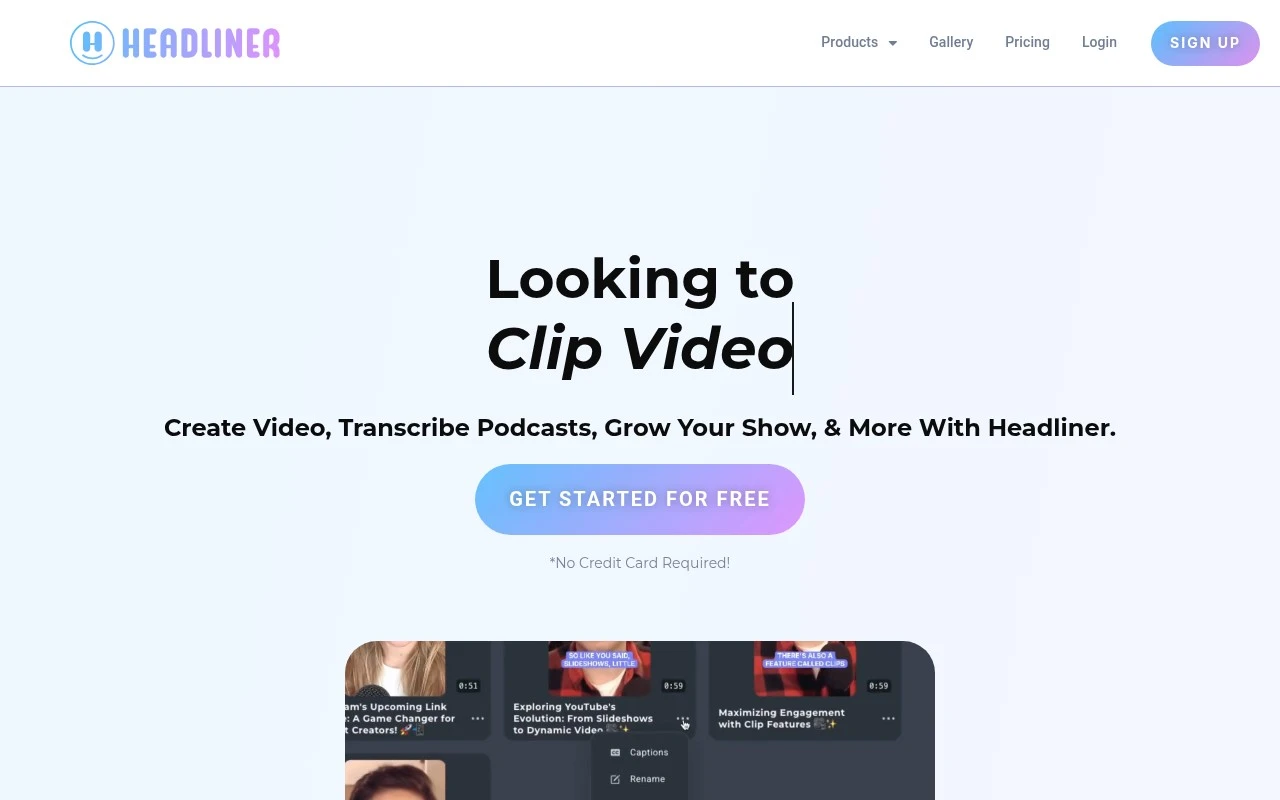
Headliner is a content repurposing tool that turns podcasts, audio, and longer videos into shareable social media clips with captions, waveforms, and audiograms. It is commonly used by creators and publishers to convert existing audio or video into short promotional videos.
Voice & Audio

FYAI Score

7.8 / 10

Based on 8 reviews + FYAI product analysis

Pricing:

Freemium

Best for:

Podcasters promoting episodes with fast, repeatable social video clips

Score Breakdown

  • Ease of use7.8 / 10
  • Features7.2 / 10
  • Pricing8.4 / 10
  • Integrations8.3 / 10
  • Support7.8 / 10

PRODUCT PREVIEW

What this AI tool does

Headliner is a content repurposing and audio promotion platform for podcasters, radio teams, marketers, and audio-first creators who want to turn recorded audio into shareable social videos. Headliner is best known for making audiograms, captioned clips, and short promotional videos without requiring a full video editing workflow. For podcast creators, the platform solves a common distribution problem: an episode may be valuable, but audio alone is hard to preview in a social feed. It lets users import audio from a file, podcast feed, or supported source, then package a selected moment with waveforms, images, captions, and branded layouts. The result is a visual teaser that can travel across platforms where short form video creation performs better than plain links. At its core, the workflow is built around speed and repeatability. Instead of starting each promo from a blank timeline, users can rely on templates, preset aspect ratios, and familiar visual styles for recurring episode promotion. This makes the tool especially useful for teams that publish often and need a practical social media content creation process around every release. Captions are a major part of the product’s value because many viewers encounter video clips with the sound off. The ability to add subtitles, combine them with waveform animation, and frame the clip with podcast artwork gives spoken content a clearer identity in busy feeds. For creators who do not think of themselves as video editors, that combination lowers the barrier to producing polished promotional assets. Headliner also fits into a broader content repurposing strategy. A long interview, webinar, sermon, panel, or livestream can produce multiple short clips, each focused on a quote, insight, guest moment, or call to action. In that sense, the platform is less about cinematic editing and more about extracting attention from audio that already exists. Compared with general-purpose editors, the platform is narrower but more focused. Full video suites may offer deeper control, yet they often add unnecessary complexity for someone who mainly needs audiograms, captioned clips, and episode previews. For anyone comparing Headliner alternatives, the key question is whether they need advanced video production or a dedicated audio-to-social workflow. Headliner is particularly relevant for independent podcasters and small marketing teams because it balances automation with enough visual control to stay on brand. Users can create assets for different channels, adjust formats for square, vertical, or landscape posts, and keep a consistent promotional look over time. Headliner pricing and plan limits may matter for high-volume publishers, but the product’s main appeal is the time saved in repeated episode promotion. In practical terms, this is a tool for making audio visible. It takes the strongest moments from spoken content and turns them into clips that are easier to watch, skim, caption, and share. Headliner is therefore best understood as a promotion layer for podcasts and audio libraries, helping creators extend the life of each recording beyond the listening app.

Use cases

Best for

Content Repurposing

Import podcast audio and turn it into short shareable clips by applying waveform visuals, images, and templates.

Social Media Content Creation

Headliner exports audiograms and short videos sized for social feeds, combining audio with waveforms, captions, and artwork.

Add Subtitles

Generate captioned videos by auto transcribing audio and burning subtitles onto the clip before exporting.

ANALYSIS

Strengths & limitations

Strengths
  • Best suited to podcasters and audio creators because it turns spoken audio into captioned social video clips without requiring a full video editing workflow.
  • Repeatable templates, waveforms, captions, and image-based layouts help content teams produce consistent episode promos quickly.
  • The freemium model makes it accessible for individual creators and small teams that want to test audio-to-social-video workflows before committing to paid usage.

Limitations
  • Less suitable for teams seeking broad generative media production because its core workflow is focused on repurposing existing audio into promotional video clips.
  • Less suitable for advanced video editors who need deep timeline control, complex effects, or multi-scene production because it is built for fast, repeatable social assets.
  • The freemium model is less suitable for high-volume publishing on a no-cost budget because heavier ongoing use is likely to require paid access.

Evaluation

FYAI score breakdown

Our structured evaluation across five key criteria

7.8 / 10

Overall score

Based on 8 reviews + FYAI product analysis

  • Ease of use7.8 / 10
  • Features7.2 / 10
  • Pricing8.4 / 10
  • Integrations8.3 / 10
  • Support7.8 / 10

What users say

Findings from public reviews, documentation and community sources.

  • Ease of use

    Capterra lists Headliner at 4.5/5 from 8 reviews, and a Capterra review snippet says Headliner “delivers on the promise” and is “never down.”

  • Features

    Acast’s Headliner integration article describes creating audiograms, sharing to Instagram and TikTok, and aligning branding with shows.

  • Pricing

    Headliner’s pricing help article describes four tiers, “Forever Free, Basic, Pro, and Enterprise/API”, and third-party pricing evidence lists paid pricing starting at $14.99. A Capterra review snippet calls Headliner “incredible value.”

  • Integrations

    Headliner’s blog names podcast-platform integrations including Castos, Podigee, Acast, and Spreaker. Headliner’s tiers include an Enterprise/API option.

  • Support

    Capterra lists Headliner at 4.5/5 from 8 reviews, and a Capterra review snippet says Headliner is “never down.”

Who is this for?

Best for podcasters and show teams that want to turn episodes into audiograms for Instagram and TikTok, Acast’s Headliner integration article describes creating audiograms, sharing to Instagram and TikTok, and aligning branding with shows. Less suited to teams that need a broad app marketplace, the named integrations in the evidence are focused on podcast platforms including Castos, Podigee, Acast, and Spreaker.

PRODUCT PREVIEW

Feature highlights

Audiograms to video

Convert audio into shareable videos built for social feeds.

Auto captions

Add readable captions fast to boost watch time and clarity.

Templates & branding

Reuse styles, images, and layouts for consistent episode promos.

COMPARE

Discover curated alternatives worth comparing

Compare similar AI tools based on features, pricing and use cases

7.4/ 10Based on 30 reviews

Zencastr

Podcast Editing
Edits recordings like text, transcribes, and cuts social clips
Best for:
Audio & podcast creators
Pricing
Freemium

8.5/ 10Based on 16 reviews

Wondercraft

Short-form VideoVideo Editing
Creates editable videos and audio from text, prompts, media
Best for:
Video creators
Pricing
Freemium

8.6/ 10Based on 130 reviews

Wellsaid

AI Voiceover
Creates business voiceovers with voice and pronunciation controls
Best for:
Audio & podcast creators
Pricing
Paid only

Turn your audio into scroll-stopping social videos in minutes. Start creating shareable clips with Headliner today and grow engagement across every channel.

FAQ

Frequently asked
questions

Everything you need to know about this AI tool,
its features, pricing, use cases, and limitations.

Who is Headliner best suited for?
Headliner is best suited for podcasters, audio creators, marketers, and content teams that want to turn spoken audio into social video clips. Its strongest fit is podcast promotion, especially creating audiograms, captioned excerpts, waveform videos, and branded clips for platforms where video posts perform better than audio-only links.
Does Headliner have a free plan, and when would I need to pay?
Headliner uses a freemium pricing model, so users can start with a free option and move to paid access when their publishing needs grow. The practical decision usually depends on how often you create clips, whether you need more export capacity, and what level of branding or workflow support your team requires.
How does Headliner compare with other social video creation tools?
Headliner is more focused on audio-first repurposing than a general-purpose video editor. It is a better fit when the main task is turning podcast or spoken-word audio into captioned social clips, while broader video tools may be stronger for complex editing, custom motion graphics, or multi-scene video production.
How quickly can a team get started with Headliner?
Headliner is not ideal for complex video production, advanced motion graphics, or highly customized editing workflows. Its value is strongest for audio-led promotional clips, so teams focused on conventional video editing may find it limiting. Results also depend heavily on source audio quality, clip selection, captions, and visual setup.
What privacy or compliance checks should buyers make before using Headliner?
Buyers should review Headliner’s current privacy, security, and data handling terms before uploading podcast audio, guest interviews, or unpublished content. Teams handling regulated or confidential material should confirm retention practices, access controls, vendor agreements, and any relevant compliance requirements directly with Headliner before adopting it in production workflows.