Curated ToolThis tool is part of our curated AI directory. We only include tools that meet our standards for relevance, usability and real-world value.

Google VEO

Generates short AI video clips from text prompts using Google Veo 3.

Short-form VideoVideo Generators
Google Veo 3 is a Google generative video model available through Google AI Studio. Its core role is to turn prompts into AI-generated video clips, making it useful for creative teams and developers who need fast visual prototypes or generated video assets rather than a traditional editing suite.

FYAI Score

7.7 / 10

Industry standard in Video & Animation

Pricing:

Freemium

Best for:

Creative teams and developers generating video from text prompts

Score Breakdown

  • Ease of use7.1 / 10
  • Features7.5 / 10
  • Pricing7.5 / 10
  • Integrations8.8 / 10
  • Support8.0 / 10

PRODUCT PREVIEW

What this AI tool does

Google VEO is an AI video generation tool designed to help users create short video clips from text prompts and other creative inputs. It’s intended for informational exploration of how modern generative models can translate written descriptions into moving visuals, making it useful for early ideation and rapid prototyping. In practice, you describe the scene you want—such as setting, actions, style, and mood—and the system produces a video that reflects those instructions. This can support tasks like drafting concept footage, testing visual directions before a full production, or creating simple illustrative clips for presentations and internal demos. As with most generative AI, results can vary depending on prompt clarity and the complexity of the request, and outputs may require review for accuracy and appropriateness. If you’re evaluating google-veo, it helps to compare multiple prompt variations and treat the generated video as a starting point rather than a final, production-ready asset.

Use cases

Best for

Generate Video

Generate video clips by entering a text prompt and letting Google VEO render an AI generated scene.

Video Ad Creation

Create video ad concepts by prompting for product shots, on screen text, and brand style to generate draft clips.

Short Form Video Creation

Produce short form video drafts by prompting for vertical framing, quick cuts, and a concise story beat.

ANALYSIS

Strengths & limitations

Strengths
  • Backed by Google’s current video generation model family rather than a generic third-party wrapper.
  • Useful for quickly exploring visual ideas without filming or producing every shot manually.
  • Fits developer experimentation because it is surfaced through Google AI Studio.
Limitations
  • The provided official page scrape does not expose detailed feature, pricing, or availability information.
  • Generated clips may still require human review, editing, and rights checks before professional use.
  • It is a generation model, not a full replacement for video editing, production planning, or brand governance workflows.

Evaluation

FYAI score breakdown

Our structured evaluation across five key criteria

7.7 / 10

Overall score

Industry standard in Video & Animation

  • Ease of use7.1 / 10
  • Features7.5 / 10
  • Pricing7.5 / 10
  • Integrations8.8 / 10
  • Support8.0 / 10

What users say

Findings from public reviews, documentation and community sources.

  • Ease of use

    A Reddit discussion about Veo 3 says the “Flow” interface is “a bit of a clunky mess” and “burns through credits.” Reddit users in the same discussion also describe practical uses for short engagement clips.

  • Features

    The Google AI Studio model page describes Veo 3 as “Video generation with native audio” and says Veo “contextually pairs sound with visuals.” The existing notes also reference high-fidelity text-to-video for Veo.

  • Pricing

    The Google AI plans page lists “Google AI Plus · $4.99,” “Google AI Pro · $19.99,” and “Google AI Ultra · $99.99.” A Reddit discussion about Veo 3 says the tool “burns through credits.”

  • Integrations

    The Gemini API documentation says “Veo 3.1 lets you create videos using interpolation” and covers prompting guidance. The Gemini API documentation places Veo in Google’s developer ecosystem.

  • Support

    The Google Veo-focused sources cited here cover product capability, Google AI plans, Reddit user discussion, and Gemini API documentation rather than human support experience.

Who is this for?

Best for creators or developers making short AI videos with generated sound, the Google AI Studio model page describes Veo 3 as “Video generation with native audio” and says Veo “contextually pairs sound with visuals.” Less suited to users who need a frictionless interface or predictable experimentation costs, a Reddit discussion says the “Flow” interface is “a bit of a clunky mess” and “burns through credits,” so iteration can involve workflow friction and credit consumption.

PRODUCT PREVIEW

Feature highlights

Text-to-video clips

Generate short videos from prompts for rapid visual exploration.

Cinematic motion

Create dynamic shots with consistent style and smooth movement.

AI Studio workflow

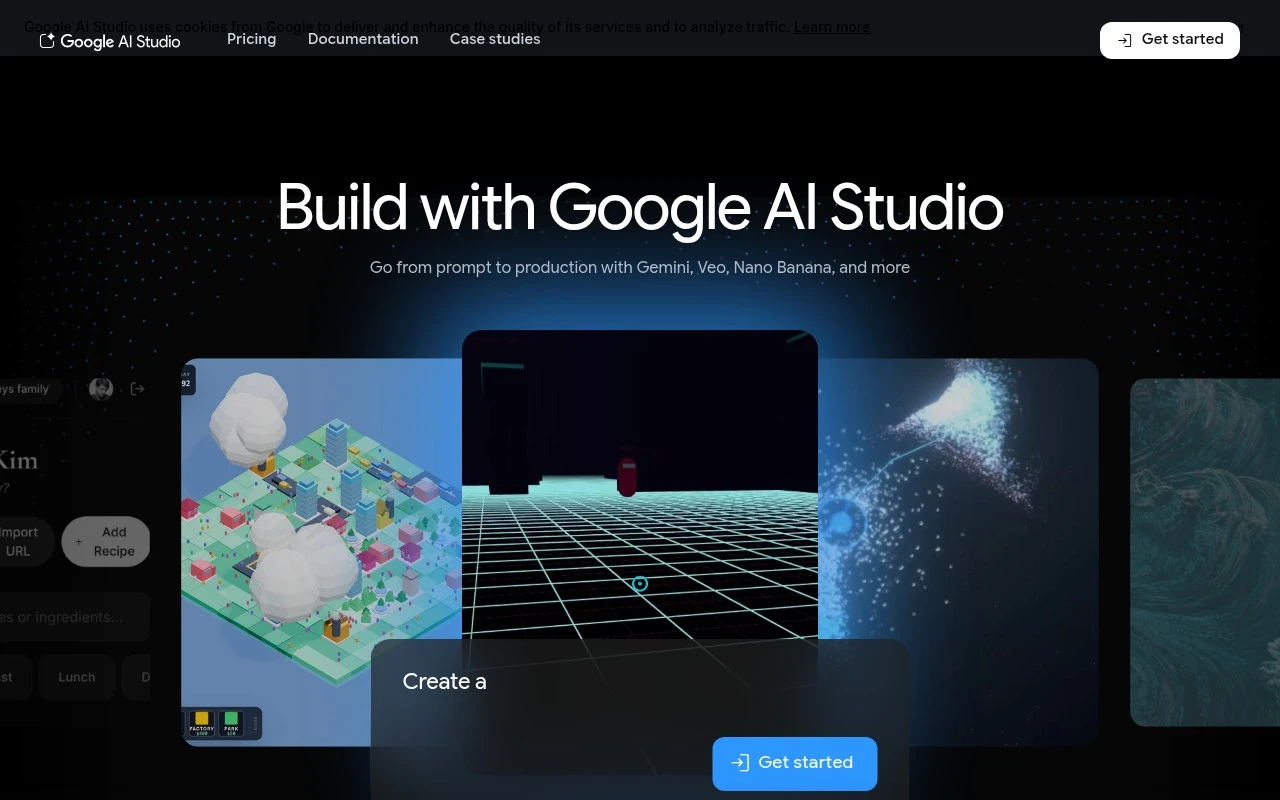
Build and test video generations inside Google AI Studio.

COMPARE

Discover curated alternatives worth comparing

Compare similar AI tools based on features, pricing and use cases

8.5/ 10Based on 16 reviews

Wondercraft

Short-form VideoVideo Editing
Turns text or audio into editable AI-generated videos and audio
Best for:
Video creators
Pricing
Freemium

8.5/ 10Based on 65 reviews

Wisecut

Short-form VideoVideo Editing
Edits long videos by removing pauses and adding captions
Best for:
Video creators
Pricing
Freemium

8.6/ 10Based on 2.521 reviews

Vizard.ai

Short-form VideoVideo Editing
Extracts short clips from long videos and adds captions for social.
Best for:
Social media managers
Pricing
Freemium

Turn prompts into cinematic video in minutes. Start creating standout clips with Google VEO today and ship more content without slowing your team down.

FAQ

Frequently asked
questions

Everything you need to know about this AI tool,
its features, pricing, use cases, and limitations.

What types of teams and workflows is Google VEO a good fit for?
Google VEO fits marketing, social, and comms teams that need to generate or iterate on short-form video quickly with minimal manual editing. It’s most useful when you have repeatable formats (ads, product promos, explainers) and want faster turnaround rather than frame-by-frame control. If your workflow depends on advanced color grading, compositing, or tight editorial timelines with offline review, you may want a traditional NLE alongside it.
Is Google VEO free, and what are the typical limitations of free vs paid access?
Access to Google VEO is generally tied to Google’s AI Studio/Vertex AI offerings, where usage is metered and may include limited trial credits rather than an unlimited free plan. Paid usage typically scales by generated video length, resolution, and number of generations, with quotas and rate limits depending on your account. Check the current pricing and quotas in the Google AI Studio or Vertex AI console because availability and limits can change by region and account type.
How does Google VEO compare with other AI video generators like Runway or Pika for marketing content?
Google VEO tends to be a strong option if you value integration with Google’s ecosystem and want a model-centric workflow via APIs or Google tooling. Tools like Runway or Pika may offer more creator-oriented UI features and editing-centric controls depending on the product tier. If your priority is team collaboration inside Google Cloud and repeatable generation at scale, Google VEO is often easier to operationalize; for hands-on creative iteration, competitors can feel more flexible.
How quickly can a team get started with Google VEO, and what onboarding is required?
Google VEO can be faster for generating variations, but it offers less granular control than professional NLEs for precise cuts, audio mixing, and detailed effects work. Output consistency can vary across generations, so teams often need a review-and-select step rather than a single deterministic render. It also depends on reliable internet access, which can be a bottleneck for some environments.
What should we know about data handling, privacy, and compliance when using Google VEO?
If you use Google VEO through Google Cloud/Vertex AI, data handling typically follows your cloud project’s settings, region configuration, and Google Cloud terms, which can help with enterprise governance. You should verify whether prompts, uploaded assets, and outputs are retained, logged, or used for model improvement under your specific plan and settings. For regulated content, confirm supported regions, access controls (IAM), audit logging, and whether you can meet requirements like data residency and vendor risk reviews.