Curated ToolThis tool is part of our curated AI directory. We only include tools that meet our standards for relevance, usability and real-world value.

Sitebulb

Crawls sites to detect, prioritize, and report technical SEO issues

Technical & AuditSEO Reporting
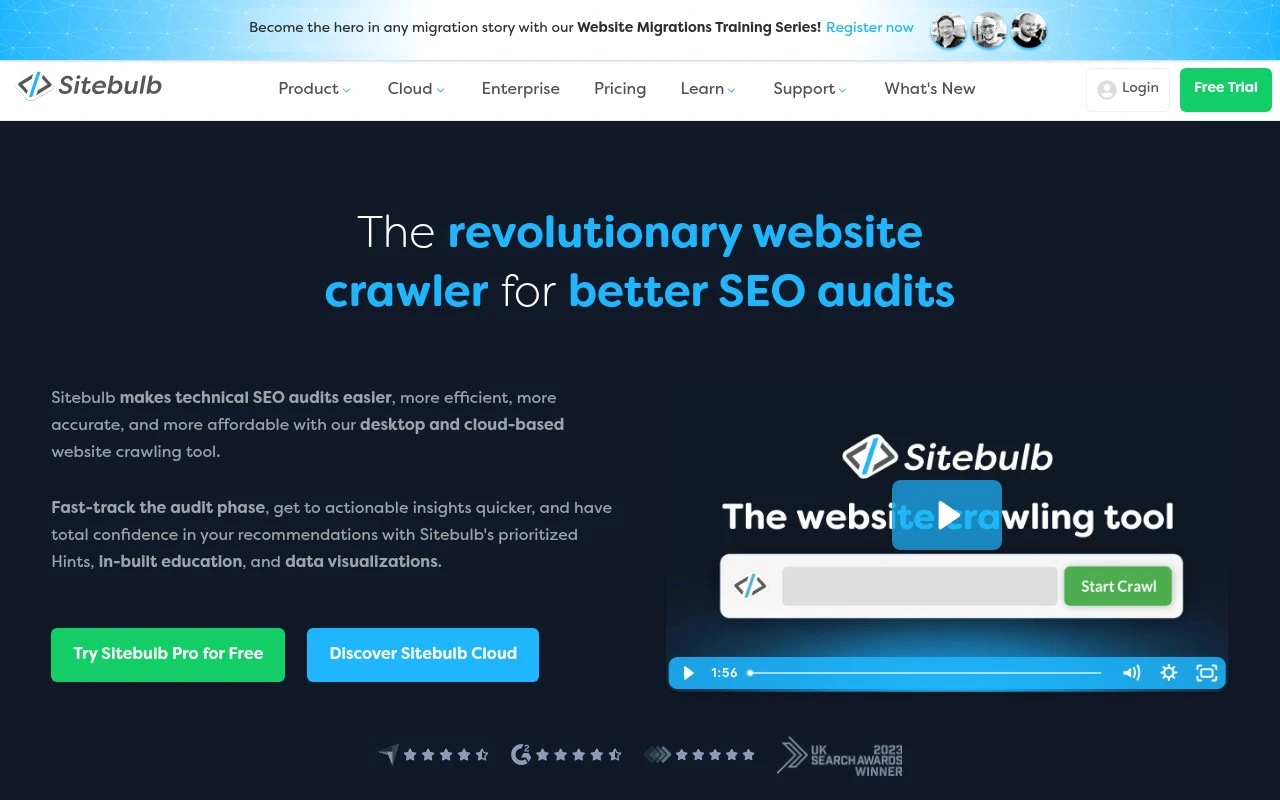
Sitebulb is a technical SEO website crawler built for audit workflows. It crawls sites, checks for 300+ SEO issues and opportunities, prioritizes findings, explains issues in client-friendly language, and presents crawl data through visualizations, exports, and reports. It is offered as Sitebulb Desktop for local crawling and Sitebulb Cloud for browser-based, collaborative, larger-scale crawling.

FYAI Score

8.6 / 10

Based on 25 reviews

Pricing:

Paid

Best for:

Technical SEO teams running repeatable site audit workflows

Score Breakdown

  • Ease of use8.8 / 10
  • Features8.9 / 10
  • Pricing8.4 / 10
  • Integrations7.7 / 10
  • Support9.1 / 10

PRODUCT PREVIEW

What this AI tool does

Sitebulb is a website auditing tool designed to help you understand how a site is structured and how it performs from a technical SEO perspective. It crawls your pages and presents the results in a way that’s easier to review than raw crawl data, making it useful for both quick checks and deeper investigations. You can use it to identify common issues such as broken links, redirect chains, duplicate content signals, and internal linking gaps, then prioritize what to fix based on impact. The reports are geared toward explaining what was found and why it matters, which can help when sharing findings with developers or stakeholders. Because it focuses on crawl-based analysis, it’s typically used during site migrations, routine technical audits, and ongoing site maintenance. If you’re comparing tools, sitebulb is best understood as a crawler and audit workflow that supports diagnosing and documenting technical SEO problems rather than a general analytics platform.

Use cases

Best for

SEO Audit

Crawl a site to surface prioritized SEO issues like broken links, redirects, and indexability problems with actionable explanations.

SEO Client Reporting

Use Sitebulb to export crawl findings into client-friendly reports with visualizations and clear issue explanations for stakeholders.

Technical SEO Analysis

Analyze crawl data to diagnose technical SEO patterns across templates, internal linking, canonicals, and crawl depth using visual charts.

ANALYSIS

Strengths & limitations

Strengths
  • Offers both desktop and cloud crawling, so users can choose local audits or browser-based team collaboration.
  • Includes prioritized Hints, issue explanations, data visualizations, spreadsheet exports, and PDF reports for communicating audit findings.
  • Supports larger audit workflows, with Desktop described as crawling up to 500,000 URLs per audit and Cloud up to 10 million URLs per audit.
Limitations
  • It is a specialist technical SEO crawler, not a general SEO suite for every marketing task.
  • Very large crawls require the Cloud product rather than relying only on the desktop machine.
  • The provided source describes an MCP feature as coming soon, so natural-language querying of audit data should not be treated as an available core feature yet.

Evaluation

FYAI score breakdown

Our structured evaluation across five key criteria

8.6 / 10

Overall score

Based on 25 reviews

  • Ease of use8.8 / 10
  • Features8.9 / 10
  • Pricing8.4 / 10
  • Integrations7.7 / 10
  • Support9.1 / 10

What users say

Findings from public reviews, documentation and community sources.

  • Ease of use

    GetApp users describe Sitebulb as having a “Very intuitive user interface,” and Sitebulb describes an “intuitive interface,” “in-built education,” and visualizations for understanding and communicating audits.

  • Features

    Sitebulb's website lists Desktop and Cloud crawling options, “300+ SEO issues,” JavaScript crawling, and Cloud crawling up to “10m URLs per audit.”

  • Pricing

    Capterra references Sitebulb pricing around Lite, Pro, and Cloud plans, a “14 day free trial,” “Cancel anytime,” and Cloud starting from “£95/month.” Capterra also includes URL limits such as “10,000 URLs per audit” for Lite and “500,000 URLs per audit” for Pro, and reviewers call Sitebulb “a very fair price.”

  • Integrations

    Sitebulb's integrations page lists “Google Search Console, GA4, Google Sheets, Data Studio,” plus MCP connectivity for AI assistants.

  • Support

    G2 reviewers mention “very good technical support,” and Sitebulb surfaces learning resources such as guides, Hint explanations, and masterclasses.

Who is this for?

Best for SEO teams running technical audits that need crawl depth and stakeholder reporting, Sitebulb covers “300+ SEO issues,” JavaScript crawling, customized PDF reports, and Cloud crawling up to “10m URLs per audit.” Less suited to teams whose workflows depend on a broad integration marketplace, Sitebulb's integrations page lists “Google Search Console, GA4, Google Sheets, Data Studio,” plus MCP connectivity for AI assistants, so teams should verify those connections fit their workflow.

PRODUCT PREVIEW

Feature highlights

Prioritized audits

Get impact-based hints so you know what to fix first.

Visual reports

Client-friendly explanations plus exports and shareable reports.

Prioritized Audit Fixes

Finds 300+ site issues, ranks impact, and explains fixes clearly.

COMPARE

Discover curated alternatives worth comparing

Compare similar AI tools based on features, pricing and use cases

8.8/ 10Based on 846 reviews

Yoast SEO

Content & On-pageTechnical & Audit
Generates and optimizes SEO titles, descriptions, and content
Best for:
SEO teams
Pricing
Freemium

8.1/ 10Based on 1.124 reviews

Yext

SEO MonitoringAI Search / GEO
Manages verified business data for search and AI discovery.
Best for:
SEO teams
Pricing
Paid

7.7/ 10Based on 5.772 reviews

Writesonic

Copy Optimization
Monitors brand visibility in answer engines and flags citation gaps
Best for:
Marketing teams
Pricing
Freemium

Start turning complex audits into clear, prioritized actions. See why SEO teams choose Sitebulb to uncover issues faster and improve rankings with confidence.

FAQ

Frequently asked
questions

Everything you need to know about this AI tool,
its features, pricing, use cases, and limitations.

Who is Sitebulb the best fit for, and when should I pick something else?
Sitebulb is a strong choice for agencies, in-house SEO teams, and consultants who need deep technical audits with clear, client-ready visuals. It’s especially useful for diagnosing crawlability, internal linking, indexation, and on-page issues across medium to large sites. If you mainly need rank tracking, backlink research, or lightweight checks, a broader SEO suite may be a better fit.
Does Sitebulb have a free plan, and what are the limitations of paid access?
Sitebulb is typically offered as a paid product, often with a time-limited trial rather than a permanent free tier. The main constraints you’ll want to verify are crawl limits, number of projects, and whether advanced reporting features are included at your price point. If you need ongoing free usage for small sites, you may need to compare against freemium crawlers or browser-based audit tools.
How does Sitebulb compare to Screaming Frog, Ahrefs, or Semrush for technical audits?
Compared with Screaming Frog, Sitebulb generally emphasizes more guided insights and visual reporting, which can reduce time spent turning crawl data into narratives. Ahrefs and Semrush are broader platforms (keywords, links, competitive research) where technical audits are only one component, so they may suit teams wanting an all-in-one tool. If your priority is audit depth and communicating fixes, Sitebulb often competes best against dedicated crawlers rather than full suites.
How quickly can I get value from Sitebulb, and what onboarding effort should I expect?
Sitebulb can feel dense for beginners because it surfaces a lot of detail and prioritization still requires judgment. Pricing may be higher than basic audit tools, which matters if you only need occasional crawls. Integrations are not as extensive as some SEO suites, so you may rely more on exports and manual workflow steps.
What should I consider about data handling, privacy, and compliance when using Sitebulb?
Sitebulb audits involve crawling URLs and collecting page content and metadata, so treat outputs as potentially sensitive—especially on staging sites or behind logins. Confirm where crawl data is stored (local vs vendor systems), how reports are shared, and who has access within your team. If you have GDPR or client security requirements, review Sitebulb’s documentation and your own retention/sharing policies before running crawls on restricted areas.