Curated ToolThis tool is part of our curated AI directory. We only include tools that meet our standards for relevance, usability and real-world value.

Routine

Transcribes meetings, creates summaries and action items.

Meeting NotesSummarization
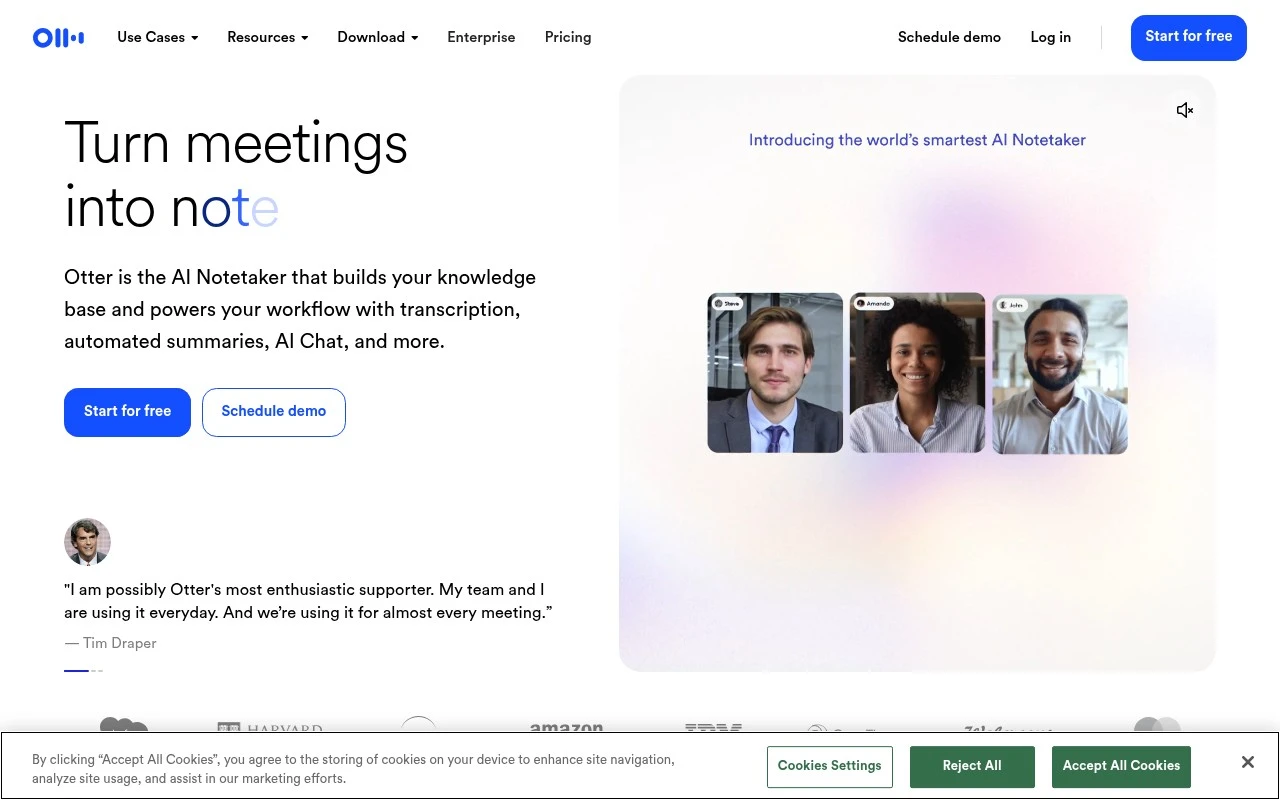
The supplied otter.ai source describes Otter Meeting Agent, an AI notetaker and conversational knowledge tool for meetings. It captures conversations through a meeting bot, desktop recording, browser, mobile, or uploaded media, then produces live transcripts, summaries, action items, and searchable meeting knowledge. It is mainly useful for people and teams that need reliable records of meetings and want follow-ups or CRM/project updates generated from those conversations.

FYAI Score

8.4 / 10

Based on 2 reviews + FYAI product analysis

Pricing:

Freemium

Best for:

Busy professionals managing tasks, meetings, and daily planning in one place

Score Breakdown

  • Ease of use7.7 / 10
  • Features8.3 / 10
  • Pricing9.0 / 10
  • Integrations9.1 / 10
  • Support7.9 / 10

PRODUCT PREVIEW

What this AI tool does

Routine is an AI tool page intended to help readers understand what the tool does and how it might fit into everyday work. It provides a straightforward overview of the tool’s purpose, typical ways people use it, and the kinds of problems it is designed to address. Because the intro and main use case are not defined, this page focuses on general guidance: what to look for when evaluating an AI tool, what inputs it may require, and what outputs you can expect. It also highlights practical considerations such as where it can be applied, how it may integrate into existing workflows, and what limitations or assumptions to keep in mind. If you are researching routine for informational purposes, this description is meant to set expectations and provide context before you try the tool yourself. As more details about the intended use case become available, the page can be updated to reflect specific scenarios and examples.

Use cases

Best for

Meeting Notes

Routine joins meetings to capture live transcripts, then generates notes with summaries and action items for follow up.

Transcribe Audio

Routine transcribes audio from meeting bots, desktop recording, mobile, browser, or uploaded files into searchable text.

Audio Summarization

It summarizes recorded conversations into concise overviews and key decisions based on the transcript.

ANALYSIS

Strengths & limitations

Strengths
  • Supports multiple capture methods, including meeting-agent attendance, bot-free desktop recording, Chrome, mobile, and uploaded audio or video files.
  • Combines transcription with summaries, decisions, action items, speaker recognition, and AI chat over meeting content.
  • Offers integrations with common meeting, collaboration, storage, CRM, and project tools such as Zoom, Google Meet, Slack, Salesforce, HubSpot, Google Docs, Jira, Notion, and Asana.
Limitations
  • The product is centered on recorded conversations and meetings, so it is less relevant for workflows that do not depend on audio, video, or call transcripts.
  • Some team-oriented capabilities, longer transcription limits, workspace administration, and advanced features are tied to paid Business or Enterprise plans.
  • The official page makes broad claims about sales, recruiting, and SDR agents, but the supplied text gives limited detail on how those specialized agent workflows operate.

Evaluation

FYAI score breakdown

Our structured evaluation across five key criteria

8.4 / 10

Overall score

Based on 2 reviews + FYAI product analysis

  • Ease of use7.7 / 10
  • Features8.3 / 10
  • Pricing9.0 / 10
  • Integrations9.1 / 10
  • Support7.9 / 10

What users say

Findings from public reviews, documentation and community sources.

  • Ease of use

    Otter's product page says users can “automatically send your AI Notetaker to meetings, record bot-free on desktop or Chrome, or capture on mobile,” and lists live transcription, speaker recognition, summaries, and action items.

  • Features

    Otter's product page lists meeting transcription, searchable meeting knowledge, Otter AI Chat, live multilingual transcription, speaker recognition, summaries, action items, Channels, and an SDR Agent.

  • Pricing

    Otter's pricing page lists a free Basic plan, Pro at $16.99/user/month monthly or $8.33/user/month annually, Business at $24/user/month monthly or $19.99/user/month annually, and Enterprise by demo. Otter's pricing page says the free tier includes 300 monthly transcription minutes, and paid tiers list usage limits and capabilities.

  • Integrations

    Otter's pricing page lists integrations including Zoom, Microsoft Teams, Google Meet, Slack, Salesforce, HubSpot, Zapier, Dropbox, Google Calendar, Google Docs, Jira, Notion, Asana, Claude, plus MCP Server access. Otter's pricing page says Enterprise includes “Otter API & Webhooks.”

  • Support

    Otter's pricing page says the Business tier includes “Prioritized support,” and Enterprise includes a “Customer Success Program.”

Who is this for?

Best for teams that need meeting capture across multiple workflows, Otter's product page says users can “automatically send your AI Notetaker to meetings, record bot-free on desktop or Chrome, or capture on mobile.” Less suited to buyers who need a fixed self-serve Enterprise price, Otter's pricing page lists Enterprise by demo, so Enterprise pricing requires a demo rather than a listed monthly or annual price.

PRODUCT PREVIEW

Feature highlights

Daily planning

Time-block your day and focus on what matters most.

Tasks + notes

Capture tasks and notes together, then turn them into action.

All-in-one workspace

Keep projects, meetings, and personal routines organized in one hub.

COMPARE

Discover curated alternatives worth comparing

Compare similar AI tools based on features, pricing and use cases

7.8/ 10Based on 31 reviews

Wudpecker

Meeting NotesSummarization
Turns meeting recordings into notes, summaries, and action items
Best for:
Knowledge workers
Pricing
Freemium

9.0/ 10Based on 1.589 reviews

Toggl Track

Time & Habit Tracking
Tracks time with automatic activity detection and reporting.
Best for:
Operations teams
Pricing
Freemium

8.5/ 10Based on 2.648 reviews

Todoist

Task & Project Management
Organize, schedule, and share tasks with AI-assisted planning
Best for:
Knowledge workers
Pricing
Freemium

Turn every meeting into clear, shareable notes automatically. Start using Routine today and keep your team aligned without the busywork.

FAQ

Frequently asked
questions

Everything you need to know about this AI tool,
its features, pricing, use cases, and limitations.

What types of teams and meetings is Routine a good fit for?
Routine fits teams that run frequent internal meetings and need reliable transcripts plus shared notes for follow-ups. It’s especially useful when decisions and action items must be searchable later across projects. If your meetings are mostly in-person in noisy rooms or involve many people talking over each other, you may want to test accuracy before committing.
How do Routine’s free and paid plans differ in practice?
Routine’s free tier is typically best for light usage and evaluating transcription quality, but it often comes with caps on minutes, storage, or advanced collaboration features. Paid plans usually expand transcription limits and add stronger team workflows like sharing, organization, and admin controls. Check whether your expected monthly meeting hours and number of seats fit within the plan limits.
How does Routine compare with other meeting transcription tools like Otter or Fireflies?
Routine is competitive when your priority is real-time transcription paired with collaborative notes and fast retrieval of past discussions. Some alternatives may offer broader integrations, more mature speaker identification, or different pricing structures for heavy meeting volume. If you rely on a specific calendar, conferencing, or CRM stack, compare integration depth and export options side by side.
How quickly can a team get Routine set up and adopted?
Routine can lose accuracy in noisy environments or when multiple speakers overlap, which can affect trust in the transcript. It also depends on a stable internet connection for best performance, which matters for remote or travel-heavy teams. If you need highly polished summaries without review, you may still need a human pass to correct names, jargon, and decisions.
What should I know about Routine’s data handling, privacy, and compliance?
Before rolling out Routine, confirm where recordings/transcripts are stored, how long data is retained, and whether you can delete or export content on demand. Review access controls for shared notes and whether admin features support your organization’s requirements (e.g., SSO, audit logs, role-based permissions). If you operate in regulated environments, verify the vendor’s stated compliance posture and whether meeting participants must be notified or consent to recording.