Curated ToolThis tool is part of our curated AI directory. We only include tools that meet our standards for relevance, usability and real-world value.

HubSpot Sales

HubSpot Sales is a sales CRM platform for managing contacts, deals, pipelines, email tracking, meeting scheduling, and outreach workflows, with lead scoring features to help prioritize prospects.
Sales & OutreachLead Generation

FYAI Score

8.9 / 10

Based on 35,726 reviews

Pricing:

Freemium

Best for:

Sales teams managing pipelines and forecasting revenue in HubSpot

Score Breakdown

  • Ease of use9.0 / 10
  • Features9.3 / 10
  • Pricing8.5 / 10
  • Integrations9.2 / 10
  • Support8.1 / 10

PRODUCT PREVIEW

What this AI tool does

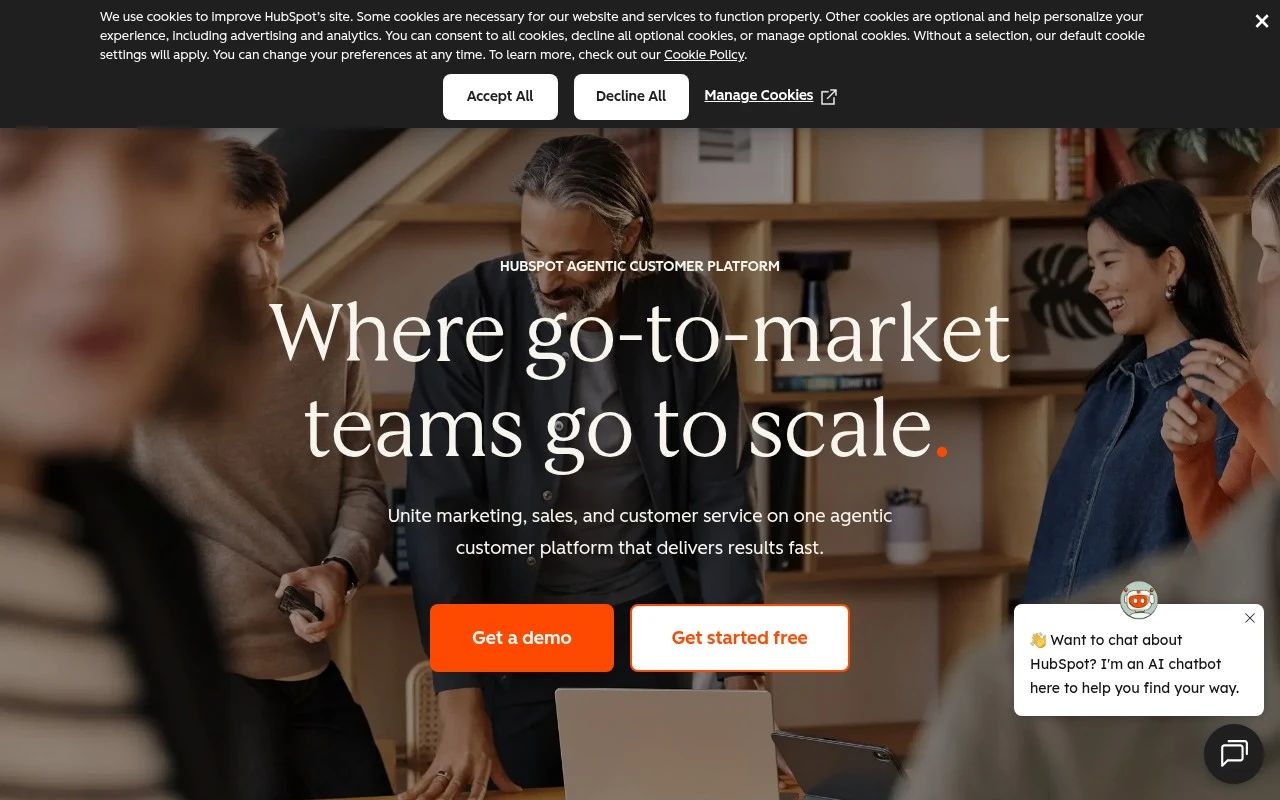
HubSpot Sales is HubSpot’s AI-powered sales software for prospecting, managing leads, engaging buyers, tracking deals, and forecasting revenue inside a CRM-connected workspace. HubSpot Sales is built for sales teams that want activity data, customer context, pipeline visibility, sales enablement, and coaching workflows in one system rather than scattered across separate tools. At its center is the idea that selling should happen close to the customer record. Emails, calls, meetings, documents, notes, deal updates, and buyer interactions can all feed the same CRM view, giving representatives and managers a shared picture of where each relationship stands. That makes the platform especially useful for teams that want CRM automation without losing the human context behind each opportunity. For sales representatives, the tool is designed to reduce the busywork around outreach and follow-up. Email templates, meeting scheduling, call tracking, and document engagement data help sellers understand when a prospect is active and what content is resonating. Lead scoring and prospecting assistance can help teams prioritize accounts more systematically, so attention goes to the contacts and companies most likely to move forward. Managers get a different kind of value from the same activity stream. Deal pipelines, pipeline automation, deal analysis, and reporting tools turn day-to-day selling into a more visible operating system. Instead of relying only on manual updates or end-of-week summaries, sales leaders can inspect deal health, rep activity, forecast risk, and performance trends from dashboards that reflect current CRM data. AI is a central part of how HubSpot now positions the product. HubSpot Sales includes AI-guided selling concepts such as prospecting support, automated meeting preparation, follow-up assistance, AI forecasting, and early AI agents for prospecting and deal progression. In practice, that means the platform is moving beyond static sales records toward a system that can suggest next steps, summarize conversations, and help sellers act on signals faster. Because it is part of HubSpot’s broader customer platform, HubSpot Sales is strongest for organizations that want sales software connected to marketing, service, content, and operations data. A marketing interaction can become sales context, a support issue can inform deal strategy, and revenue forecasting can reflect more than a single rep’s notes. HubSpot also says the product can be used alongside an existing CRM, which may matter for teams that want HubSpot’s engagement layer without immediately replacing every system. Teams evaluating the platform will usually weigh depth, simplicity, and ecosystem fit. Compared with many HubSpot Sales alternatives, its appeal is less about being a single niche tool and more about bringing prospecting, engagement, report generation, dashboard generation, forecasting, and automation into one familiar HubSpot environment. HubSpot Sales pricing and package selection can be an important consideration, since the value depends on which sales features, AI capabilities, and CRM workflows a team actually needs. The overall story is a sales hub that tries to make revenue work more connected and more measurable. HubSpot Sales is best at helping sales organizations turn fragmented buyer interactions into an organized pipeline, then use that pipeline for coaching, prioritization, and revenue forecasting. It is not just a contact database or an email productivity add-on, but a broader sales operating layer for teams that want their CRM to guide action as well as store information.

Use cases

Best for

Sales Enablement

Hubspot Sales enables reps with CRM linked templates, meeting scheduling, call recording, and deal pipelines to run outreach and track engagement.

Lead Scoring

It scores leads using CRM properties and engagement signals, then uses workflows to route and prioritize follow up in pipelines.

Revenue Forecasting

It forecasts revenue by aggregating deal stage data, amounts, and close dates into pipeline reports and AI forecasting views.

ANALYSIS

Strengths & limitations

Strengths
  • Best suited to sales teams that want outreach, deal management, reporting, and coaching in one CRM-connected workspace because reps and managers can work from shared customer and pipeline data.
  • Useful for revenue teams prioritizing daily selling actions because its AI-guided selling, prospecting assistance, meeting prep, follow-up, forecasting, and conversation intelligence support both reps and managers.
  • Strong fit for organizations already using HubSpot because sales activity can connect with existing marketing, CRM, and customer data rather than sitting in a separate sales tool.

Limitations
  • Less suitable for teams that want a lightweight sales engagement layer on top of a non-HubSpot CRM because the deepest workflow and data benefits come from operating inside the HubSpot ecosystem.
  • The freemium model is best for initial adoption, but growing teams that need advanced automation, forecasting, coaching, and broader usage should expect subscription costs to scale with seats and feature needs.
  • Heavier than a simple pipeline tracker for solo sellers or very small teams because getting value from pipelines, automation, reporting, AI guidance, and data hygiene requires setup and ongoing administration.

Evaluation

FYAI score breakdown

Our structured evaluation across five key criteria

8.9 / 10

Overall score

Based on 35,726 reviews

  • Ease of use9.0 / 10
  • Features9.3 / 10
  • Pricing8.5 / 10
  • Integrations9.2 / 10
  • Support8.1 / 10

What users say

Findings from public reviews, documentation and community sources.

  • Ease of use

    G2’s large review base reports that users “consistently praise the ease of use and automation features of HubSpot Sales Hub,” and HubSpot’s product page emphasizes keeping work “under one roof” rather than splitting activity across tools.

  • Features

    HubSpot lists sales features including “Breeze Prospecting Agent,” “Conversation Intelligence,” “Forecasting,” and AI-powered CPQ.

  • Pricing

    HubSpot’s pricing page lists a “Free” $0/month tier, “Starter” beginning at $10/$20 per seat, “Professional” at $100/month per seat, and “Enterprise” at $150/month per seat, plus a 14-day free trial.

  • Integrations

    HubSpot’s app marketplace says “featured apps…help Sales teams stay connected,” and HubSpot’s Technology Partner Program is for companies that “build integrations on our platform.”

  • Support

    HubSpot’s knowledge base provides guidance on how to “Access HubSpot’s sales tools directly from your inbox,” and HubSpot’s product page offers demo and trial paths.

Who is this for?

Best for sales teams that want sales activity consolidated in one place, HubSpot’s product page emphasizes keeping work “under one roof” and lists tools such as Lead Management, Sales Automation, Deal Pipelines, and Forecasting. Less suited to teams that need Professional or Enterprise seats on a tight per-seat budget. HubSpot lists “Professional” at $100/month per seat and “Enterprise” at $150/month per seat.

PRODUCT PREVIEW

Feature highlights

AI-guided selling

Get next-step suggestions to move deals forward faster.

Sales engagement

Templates, sequences, and meetings to speed up follow-ups.

Pipeline forecasting

Track deals and forecast revenue with CRM-connected reporting.

COMPARE

Discover curated alternatives worth comparing

Compare similar AI tools based on features, pricing and use cases

7.5/ 10Based on 12,890 reviews

Zoominfo

Lead GenerationCRM & Segmentation
Finds prospects, enriches accounts, and flags buyer signals
Best for:
Sales teams
Pricing
Paid only

8.6/ 10Based on 6,982 reviews

Zoho CRM

Sales & OutreachAnalytics & Reporting
Rewrites emails, detects anomalies, and builds CRM modules
Best for:
Sales teams
Pricing
Freemium

8.0/ 10Based on 1,041 reviews

Zoho Campaigns

Lead GenerationCRM & Segmentation
Builds email and SMS campaigns, automates and analyzes results
Best for:
Marketing teams
Pricing
Freemium

Join teams closing more deals with less busywork. Start building a predictable pipeline with Hubspot Sales today.

FAQ

Frequently asked
questions

Everything you need to know about this AI tool,
its features, pricing, use cases, and limitations.

Is HubSpot Sales a good fit for teams that need lead scoring and pipeline automation?
HubSpot Sales is a strong fit for sales teams that want AI-assisted lead prioritization, pipeline tracking, outreach automation, and forecasting in one CRM workspace. It is especially relevant for account executives, business development teams, sales managers, and revenue leaders already using or considering HubSpot’s CRM ecosystem.
What do you get for free in HubSpot Sales, and when would a paid plan be needed?
HubSpot Sales uses a freemium pricing model, with free access available and more advanced sales capabilities tied to paid plans. Teams may need a paid plan for deeper automation, forecasting, conversation intelligence, reporting, and more mature sales management workflows. Current plan details should be checked on HubSpot’s pricing page.
How does HubSpot Sales compare with other sales enablement or CRM automation tools?
HubSpot Sales is best compared as a CRM-centered sales platform rather than a narrow outreach or reporting tool. Its advantage is combining lead management, prospecting, meetings, calling, deal tracking, automation, forecasting, and reporting in HubSpot. The right alternative depends on team size, budget, existing CRM, and workflow complexity.
How quickly can a team set up HubSpot Sales?
The main trade-off with HubSpot Sales is that some advanced sales automation, AI, forecasting, and reporting capabilities may require higher paid plans. Quote, billing, payment, and CPQ-related workflows can also depend on related HubSpot products or separate seats. Some AI features may be in beta, which can affect availability.
What should buyers check about HubSpot Sales data privacy and compliance?
Buyers should evaluate HubSpot Sales privacy and compliance based on how CRM, call, meeting, prospecting, and sales performance data will be stored, accessed, and governed. Key checks include user permissions, data retention, regional requirements, consent for call recording, integration access, and HubSpot’s current security and compliance documentation.