Curated ToolThis tool is part of our curated AI directory. We only include tools that meet our standards for relevance, usability and real-world value.

Planable

Planable is a social media collaboration platform for planning, previewing, approving, and scheduling content across social channels. It provides shared calendars, post mockups, comments, and approval workflows for marketing teams and clients.
Social Media

FYAI Score

8.4 / 10

Based on 1,062 reviews

Pricing:

Freemium

Best for:

Agencies and marketing teams managing multi-stakeholder social content

Score Breakdown

  • Ease of use9.2 / 10
  • Features7.7 / 10
  • Pricing8.6 / 10
  • Integrations8.7 / 10
  • Support7.6 / 10

PRODUCT PREVIEW

What this AI tool does

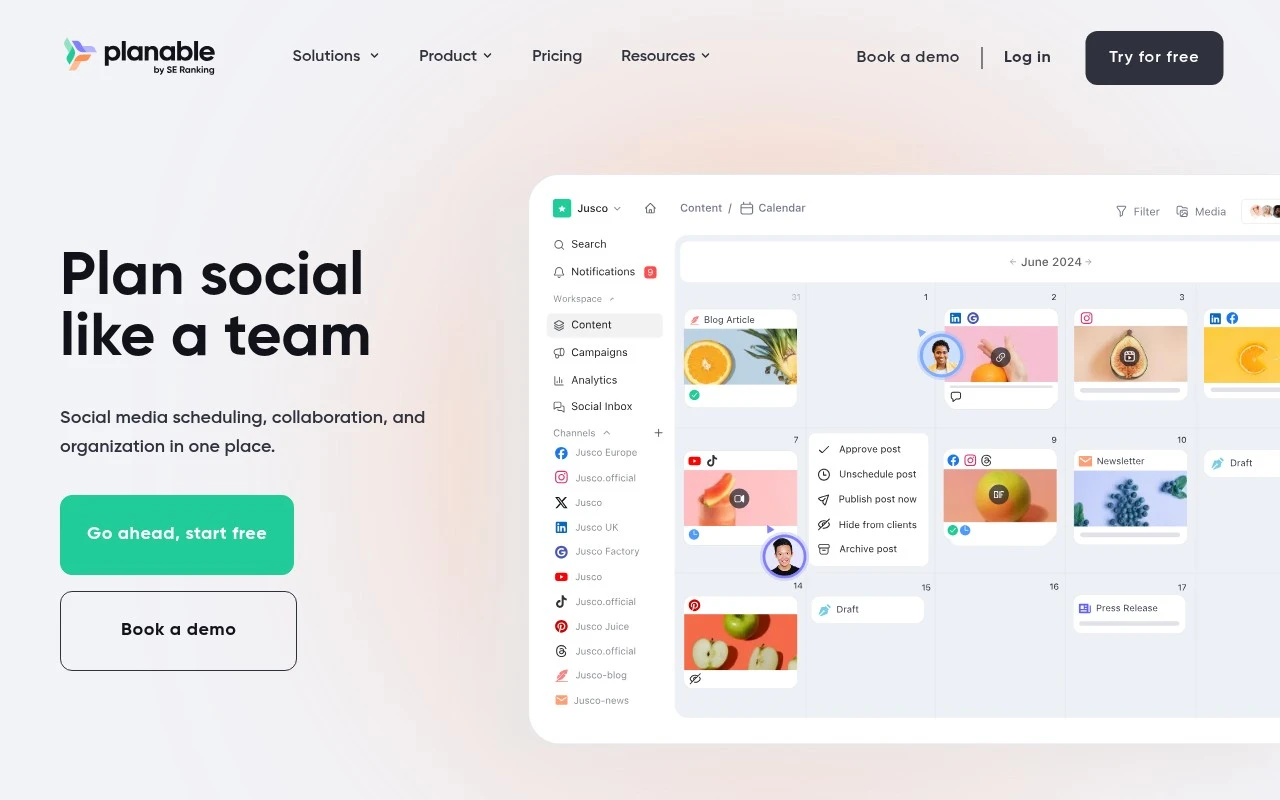
Planable is a collaborative social media management platform for agencies, brands, and distributed marketing teams that need one shared workspace for creating, approving, scheduling, and analyzing social content. Planable is best known for making social media content creation feel visual and team-based, with post previews, comments, approvals, and publishing plans living together instead of being scattered across documents, spreadsheets, chats, and inboxes. Instead of treating social media as a solo posting task, the platform is designed around the operational reality of modern content teams. Writers, designers, account managers, clients, legal reviewers, and brand stakeholders can see the same draft, react to the same version, and resolve feedback in context. That makes it especially useful when content must pass through several people before it can go live. For agencies, Planable gives client collaboration a more structured home. A campaign can be drafted, previewed in a format that resembles the final social post, discussed in comments, and approved without forcing clients to interpret raw copy in a spreadsheet. The result is a clearer feedback loop where everyone can see what is being changed, why it matters, and whether a post is ready to publish. Approval workflows are central to how the tool is positioned. Teams can move content from draft to review to approved status, reducing the uncertainty that often surrounds social publishing. Planable supports this process by keeping conversations close to the asset itself, so decisions are easier to trace and fewer details get lost between meetings or messaging tools. Multiple planning views help different teams work in the way they think. A calendar view supports scheduling and campaign visibility, while feed and grid-style previews help social teams judge how content will look in context. This visual layer is important because social media work is not only about text and timing, it is also about presentation, sequence, and brand consistency. Publishing and performance review extend the workspace beyond planning. Once content is approved, teams can schedule posts and maintain a clearer overview of what is going out across channels. Reporting and analytics then help marketers understand how published content performs, creating a connection between the collaborative planning process and the results that follow. In day-to-day use, the platform’s character is practical rather than experimental. It is not primarily an AI generation product or a broad enterprise marketing suite, although it may sit alongside tools used for writing, design, ads, or customer engagement. Its core value is coordination, helping people move from idea to approved social post with fewer version-control problems and less back-and-forth. Because feedback is visible next to the work, Planable fits teams that care about clarity, accountability, and client confidence. Planable gives social media teams a shared source of truth for content operations, especially when approval, presentation, and stakeholder communication are just as important as scheduling the post itself.

Use cases

Best for

Social Post Scheduling

Plan and schedule posts across channels using feed, calendar, grid, and list views.

In-Context Approvals

Planable collects comments, suggestions, annotations, and approvals directly on each post draft for stakeholders to review.

Content Organization Analytics

Organize content by brand, location, campaign, label, workspace, and assets while tracking analytics and engagement.

ANALYSIS

Strengths & limitations

Strengths
  • Best suited to collaborative social media teams because drafts, previews, comments, approvals, scheduling, and performance review sit in one shared workspace.
  • Strong fit for agencies and client-facing teams because feedback and stakeholder decisions are captured beside the content being reviewed.
  • Useful for multi-brand or distributed marketing teams because multiple planning views and structured approvals help keep social content organised before publishing.

Limitations
  • Less suitable for solo creators or very small teams because its main benefits come from collaborative planning, approvals, and stakeholder review workflows.
  • Less suitable for teams that want AI content generation as the central capability because its strongest role is social content review, governance, scheduling, and coordination.
  • The freemium model can become restrictive for growing teams because heavier collaboration, approval, and publishing needs are likely to require a paid plan.

Evaluation

FYAI score breakdown

Our structured evaluation across five key criteria

8.4 / 10

Overall score

Based on 1,062 reviews

  • Ease of use9.2 / 10
  • Features7.7 / 10
  • Pricing8.6 / 10
  • Integrations8.7 / 10
  • Support7.6 / 10

What users say

Findings from public reviews, documentation and community sources.

  • Ease of use

    Capterra lists Planable at 4.5/5 from 326 reviews and highlights user feedback including “Easy to use. Client approval is top-notch.”

  • Features

    Planable’s features page says users can “Create content for 9 social networks, your blog, newsletters, and campaign briefs,” and lists grouped posts, version history, Canva integration, and approvals.

  • Pricing

    Planable’s pricing page says “The first 50 posts are free. No time limit & no credit card required,” and lists published tiers at $33 and $49 per workspace/month plus custom Enterprise pricing. Planable’s pricing page also lists unlimited users and paid add-ons for analytics and social inbox.

  • Integrations

    Zapier lists Planable as integrating with “9000 other apps on Zapier,” and Planable’s help center lists Public API, MCP, and iCal integration topics. Planable also lists Slack and Canva as native/featured connections.

  • Support

    Planable’s pricing page links to “Help Center” and “Status,” and the Enterprise tier includes a “Dedicated account manager.”

Who is this for?

Best for social media and content teams that need client approvals across multiple content types, Planable’s features page says users can “Create content for 9 social networks, your blog, newsletters, and campaign briefs,” and lists approvals and version history. Less suited to teams that need analytics and social inbox included in the base workflow, Planable’s pricing page lists analytics and social inbox as paid add-ons.

PRODUCT PREVIEW

Feature highlights

Feedback on posts

Collect client and stakeholder comments right next to each draft.

Approval workflows

Route content for review and sign-off with clear status tracking.

Plan & schedule views

Preview posts and plan with calendar and feed-style layouts.

COMPARE

Discover curated alternatives worth comparing

Compare similar AI tools based on features, pricing and use cases

7.5/ 10Based on 12,890 reviews

Zoominfo

Lead GenerationCRM & Segmentation
Finds prospects, enriches accounts, and flags buyer signals
Best for:
Sales teams
Pricing
Paid only

8.6/ 10Based on 6,982 reviews

Zoho CRM

Sales & OutreachAnalytics & Reporting
Rewrites emails, detects anomalies, and builds CRM modules
Best for:
Sales teams
Pricing
Freemium

8.0/ 10Based on 1,041 reviews

Zoho Campaigns

Lead GenerationCRM & Segmentation
Builds email and SMS campaigns, automates and analyzes results
Best for:
Marketing teams
Pricing
Freemium

Bring your team’s social content into one clear workflow. Start using Planable today to move from drafts to approvals faster and publish with confidence.

FAQ

Frequently asked
questions

Everything you need to know about this AI tool,
its features, pricing, use cases, and limitations.

Who is Planable best suited for?
Planable is best suited for social media teams, agencies, marketing teams, and multi-brand organizations that need structured content review and approval workflows. It fits teams managing social posts from draft to feedback, client approval, scheduling, publication, and performance review in a shared workspace.
Does Planable have a free plan, and what do paid plans add?
Planable uses a freemium pricing model, so teams can start with free access and upgrade when they need more capacity or workflow control. Paid evaluation should focus on user needs, workspace structure, approval complexity, publishing volume, analytics, and collaboration requirements rather than price alone.
How does Planable compare with other social media management tools?
Planable stands out most for collaborative social content planning, visual previews, comments, annotations, and approval workflows. Other social media tools may place more emphasis on advanced analytics, social listening, inbox depth, automation, or AI generation, so the better choice depends on whether approval governance or broader platform depth matters more.
How quickly can a team get started with Planable?
Planable is strongest for social media content collaboration and approval, not as a general project management platform or a full AI content generation system. Teams should also verify current plan details for analytics depth, inbox workflows, channel-specific publishing behavior, and any limits that could affect larger social operations.
What should buyers check about Planable’s data privacy and compliance?
Buyers should review Planable’s current security, privacy, and compliance documentation before using it for client or regulated content workflows. Key checks include access controls, workspace permissions, approval records, data retention, third-party integrations, social account permissions, audit needs, and contractual terms for agencies or multi-brand teams.