Curated ToolThis tool is part of our curated AI directory. We only include tools that meet our standards for relevance, usability and real-world value.

Munch

Munch is an AI video repurposing platform that analyzes long-form videos to identify key moments and turn them into short, captioned clips for social media. It also supports automatic reframing and platform-ready formatting.
Marketing AutomationContent & Social

FYAI Score

7.3 / 10

Based on 37 reviews

Pricing:

Freemium

Best for:

Business owners and agencies running multiple social calendars fast

Score Breakdown

  • Ease of use7.7 / 10
  • Features7.2 / 10
  • Pricing7.1 / 10
  • Integrations7.1 / 10
  • Support7.4 / 10

PRODUCT PREVIEW

What this AI tool does

Munch is an AI social media marketing platform for businesses and agencies that want to turn a website, brand context, and optional assets into a working social content plan. Munch is built to reduce the time spent deciding what to post, writing captions, preparing visuals, and keeping a publishing calendar active. Its core promise is not simply faster posting, but a more structured social media content creation workflow that starts from the identity of the brand. For small business owners, the value is practical time compression. Instead of opening a blank calendar and trying to invent ideas from scratch, they can give the platform a website and let it infer the business category, audience, tone, offers, and likely content pillars. The result is a queue of suggested posts that can be reviewed, adjusted, scheduled, and published without needing a dedicated social media team. The workflow begins with brand understanding. The platform uses the user’s site and uploaded assets to form a content strategy, then turns that strategy into ready-to-edit social posts. This makes it useful for companies that know they need consistent social presence, but do not want the process to depend on ad hoc brainstorming, scattered documents, or manual copywriting every week. A central queue gives the tool its operational shape. Posts are not just generated as isolated outputs, they are organised into a calendar-like flow where users can approve, edit, and schedule content. That positions the platform closer to marketing automation than to a simple caption generator, because the emphasis is on maintaining a repeatable publishing system over time. Agencies have a different reason to use Munch: Munch supports separate workspaces and calendars for multiple client brands. That matters when a team is managing distinct voices, approval paths, and schedules at the same time. By keeping client environments isolated, the platform helps agencies avoid mixing assets, strategies, or publishing plans across accounts. Rather than acting as a generic post generator, the tool is designed around brand-specific output. It can help translate a company’s existing messaging into social formats, and it can support content repurposing by turning source material and brand context into posts suited for social channels. The user still stays in control, but the repetitive work of ideation and first-draft creation is handled by the system. Munch is best at giving non-specialists a guided path from business identity to publishable social content. That makes it relevant for founders, local businesses, service providers, ecommerce brands, and lean marketing teams that need consistency more than complex campaign production. It is also useful for agencies that want to standardise the early stages of strategy and post creation while preserving room for human editing and client approval. The product’s character is that of a social media operating layer rather than a one-off creative toy. It brings together strategy generation, AI-assisted writing, asset-aware content creation, calendar management, and scheduling into a single workflow. For users who want social media to become a manageable routine instead of an open-ended chore, it offers a structured way to keep content moving from idea to publication.

Use cases

Best for

Social Media Content Creation

Munch generates a tailored social content strategy and draft post queue from your website and brand assets for review and editing.

Marketing Automation

It automates the social workflow by queuing posts, letting you edit, schedule, and publish from a shared calendar.

Content Repurposing

It repurposes website content into multiple social post ideas and captions that you can adapt for different channels.

ANALYSIS

Strengths & limitations

Strengths
  • Best suited to time-poor business owners because it turns a website and brand assets into a social strategy, content queue, and posting calendar in one workflow.
  • Useful for agencies managing multiple clients because isolated workspaces and calendars help keep each brand’s content pipeline separate.
  • Supports human review, editing, scheduling, and performance tracking, so teams can reduce repetitive planning without fully handing over publishing control.

Limitations
  • Less suitable for brands that need highly bespoke creative direction because the workflow is built around AI-generated strategy and posts from existing business materials.
  • Not a full marketing operations suite because its focus is social content rather than CRM, paid advertising, email automation, or broader campaign management.
  • The freemium model is better for testing than scaling because higher-volume posting and multi-brand workflows are more likely to require paid access.

Evaluation

FYAI score breakdown

Our structured evaluation across five key criteria

7.3 / 10

Overall score

Based on 37 reviews

  • Ease of use7.7 / 10
  • Features7.2 / 10
  • Pricing7.1 / 10
  • Integrations7.1 / 10
  • Support7.4 / 10

What users say

Findings from public reviews, documentation and community sources.

  • Ease of use

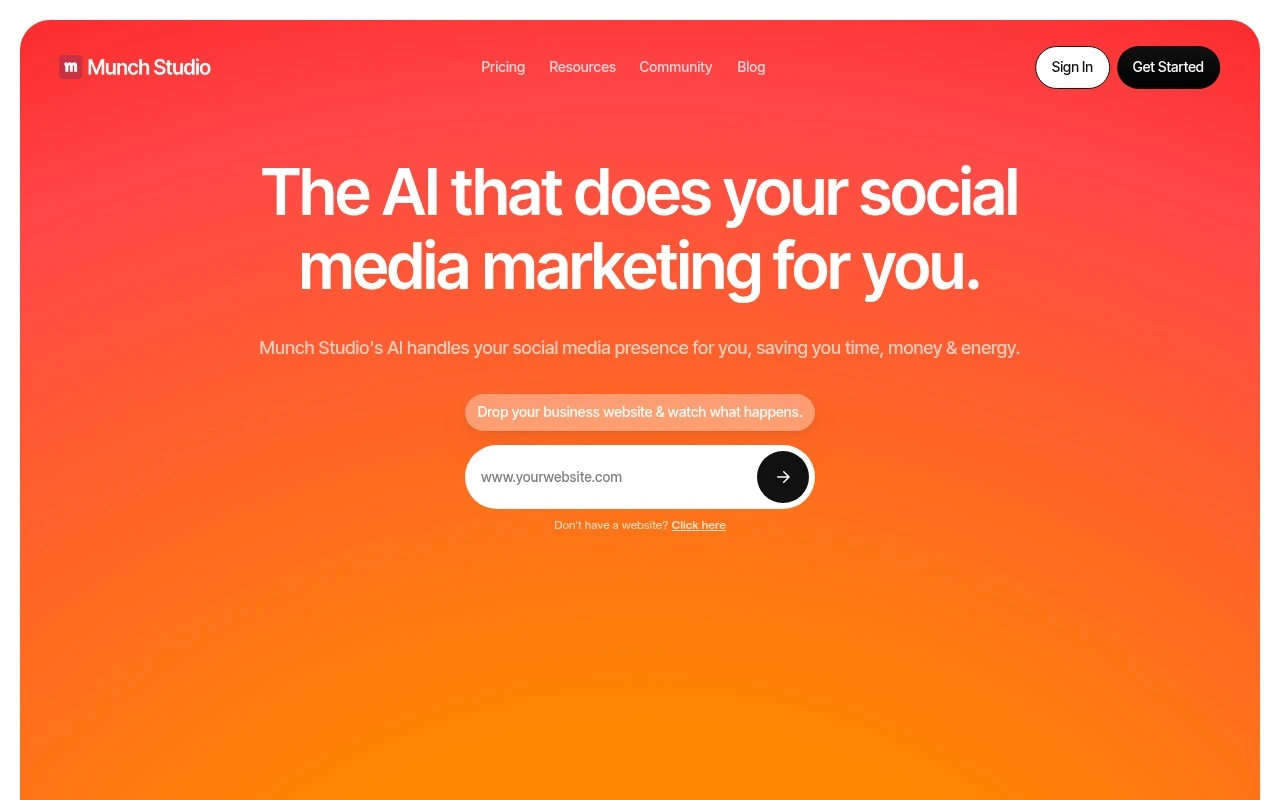
    Munch's product page describes onboarding as “Drop your business website,” add assets, then “Choose the posts you love and post with just one click, or edit easily without any technical skills required.”

  • Features

    Munch's product page says Munch learns a business from a website, videos, photos, and Zoom recordings, then creates posts and a custom content strategy. The same page lists scheduling, monitoring “Reach,” “Engagement,” and “Followers,” and agency features including multi-brand workspaces and isolated strategy/content queues.

  • Pricing

    Munch's pricing page emphasizes “Get Started For Free” and agency-specific “custom free trial” and onboarding calls. Munch's pricing page handles pricing through signup or consultation-style flows rather than visible tier amounts in the page text.

  • Integrations

    Munch's product page names social publishing destinations including Instagram, Facebook, and LinkedIn. The same page gives publishing examples including Instagram Story/Reel, Facebook Post, and LinkedIn Post.

  • Support

    Munch's product page links to “Help Center,” “Docs,” and “Community.” Munch's agency offering includes a “Dedicated Agency Concierge” where a “Real human walks you through onboarding, pricing, and a free trial.”

Who is this for?

Best for businesses or agencies that want social posts generated from existing website, video, photo, and Zoom recording assets, Munch's product page says it creates posts and a custom content strategy from those inputs. Best for agency workflows that need multi-brand workspaces and isolated strategy/content queues. Less suited to buyers who need to compare published plan prices before signup, Munch's pricing page handles pricing through signup or consultation-style flows rather than visible tier amounts in the page text.

PRODUCT PREVIEW

Feature highlights

AI content strategy

Generates a tailored social plan from your website and brand inputs.

Post queue builder

Creates a reviewable queue of posts you can edit, approve, and reuse.

Schedule & publish

Plan, schedule, and post across calendars to stay consistent in less time.

COMPARE

Discover curated alternatives worth comparing

Compare similar AI tools based on features, pricing and use cases

7.5/ 10Based on 12,890 reviews

Zoominfo

Lead GenerationCRM & Segmentation
Finds prospects, enriches accounts, and flags buyer signals
Best for:
Sales teams
Pricing
Paid only

8.6/ 10Based on 6,982 reviews

Zoho CRM

Sales & OutreachAnalytics & Reporting
Rewrites emails, detects anomalies, and builds CRM modules
Best for:
Sales teams
Pricing
Freemium

8.0/ 10Based on 1,041 reviews

Zoho Campaigns

Lead GenerationCRM & Segmentation
Builds email and SMS campaigns, automates and analyzes results
Best for:
Marketing teams
Pricing
Freemium

Turn long videos into scroll-stopping social clips in minutes. See why marketing teams choose Munch to boost reach and engagement.

FAQ

Frequently asked
questions

Everything you need to know about this AI tool,
its features, pricing, use cases, and limitations.

Who is Munch best suited for?
Munch is best suited for small businesses, creators, consultants, and agencies that need regular on-brand social content without hiring a full social media team. It is especially useful when a business already has a website, photos, videos, recordings, or other assets that can be turned into a social media strategy and content calendar.
Does Munch have a free plan, and what do paid plans add?
Munch uses a freemium pricing model, so users can start with a free option and upgrade for more complete use. Paid plans are typically the better fit for ongoing publishing, multi-brand workflows, higher content volume, or agency use. Check getmunch.com for current plan limits and included features.
How does Munch compare with other social media automation tools?
Munch is more focused on generating a brand-specific content strategy and post calendar from a business website and existing assets than on scheduling alone. Similar tools may emphasize publishing queues, analytics, or design workflows. The right choice depends on whether strategy creation, content generation, approvals, scheduling, or reporting matters most.
How much setup work does Munch require?
Munch still appears to work best with human review rather than fully hands-off social media management. Users may need to approve, edit, or choose posts before publishing. Buyers should also verify the current list of publishing integrations, automation controls, analytics depth, and plan limits before committing to a workflow.
What should teams check about privacy and compliance before using Munch?
Teams should review Munch’s current privacy policy, data processing terms, and account permission model before uploading client assets or connecting social platforms. Agencies and regulated businesses should confirm how brand files, website content, recordings, generated posts, and performance data are stored, accessed, retained, and deleted.