Curated ToolThis tool is part of our curated AI directory. We only include tools that meet our standards for relevance, usability and real-world value.

Lusha

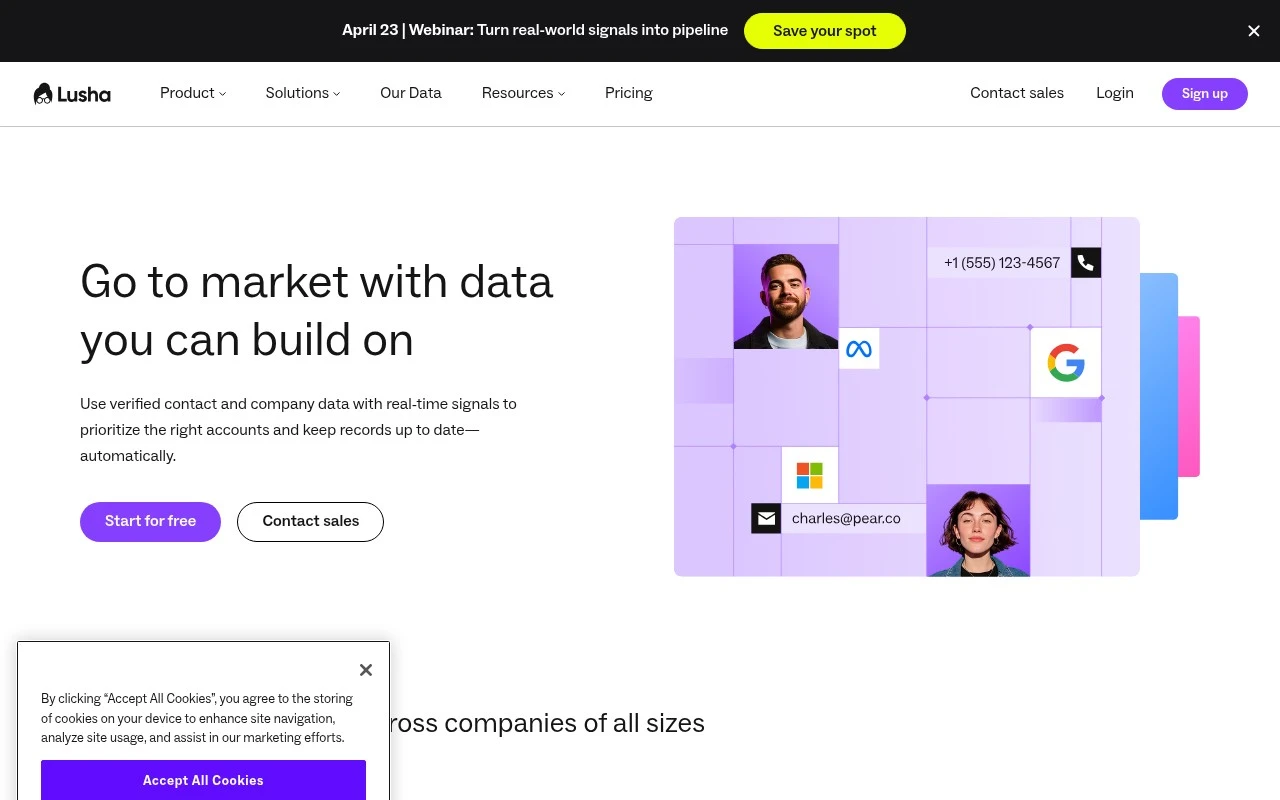
Lusha is a B2B sales intelligence platform that helps teams find verified business contact details, including emails and phone numbers, for prospecting. It also supports company data lookup and CRM enrichment for sales and recruiting workflows.
Lead Generation

FYAI Score

7.8 / 10

Based on 1,660 reviews

Pricing:

Freemium

Best for:

Sales and SDR teams prospecting B2B accounts and contacts

Score Breakdown

  • Ease of use8.3 / 10
  • Features7.3 / 10
  • Pricing8.1 / 10
  • Integrations8.2 / 10
  • Support7.1 / 10

PRODUCT PREVIEW

What this AI tool does

Lusha is a B2B prospecting and sales intelligence platform for sales, recruiting, and go-to-market teams that need reliable contact and company data to find and reach potential buyers. It sits in the practical layer of revenue operations, helping users move from a named account or target persona to usable business emails, phone numbers, and company context. For outbound teams, the platform is built around a simple problem, knowing who to contact and how to contact them. Instead of starting from blank research, users can identify prospects by role, company, industry, location, and other business signals, then bring those records into their outreach or CRM workflow. Lusha is best at contact discovery, lead generation, and data enrichment for teams that depend on accurate B2B records. Sales development representatives can use it to build prospect lists, account executives can expand buying committees inside target accounts, and recruiters can source professional contact details for hard-to-reach candidates. Data enrichment is a central part of the product story because many teams already have leads, accounts, or CRM records that are incomplete or outdated. The platform helps fill gaps such as missing email addresses, direct dials, job titles, company details, and firmographic information, which can make outbound campaigns and account planning more consistent. In daily use, Lusha works less like a creative AI assistant and more like a structured business data layer. Its value comes from giving commercial teams faster access to verified contact intelligence, then fitting that intelligence into familiar workflows such as prospecting, CRM updates, sales engagement, recruiting outreach, and account-based marketing. Accuracy, coverage, and workflow fit are the main reasons teams consider tools in this category. Lusha positions itself around making B2B data easier to find, validate, and operationalize, especially for teams that need to scale outbound activity without relying entirely on manual research. The platform is also relevant for operations teams that care about data hygiene across sales and marketing systems. When contact records are cleaner and account profiles are more complete, segmentation, routing, reporting, and personalization all become easier to manage. Lusha is not a general-purpose generative AI tool for writing content, building chatbots, or automating broad office tasks. Its role is more specific and commercially focused, helping teams identify the right people at the right companies, enrich the records they already have, and support more targeted B2B outreach.

Use cases

Best for

Contact Detail Lookup

Use Lusha to find and verify work emails, direct dials, and company details for specific prospects and target accounts.

CRM Data Enrichment

Enrich CRM or lead records by appending missing company fields, work emails, and phone numbers from Lusha contact data.

Outbound List Building

Build and qualify outbound lists by filtering contacts and companies by role, seniority, and firmographics, then exporting the results.

ANALYSIS

Strengths & limitations

Strengths
  • Well suited to outbound sales and recruiting teams because it combines contact and company data for building targeted prospect lists.
  • Useful for revenue operations teams because it can enrich lead and account records with structured business data, reducing manual research before outreach.
  • Freemium access helps small teams test data coverage and workflow fit before committing to paid prospecting volume.

Limitations
  • Less suitable for teams seeking generative AI copywriting or campaign automation because its core value is contact intelligence rather than content creation.
  • Less suitable for consumer marketing teams because its data model is oriented around B2B companies, contacts, and go-to-market targeting.
  • The freemium model can become restrictive for higher-volume prospecting because broader access and heavier usage typically require paid plans.

Evaluation

FYAI score breakdown

Our structured evaluation across five key criteria

7.8 / 10

Overall score

Based on 1,660 reviews

  • Ease of use8.3 / 10
  • Features7.3 / 10
  • Pricing8.1 / 10
  • Integrations8.2 / 10
  • Support7.1 / 10

What users say

Findings from public reviews, documentation and community sources.

  • Ease of use

    G2 rates Lusha 4.3/5 and says users “consistently praise Lusha for its ease of use.”

  • Features

    G2 notes users praise Lusha’s “accurate contact data” that “significantly streamlines the prospecting process.”

  • Pricing

    ZoomInfo’s Pipeline article says Lusha has a “permanent free tier” and reports paid tiers such as Starter at “$49.90/month” or “$37.45/month” annually. ZoomInfo’s Pipeline article also references Lusha’s credit model.

  • Integrations

    Lusha’s integrations page states Lusha offers “out-of-the-box integrations” plus a “custom API.”

  • Support

    Capterra’s review summary cites “the biggest disappointment” as “customer support,” despite an overall 4/5 rating.

Who is this for?

Best for marketing and prospecting teams that need contact data for lead workflows, G2 says users praise Lusha’s “accurate contact data” that “significantly streamlines the prospecting process.” Less suited to teams that depend heavily on customer support, Capterra’s review summary cites “the biggest disappointment” as “customer support,” so support interactions may become a friction point.

PRODUCT PREVIEW

Feature highlights

Verified contact data

Get business emails and direct dials to reach decision-makers.

Prospecting search

Find leads by company, role, and filters to build target lists.

Lead enrichment

Auto-fill missing fields and keep CRM records clean and current.

COMPARE

Discover curated alternatives worth comparing

Compare similar AI tools based on features, pricing and use cases

7.5/ 10Based on 12,890 reviews

Zoominfo

Lead GenerationCRM & Segmentation
Finds prospects, enriches accounts, and flags buyer signals
Best for:
Sales teams
Pricing
Paid only

8.6/ 10Based on 6,982 reviews

Zoho CRM

Sales & OutreachAnalytics & Reporting
Rewrites emails, detects anomalies, and builds CRM modules
Best for:
Sales teams
Pricing
Freemium

8.0/ 10Based on 1,041 reviews

Zoho Campaigns

Lead GenerationCRM & Segmentation
Builds email and SMS campaigns, automates and analyzes results
Best for:
Marketing teams
Pricing
Freemium

Find the right prospects faster and reach them with confidence. See why revenue teams choose Lusha to turn outreach into more booked meetings.

FAQ

Frequently asked
questions

Everything you need to know about this AI tool,
its features, pricing, use cases, and limitations.

Who is Lusha best suited for?
Lusha is best suited for B2B sales, revenue operations, recruiting, and go-to-market teams that need contact and company data for prospecting. It is most useful when teams are building outbound lists, finding work emails or phone numbers, and enriching lead or account records rather than creating AI-generated content.
Does Lusha have a free plan, and when would a paid plan make sense?
Lusha uses a freemium pricing model, so teams can typically start with limited access before moving to paid usage. A paid plan makes more sense when prospecting volume, team collaboration, or CRM enrichment needs exceed what a free tier can reasonably support. Check lusha.com for current plan limits.
What should I compare when looking at Lusha alternatives?
The best Lusha alternative depends on contact-data accuracy, market coverage, enrichment depth, workflow fit, and budget. Buyers should compare how well each platform supports their target regions, industries, job titles, CRM processes, and outbound volume. Data freshness and compliance controls are especially important for sales intelligence tools.
How much setup does Lusha usually require?
Lusha’s main limitation is that its value depends on the accuracy, coverage, and freshness of its B2B contact data in your market. It is also not a general-purpose AI assistant or creative automation tool. Teams should test results against their target segments before relying on it at scale.
What privacy or compliance issues should teams consider with Lusha?
Teams using Lusha should treat contact data, consent, and outreach compliance as core buying and operating considerations. Sales and recruiting teams need processes for lawful data use, suppression requests, regional privacy rules, and responsible outbound messaging. Buyers should also review Lusha’s current privacy, security, and compliance documentation directly.